Agony in the Garden. Parables. Metaphors. Incisive mythology within the realms of the contemporary political landscape of Europe in the 2020s. To reduce Lua Ribeira’s work to any single motif is an exercise in futility. Instead, the analysis must stem from the aggregate means of its parts. Of course, one cannot simply resign the work to the impulses of documentary practice. To do so would challenge the network of historical imagery in both religious painting and secular choreography. Bodies in Lua’s work appear as a continuation of painting in the tradition of Goya, El Greco, and Zurbarán, amongst others. I have named Spanish painters specifically, as Lua’s native Galician origins would be unacceptably humble had she not been aware of these traditions. Growing up in Spain, one cannot ignore several co-existing topics, from Catholicism to the distinct echoes of Franco’s fascist ideology.
Growing up in a traditional country has its complications, and the tendency to ignore politics under the Church’s governing body will come as no surprise to anyone who has spent more than one full day in the country. The complications arise when the two worlds of traditional religion come in close proximity to contemporary politics. This has been the case historically from the Inquisition until the Spanish Civil War. No historical timeline in Spain can be equivocated without discussing the terms in which the country addresses its spiritual piety, conflated with the aggressive tendencies of its dance with political ideology.
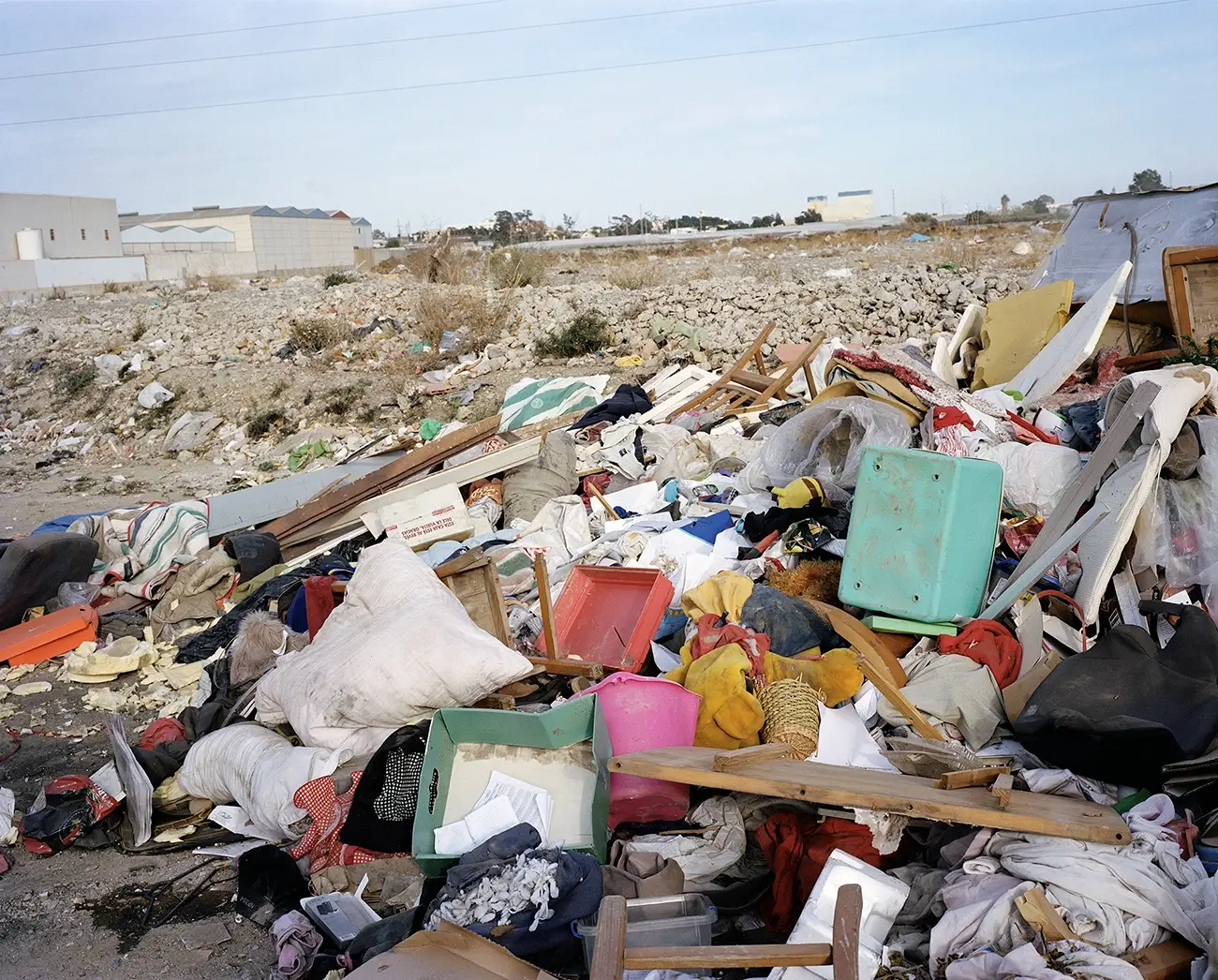
In the case of the present, the world, and more specifically, Europe’s backsliding toward global fascism, is not without precedent, nor does it come as a complete surprise, given that human behaviour indicates a cyclical interest in the phenomenon both in terms of its beliefs and its political posturing. The pendulum swings idly back and forth, left to right and up and down (genuflecting) realities. Perhaps one question that most countries and governments have not grappled with, discussed, or considered is the flattening rise of globalism with its shifting bodies of people who move away from calamity, looking for peace, only to end up in a country not their own, to adapt, and adopt the courage to survive across borders. One of the most obvious signs of the tedium with which local populations resist and accept these movements (with forbearance in global forever wars) is the rise of nativism and populism, suggesting that the backyard remains indicative of the historical population rather than of current trends in displacement, movement, and settlement.

These topics and tropes have found their way into Lua’s work and have been a recurring theme since her last book, Subida al Cielo, was released by her publisher Dalpine in 2023 and she was/is just getting started with what I perceive to be an incredible, if slightly obtuse vision of how to capture the body, people, and charged political moments that present as a type of allegory. Of note about Lua is that her work is subtle and perhaps best understood outside the context of Magnum, the agency that represents her. While Magnum is essential, it can often cloud the vision of an artist under its umbrella who is not working within the historical paradigm of its architecture, and I believe this is especially true of Lua’s work. Her images do not present as documentary, but as something adjacent, and, with Magnum, might come the wincing pangs of a (particularly male) audience who cannot fathom how this work fits within the agency’s context and legacy. Frankly, that is the greatest compliment that I believe anyone could give Lua for her work. Magnum is a great thing, but it comes with a heavy burden.
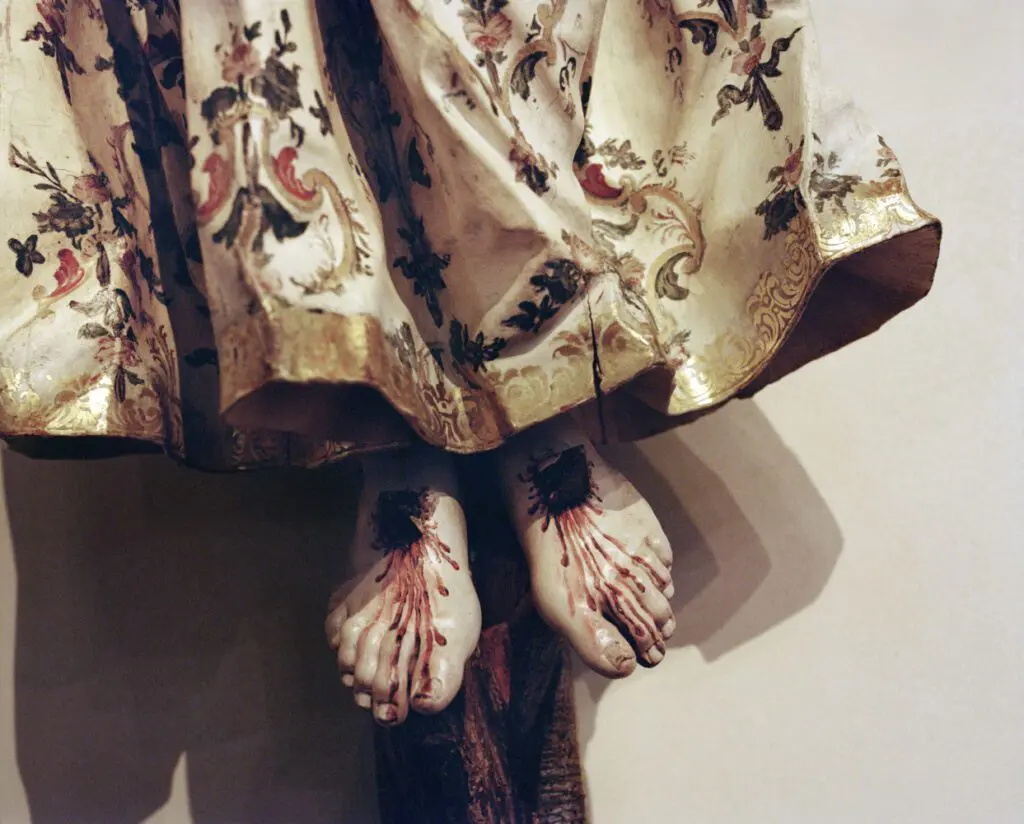
Lua’s work is asking the viewer to understand that context, while vital, is not the only essential quality of a photograph or body of work. Rather, she suggests that we understand the power of images and their creation within the broader context of artistic production, leading the viewer to, as in the work of Max Pinckers, understand allegory within the tradition of images, and instead of being compelled to seek truth, to seek instead an approximation to a tenuously shared reality. I know this sounds basic and in a post-truth economny, image-makers tend to think this is a forgone conclusion when speaking abou timages, yet agencies, Magnum in particular, still have a long shadow cast over how images are to be produced and understood and I believe that Lua is doing a phenomenal job in asking that audience to bend with her, to understand contemporary politics, particularly gloablization, and immigration in the brroader trajectory of arts and socio-political discussions, with a reasonable working knowledge of the Western canon of art historical (namely Christian) iconography and its enduring legacvy within the production of images in the present.
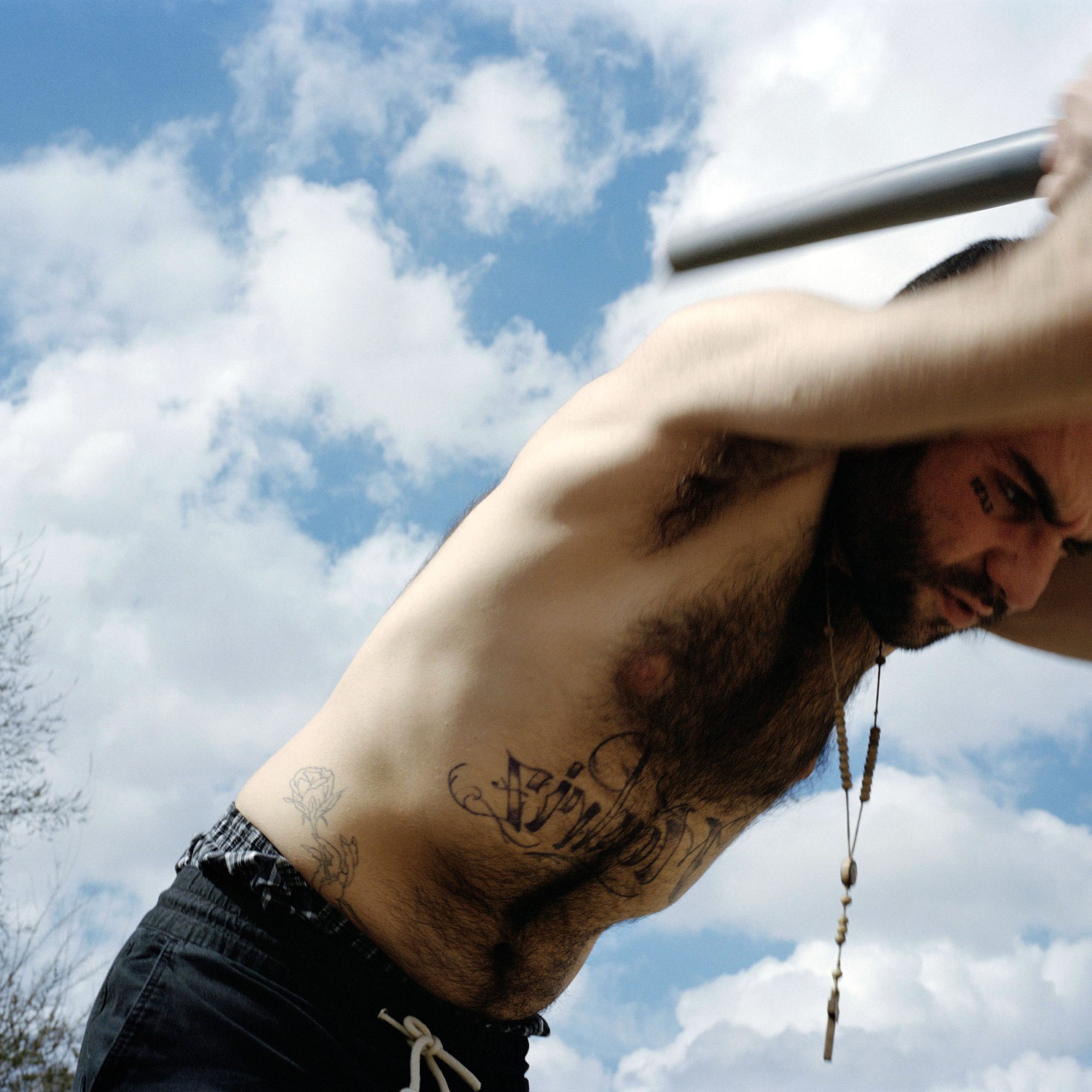
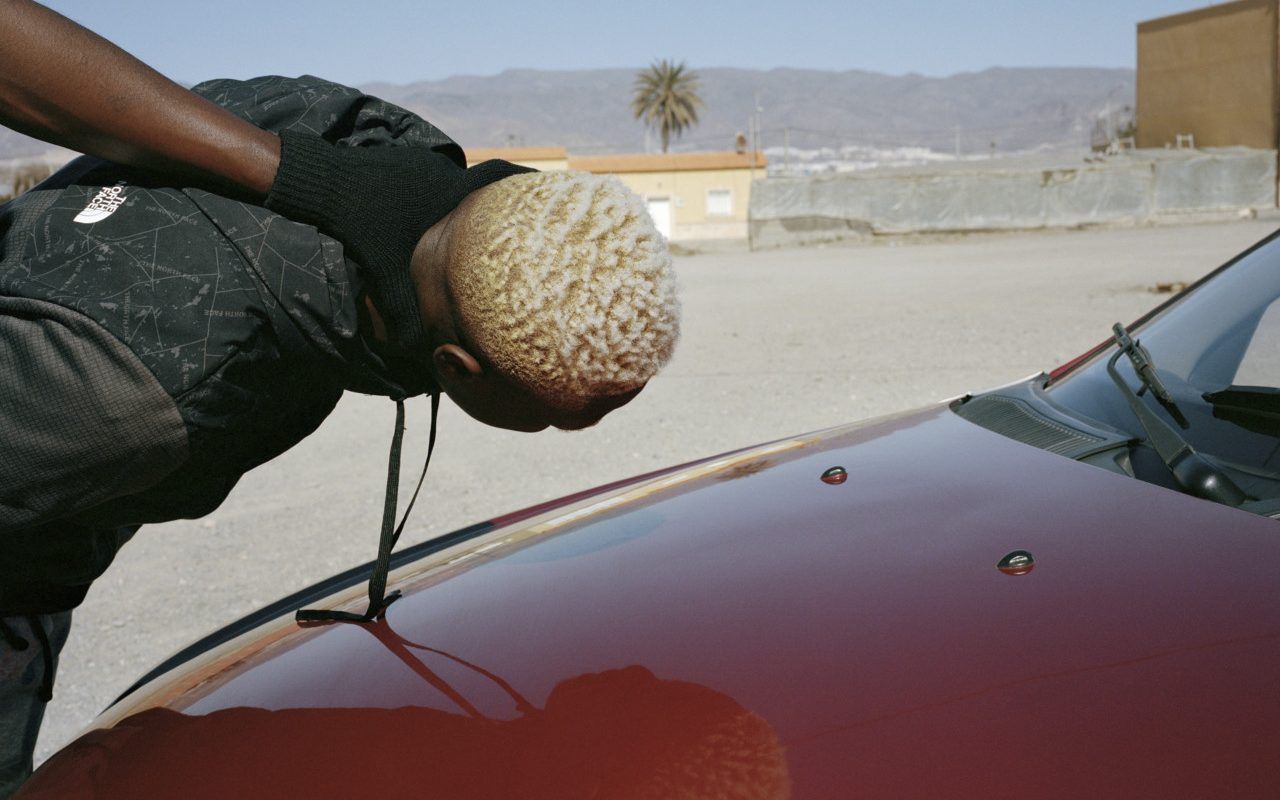
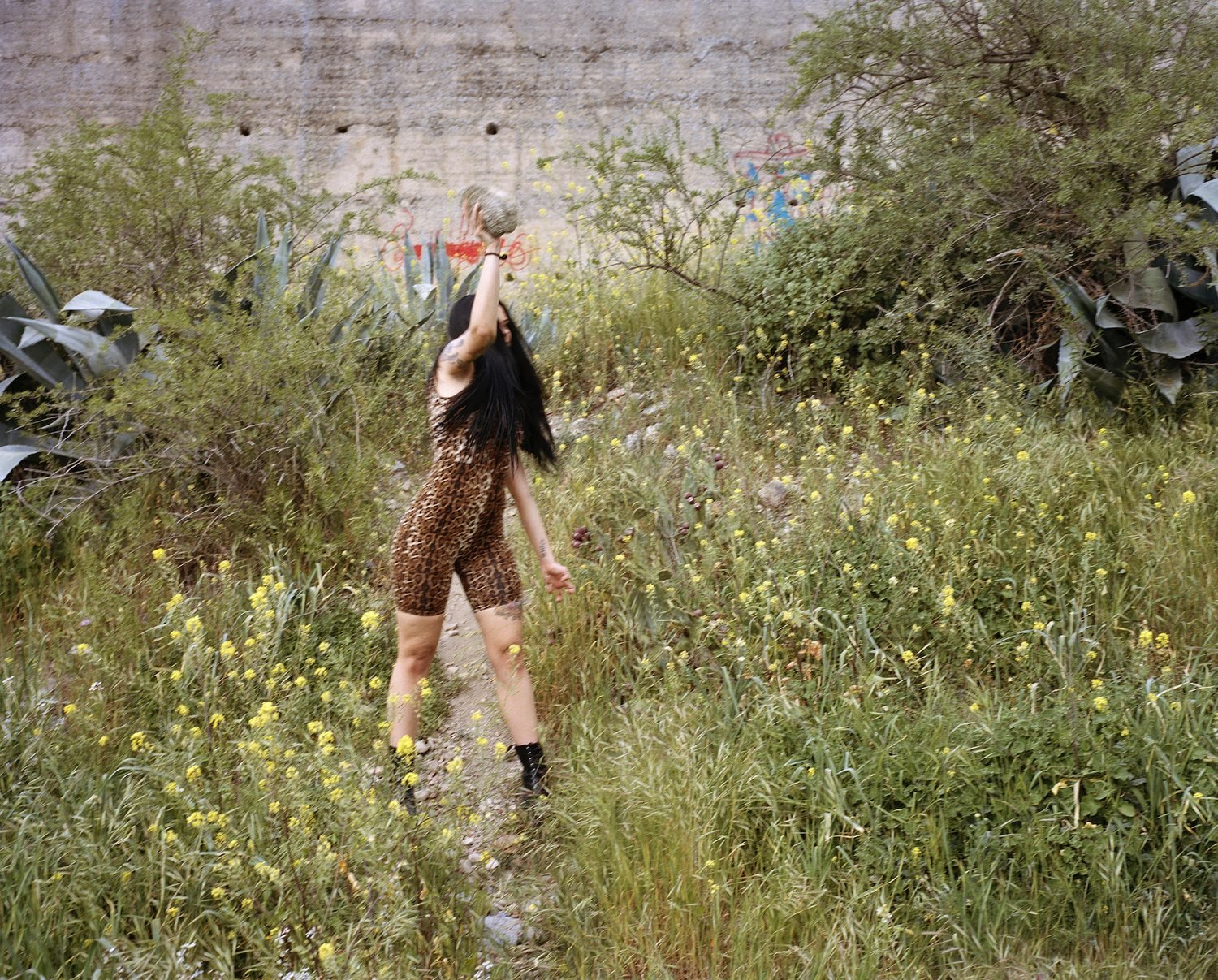
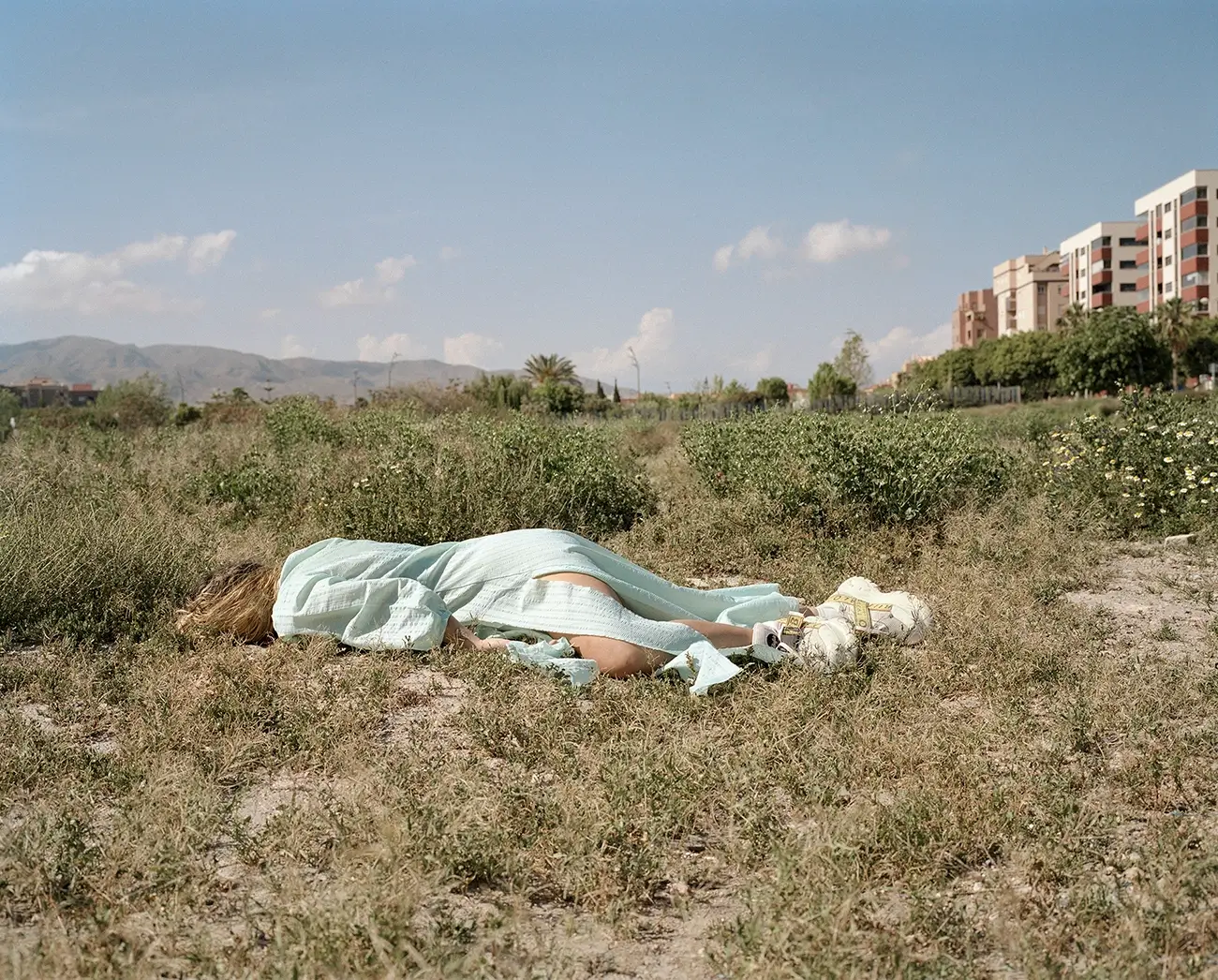
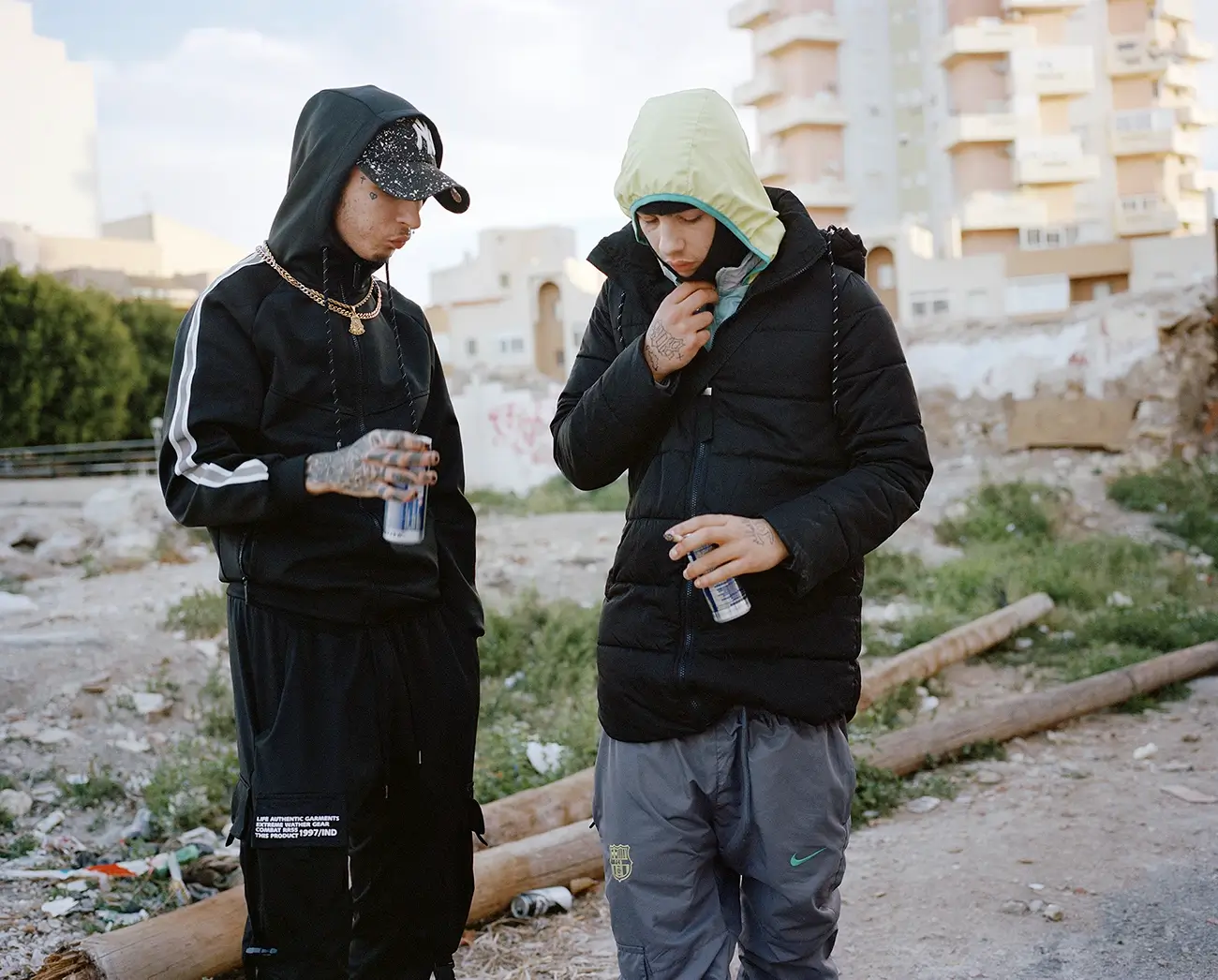
Lua documents the travails of people she encounters in the Spanish landscape. Though she works elsewhere, this body of work has more to do with Spain and its South, including the border politics that feature into that framework, than it does with her images culled from the U.K., for example. Here, the persistence of the Spanish economy of images, both political and non-secular, finds a place in the work, with figures held in motion, some displaying signs of religious appeal. For example, several bodies appear to be prone to stumbling or to have stumbled onto the ground. This interest in gravity and the falling body is not altogether unrelated to the deposition of the body of Christ, nor to the stations of the cross, nor to Jesus’s stumble up Golgotha.
Men look as if they are carrying an absent cross, and are at times held in stress positions, creating a spiritual suffering that is activated by very real world politics. Lua and I spoke two weeks ago about her interest in gravity, and perhaps it is me, but I also see questions concerning its opposite, namely: ascension and the break from the lived plane of earthly existence, which in allegory may be viewed as the suffering of refugees toward a place of freedom from their bondage. In this, Lua’s use of symbolic gesture, her ability to read the contemporary environment, asks us to extract questions about ethical conditions in a moralizing exercise. To retatch the lived reality of the people she photographs through allegory and return it to the present-tense understanding of their imperiled exile. Further, it asks us to drop the pretense of the documentary tradition nearly in its entirety, thus converting symbol to reason, if not the forced execution of its absolutes.
It is entirely successful work and a great follow-up to her previous book. It is oversized; images float on white pages/fields for us to ruminate over, and whereas the previous book was overflowing with images, this offering asks us to hold far fewer images closer, with some discussion of their iconographic relationship. Both books are very much worth the effort, but I might prefer this one’s sparsity, as it serves as a shorter conduit for connecting the motivations/intentions in her excellent work. Highly Recommended.
Lua Ribeira
Agony in the Garden
Dalpine
Izima Kaoru