

So, I’ve never watched a single one of Lanthimos’s films. Maybe this will change in the near future. Dunno. I am aware that I do not know a Dog’s tooth from a Frog’s gooch. In order to subvert my programming, which some of my more learned friends insisting that I am already in denial over its state of impossibility, I have decided to leave the phenomenon of watching films from Greece’s second greatest director outside of Theo Angelopoulos (as im told) from my cinematic vocabulary for the time being lest it disrupt my ability to screen his photobooks in the context of the medium that I am vastly more familiar with.
I am not blaming myself or Lanthimos for my lack of enthusiasm or education. I am blaming the sheer desire to rewatch Return of the Living Dead (also Day) or Predator (P is for pushing Pencils, Dillon) for the 100th + time instead of watching anything new. I mean, cinema did kind of peak in the mid-80s, with horror and action, as far as I am concerned, and it peaked with brains and balls-out bravado. I attribute this secret knowledge of cinema to my time in Wisconsin, where the pines gave me a penchant for pastimes unrelated to the cool auteur world that Europeans seem to gravitate toward, and to my Midwestern geographic metabolism for lowbrow that still encourages my habits well into my 40s. I had the same cinematic mishap with Sofia Coppola and have not gotten along any further in that sacred cinematic catalog either. Dear me. I did enjoy her archive book (same publisher) though.

With i shall sing these songs beautifully (Mack, 2025), I will admit that I loathe the title. I am aware of the first book he did as well, the title, despite how much time I spend in Athens (months per year/best city in the world/fight me), also triggered me. It is not that it’s bad; it just seems like a mouthful, and with my predelictions dependent on the thin slice of absurdity featured in films I enjoy with Austria’s second-most-famous artist in tow, it is hard to get past one- or two-word titles before my brain seizes. I always thought that books should be titled the way bands title their albums. Helmet’s Meantime or Melvins Houdini, Jesus Lizard’s Liar, and should eschew, where possible, the lengthier, flowery or lyrical titling, with the exception of Big Black’s Songs About Fucking or maybe PiL’s Flowers of Romance. Both the latter have three words that bang on for a bit too long, but in the end, I believe it is justified. I have given away so much of my position here that it will be hard to exonerate my actions in the future.
Sca-do-ba-da, ewwSca-do-ba-da, eww(Sca-do-ba-da) We were at a party (eww)(Sca-do-ba-da) His earlobe fell in the deep (eww)(Sca-do-ba-da) Someone reached in and grabbed it (eww)(Sca-do-ba-da) Was a rock lobster (eww)
While thumbing through the ISSTSB (which sounds vaguely like a syndrome as an acronym), I have been trying to figure out how to approach the book. I am aware that the director’s books are, if one might, outtakes from his time on the set of one of his movies, and this one from his film called Kinds of Kindness. Although it might not be exact, the still-frame outtakes I understand were made within the world he and the actors inhabited, not necessarily meant as exact cinematic stills. Concerning the film, I have no idea what its premise is, so I cannot gather if the photobook here functions like a Ciné-roman from the past, when books were created in order to extend the life and context of a film and often incorporated still shots and background imagery, or if this is meant to stand alone, and be an ambient piece of furniture, an extension of that world, of that time, an index to the efforts of cinema. I am guessing that it is something like this.

One of my favorite books in this lineage, rather, two books within the trajectory of this style of book, is the two Chris Marker books on La Jetée (One Japanese, one French), which both exhibit a different attitude toward the still photograph-to-film-to-book legacy than anything else out there. The second, if I count the first two as one, would be the 1974 gem that is Repérages by Alain Resnais, a location scouting book in which the director (of whom I saw that one Hiroshima film by) simply records possible sites for filmmaking that have a slightly unnerving and gritty feel about them. They are not exactly belabored to the idea of film sets, but act as imaginary catalysts for which to project ourselves. Being unfamiliar with his films before buying that book, I was able to delve in unaccosted by the legacy of his work, and after seeing Hiroshima Mon Amour, it didn’t really change much for me, as there were no montages, no actors, no referents with which to make absolute connectivity to the book.
ISSTSB exhibits what I understand to be the director’s love of analog photography within the context of his analog filmmaking process and the images, culled from his daily work, a diary of sorts without the severity of such inclinations, a working sketchbook perhaps. This I find interesting, as in reading it this way, there is no obligation to narrative, no matter how absurd the films might be, or how much I might actually enjoy them. With this in mind, a friend of mine, more inspired to watch recent trends in filmmaking than I, and who has the book, suggested that if I were to see the film, it would be hard to distance these pictures from that context, but in that I have not commited to the film, that I have the freedom to view them without this aid or crutch, that I might be able to explore the artist through photography and his ( or the publisher’s) arrangement of sequencing within the terms and limits of the photobook medium.
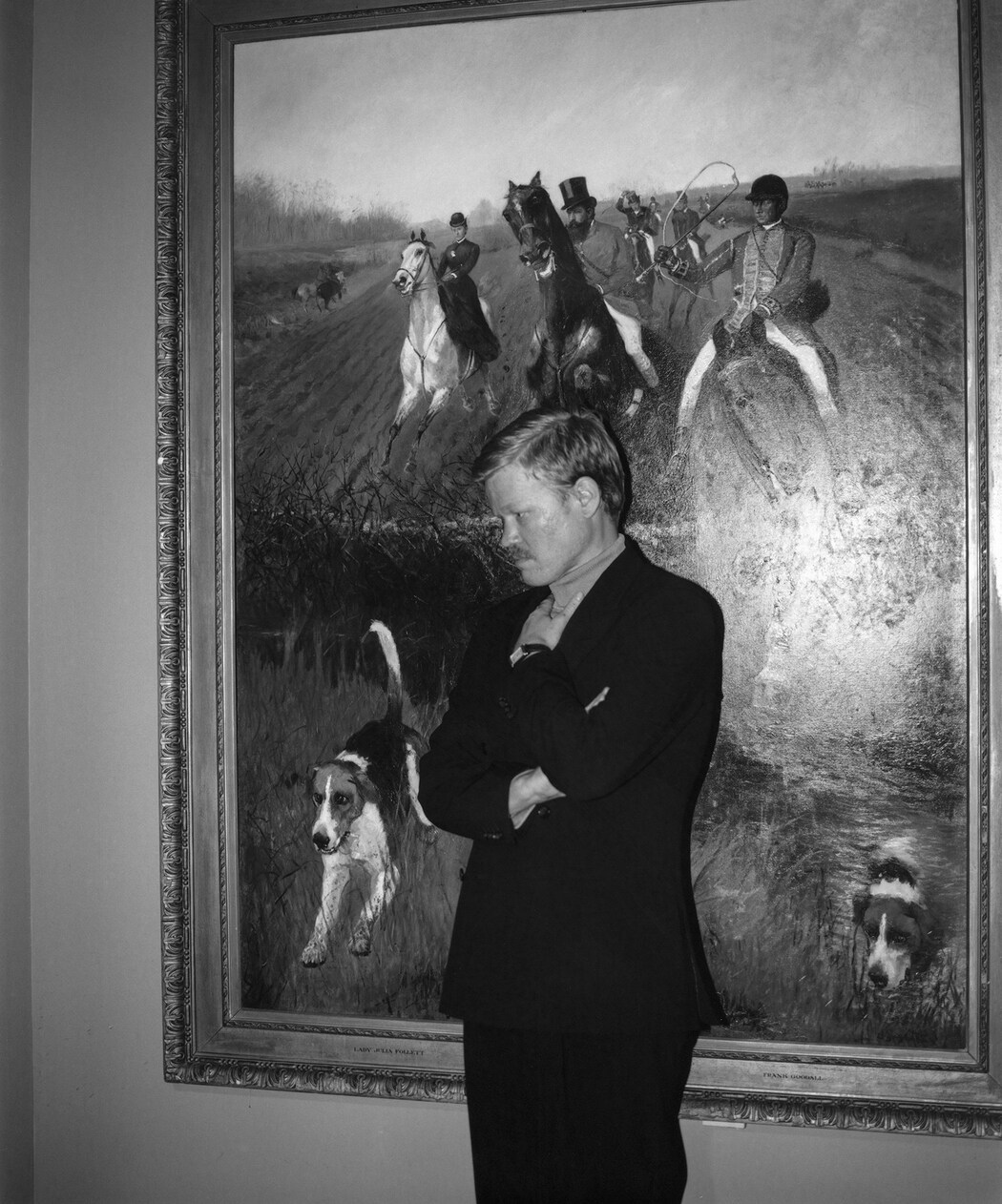
In thinking about the book on those terms, I have been able to enjoy the pictures. What I do miss is an overarching narrative. It feels like these images have been culled from another place, perhaps where there is a storyline, but are presented here out of joint, without direction, slightly aimless, and perhaps better for it. The closest approximation I had in viewing the pictures was Alec Soth’s Songbook (Also Mack, 2015). Songbook features of a series of black and white photographs that present as American and have the feeling of a Graphlex 4×5 news reporter feel to them, as if the aritst were stalking bingo halls and looking for illicit tales of love affairs from under the bleachers of a much more sustainable America than we have today, which would positively feel more murderous if crafted a decade later. In Lanthimos’s work, there is this vestigial tale of that America, but things feel more distant, off, and isolated. When figures enter the frame, they do so from a solitary position and are often obscured.
In the work suburban home objects bear the wounds of smoky heirloom entitlement. Chalky dust settles atop of the statue of the Virgin Mary cornered in the Steven Meisel wood panelling of the den and the upholstery clings to the scab of a teen girl child only letting go of her with a rip when her thighs pull from the sofa to peak through the blinds and watch with bemusement as two dogs fuck rythmically, without obedience in front of an audience of hot dog venders and bail bondsmen, the calling card of America on a new trail of tears. Neighbors no longer pretend to understand or condone one another, and the paranoia involved is the milk of our collective, impassioned amnesia. Here, we are all in flight, yet unable to move too far along the highways and byways of our sun-tattered suburbia. There is an unequivocal misery to some of the images. People look away from the camera, People do their best to evade capture, yet are caught often enough in the tripwires of the camera’s insolence, mistaken, in half-gestures for flattery turned possession.

I am reminded of a filthy Friedlander. Lanthimos has picked up on the former’s use of framing, an optical form of obfuscation that plays out in humorous ways with Friendlander, particularly his self-portraits, but in Lanthimos’s case, turns something more sour, more darkly possessive and successfully so as if every actor were forced into the naughty corner of the Blair Witch Project to recite lines from the Bhagavad Gita. I like that he has spent so much time with such recognizable faces only to cut, dissect, hide, and bury their money-maker behind shadows, cut frames, and leaves. This is, frankly, the type of photography that flirts with what lies on each side of the cinematic frame, but by denuding that possibility, it offers something more enigmatic, more in line with vernacular tendencies. What I do find interesting is how American much of the director’s photographic aesthetic feels. Perhaps there is tragedy in some of the images.

In spending time in Greece, one learns that Greeks have an interior coda that is very hard to shed or acquire, which speaks to the theatrical formation of tragedy and can often be summed up in a single painting, picture, icon or gesture. Perhaps there is a melding here of both worlds, one American aesthetic and within the inland empire of things, the other a type of tortured animus, a Greek malady on its way to fulfillment through disorder and lament, perhaps an elegy for an empire, of which both countries are now in conversation over, sharing notes. It’s like when Frank has to self-immolate in the crematorium in Return of the Living Dead. He knows he is stumbling into villainy as his body atrophies and changes toward an undead ghoul, but instead of chowing head, he chooses death, as he slides his wedding band over the incinerator gate lever and slides himself into the fire with Roky Erickson’s Burn the Flame playing alongside his cremation. Perhaps it’s not like this at all, but I am out of my lane as it is.

Of the book’s structure, I find myself at a loss when the words begin, but I understand their point of reckoning and my cointention to this type of literacy, a form of lyrcism that interrupts my viewing pleasure of the pictures within for something that feels less than magical, but I understand how it plays with sequential pace and wheres I think the sequence itself has a somewhat wave-like form, based on singular pictures with some inter-webbing to slightly less pronouncing images holding the in-between, what strikes me as favorable is how it taxes and distracts from ever soldifying into a type of narrative for the uninitiated. The images are mostly strong and offer a very spartan interleaf, where things feel of the same realm, but are cautiously hard to index given their framing of the era, except for the last 30-40 years. The color images perform their duty but, without being too harsh about them, offer less than an equal return to the black-and-white images, which feel like a mashup of Soth, Dijskra, Groebli, Frank, Friedlander, with the spice of some Wessel to cut in. I wanted to say Shore, but I decided to opt out of a Raw Deal. If things weren’t bad enough, I haven’t seen that film either.
In its aggregate, I find the curious spectacle within ISSTSB really enigmatic and entertaining. My only constructive piece of criticism is that the book does not feel sequenced with the photobook medium in mind, and perhaps bears quite a bit of relationship to cinematic sequencing, which is not necessarily a problem and can even activate a fresh approach to the photobook. With that said, I think if one does not define their audience as a photobook enthusiast or photography-adjacent, they risk missing the mark in their communication. With trogladytes such as myself, who have not invested in the films but love the photobook and photography, the book’s flow feels somewhat impeded by in-group knowledge of how it is supposed to operate.

With this in mind, I might suggest a slightly more photographic approach to the edit and the sequence of further books. OR, if the intended audience aligns with the cinematic enthusiast, perhaps speak that language a bit more clearly. Within this world, we seem to be floating between. If that is the intent, it works, no matter how confused the audience might be. Ngl, after seeing the last book (VOID), which I fundamentally thought was overdesigned and lacked charm, this is a step forward, and it has enough oddness to keep it on my shelves, with repeated viewings of single pictures and not overthinking it as a great photobook. Maybe definitions of intention are overrated, but this simulation between photobook and cinema might do with a little more consideration for the Bugonia book currently in the works. Let’s see where MACK and the artist can take this collaboration. Then agian, who am I to make such claims with a film history that is as horrifcally camp and butch simultaneously as it stands?
Yorgos Lanthimos
i shall sing these songs beautifully
MACK