

As a species, we have become addicted to the spectacle of political theater. Events are organized to engage our sensitive minds in the furor of ideological division, and arguments become tribal tools meant to manifest the supposed will of Western democracy, though little of this exhibitionism uncovers the true vessel of political life, fueled by economics, ego, and certainly NOT the will of the people, but that of a tiny minority bought into their fountainhead positioning.

Olaf Scholz. SPD Bundesparteitag 2024, Messe Berlin, Dezember 2023
These gatherings showcase the face, or rather the facade, of politics, an ill-appointed embodiment wrestling not with exhibited trust, but with the febrile notion that an individual, allegedly placed in power by the condition of the people’s will, can make changes in favor of said demographic. Mired in the fallacy that democracy presents in the 21st Century, these mouthpieces are not a conduit of the people. But rather use their pulpit to engage the willing blind spot of the political body to push policy that will, like so much junk food, inevitably turn cancerous when in conflict with the unseen lobby behind them, and every single one of these talking heads is fueled by monomaniacal self-belief, or they dwell in the audacity of bought-and-paid-for elites behind the scenes, or both. They do their show, they dance, then they fuck off to collect their speaking fees, military armament or AI lobby checks and continue to let clandestine puppeteers corrupt the political body of the nation or world through their obvious mendacity, and yet, the people, in their willingness to be led, braid their own nooses with the investment of their beliefs in said individual.

These gatherings, rallies, demiurgical congresses, in their plurality, do not necessarily do anything more than provide a way to vent frustration or acknowledge people’s rung in the hierarchy of ideas. Of course, it is not to suggest that these events do not have very real consequences. Certain political conventions, speeches, and gatherings have placed their knee on the neck of history, with consequences. The Roman Forum, Gettysburg, Nuremberg, Charlottesville, the poorly white Trump gatherings, and many more exhibitions of purchased might have paved the way for change, revolt, and mass murder. In fact, I would be remiss of me not to exhibit some form of skepticism at seeing waves of humanity gathered together for a single purpose without saying they have no sway. And yet the sway is not built on actual policy, but on how much they can choke the population with believable, if completely malignant, rhetoric to purchase, by means of persuasion, a vote- a way of keeping at bay mass collective consciousness that might actually destabilize power from the doors of the elite.

Olaf Scholz. SPD Bundesparteitag 2024, Messe Berlin, Dezember 2023
When it comes to how we present the charade of political convention, a few examples show how to organize the image of power against itself. Historically speaking, I return most to Erich Solomon’s book Berühmte Zeitgenossen in Unbewachten Augenblicken, from 1931, a book that on its face seems to be a bit boorish, dry, and lacks the energy that I associate with political exhibitionism, but underneath the surface, it is a book that gives acces to the behind-the-scenes machinations of the elite and how they structure their decision making and policy over cigars, champaigne, etc. while discussing how best to process children through the meatgrinder of war, ecconomic oblivion, and how to continually criminalize and keep at bay the lower and middle classes. Often shot at a sideways, quick glance, the work recalls a kind of voyeurism associated with Paul Strand’s images of people on New York streets and late Walker Evans’s images of people shuttling underneath the city streets in subway cars. This askance viewing suggests clandestine motives, and in Salomon’s case, the dry, crusty atmosphere betrays the inner sanctum of political capitalism and shows the figureheads, something that true power tries to avoid.
More recently, Christopher Anderson’s Stump showcases the naked faces of politicians in the manner of Helmar Lerski, up-close, flash-induced, a warts-and-all telling of the humanity parading as demigod, with the flash penetrating the masks of many politicians, showing the glazed and vacuous look from under the canopy of eyelids and Botox-induced foreheads. It reveals physiognomy, but also suggests a blatant unmasking of naked aggression and agenda if you read between the lines. Jules Spitasch has similarly made work about political elite life in Davos over several bodies of work, showcasing the environment of WEF retreats and the luxury brands that back the audacious groupings of money, militaries, and economic charlatanism once a year in an otherwise humble Swiss chalet-type town. These works show the underside of power, claiming nothing more than the observable, but together they say as much about political visibility as they do about the system’s faults through the human counterpart, the spectacle, and what might otherwise be manicured into something more monumental.

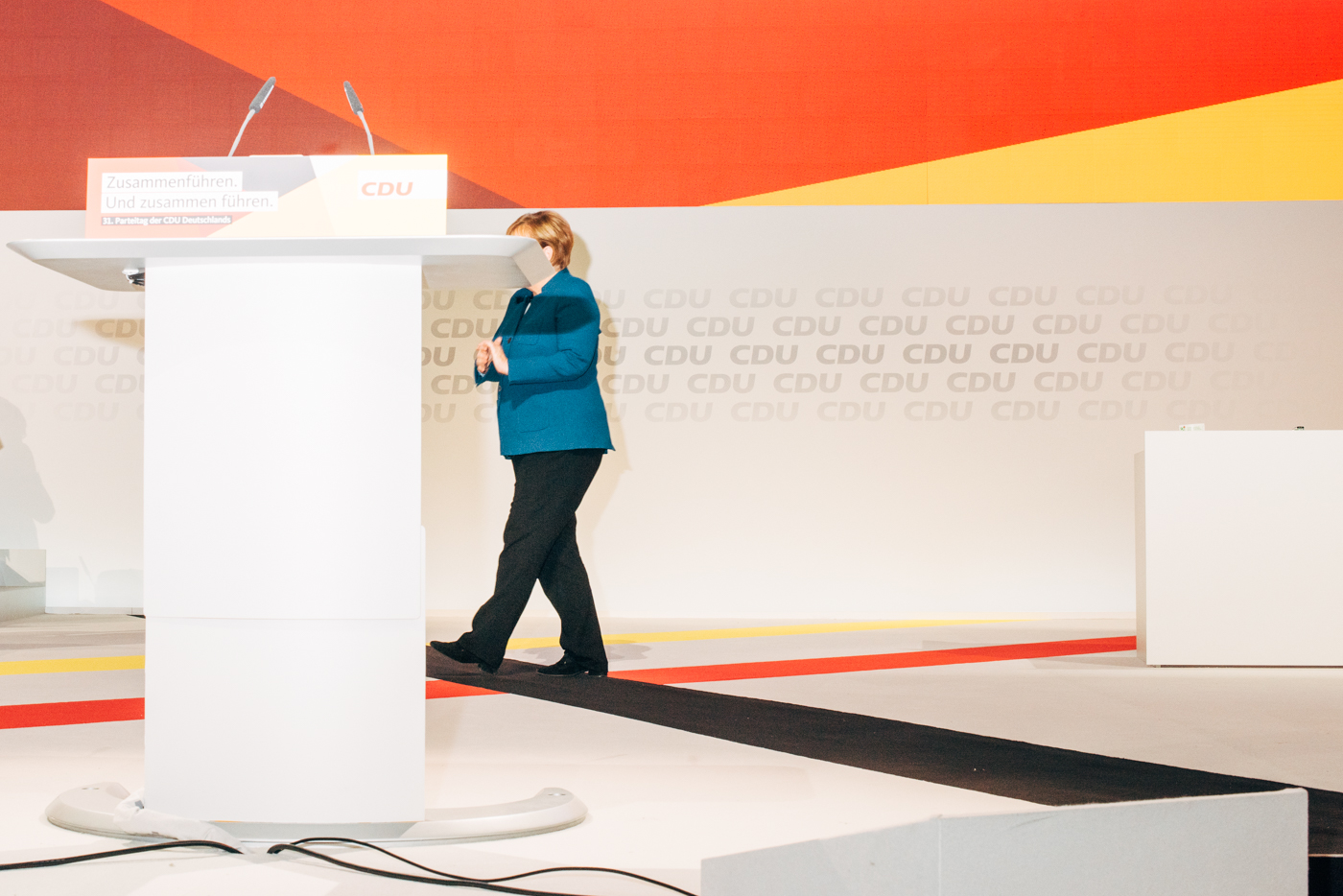
This is where Nikita Teryoshin comes in. Nikita is a master at defusing the pomp and circumstance of political character actors. Likely closest to Christopher Anderson on the aforementioned list of agitators, Teryoshin relies on a humor that destabilizes the visage of politicians. He uses, as Martin Parr before him, flash in a way that plays with deep shadow, but also hyper-saturated color, a delivery system that speaks the language of editorial work, but that simultaneously denies the subject matter through what would otherwise appear as an amateur fumble by cutting off heads of state, members, and parliamentary figures through the flashes’ overreach as the cameraman perches behind objects that cast shadows. His previous book, Nothing Personal: The Back Office of War (GOST, 2024), exemplified this type of shooting by following the inbred heads of the military-industrial complex at their trade/wank fairs, where they sell their wares of murder to each other’s citizens over canpoes and cigar-sucking escapades. J.G. Ballard could not have made it up. In the book, Teryoshin slices and dices, murders these hypocrites with the use of his flash and quick eye, allowing heads and body parts to be dislocated, disembodied, and disassembled in frame, suggesting a reflexive way to view the subject matter at the fair as the inevitable conclusion of the pornography they peddle, albeit in humorous, absurd form. I am waiting for the big tech follow-up, but maybe simply visiting the Palantir offices will do just as well.

CDU-Bundesparteitag 2016 in Essen
With his new book Game of Chairs: Splendors and Miseries of Federal Party Conventions (Pupupublishing, 2026), he returns to take aim at German Federal Party conventions. If you have not been paying attention, German political life is moving at a rather awkwardly fast rate, as it cannot decide whether its shame over the last 80 years is worth starting a new war with Russia or whether its continued assault, with its third genocide in tow with the Palestinians, is more worthy of investment. The rise of the far right, with all of its Hackfresse contradictions, is destabilizing the connectivity to Brussels, and the Merz and Von der Leyen dance party is being threatened with a bad time. All of this makes for unusual viewing, and one can’t help but think that, instead of mandatory suicide conscriptions in a flagging economy, ironing out malady through some form of diplomacy could better fit the sagging developments of a post-ecological, post-human world in which Ukrainian drones land elsewhere than at Leipzig airport. These humans can be so tiring in their pantsuits and dodgy organ-harvesting dreams.

CDU Bundesparteitag 2016 in Essen
Teryoshin continues to document the absurd and macabre spectacle of these conventions. I am still in awe that they let him get away with it. Perhaps the press editors they employ are so backward in their optics that they think he is just a shitty photographer, not building a veritable archive of the times we are forced to endure. Either way, what is apparent is that Teryoshin’s ability to put an image on top of the spectacle that showcases its true nature, the duality between its real purpose and its facade, is worth scrutiny and celebration. It may not change the shape of the bottle, but it certainly aids in the cracks in its hard-won surface. This is an excellent second volume to Nikita’s more brazen political coverage. It’s AI or bust next, buddy. Maybe the antichrist will get what you are up to. Highest Recommendation.

CDU Bundesparteitag 2016 in Essen
Nikita Teryoshin
Game of Chairs
Pupupublishing