Slightly enamored with the idea of architecture in photography, a clear use of terms that suggests photography to be the primary category of assessment over architecture, I have found myself leafing through books devoted to Hélène Binet, Joachim Brohm, Andrea Gehrke, Lucien Hervé, Karl-Hugo Schmölz, and others who have made architecture a central subject matter within their work. I cannot say exactly what the pull has been other than I am interested in how space becomes subject matter and how we, or more presently, I may have taken the subject of architecture too lightly in my own pursuit of photography.
Buildings, if you like, are phenomenally interesting to the human experience. They are often taken for granted, as is the experience of passing through them, as well as the way they become a significant part of our daily landscape. In some ways, I suppose that I might even be suspicious of architecture because of this. I am curious about how we shifted, in a very short time on the human scale of events, toward glass-and-steel citadels without much discussion as a society. Perhaps I missed these discussions, born too late outside the burgeoning sky race of modernism, but I am still curious about why it is not a larger part of our conversation.
With this in mind, it is essential to clarify that I do not view architecture solely in social terms. I am interested in their capacity to be understood both as symbols and as forms. I think the latter is easier to delineate a response to, being the sheer physicality of most architecture, and that much of architecture is discussed by its shape, if not outwardly, its function. In fact, many buildings are seen more than they are understood. The way they shepherd people through corridors, the way sound deadens in certain spaces, and the way light cuts the space from windows and material absence are vital aspects of understanding the form of architecture, and often photography is employed to understand these elements. Photography is an effective tool for such exchanges, as it allows light to intervene over time, giving shape and form to its circulation.
Thinking through the notion of symbolism in architecture yields many possibilities. Genres of architecture, such as vernacular and functional forms, if cosmetically pastiched, can often elicit a playful, humorous form of consumer signaling that pivots architecture toward its blatant relationship with transaction. The easiest examples of these can be found in restaurants that feature their goods on their frontage, a donut-shaped building front, a classic drive-through, or an atomic age McDonald’s, which signals progress through fast-food culture. These symbols are largely on the wane in the 21st century as attitudes toward architecture are less playful and more antiseptic.
Other forms of architecture reflect ideology, the easiest of these is Brutalism, but also the skyscraper itself, with its sky-penetrating, babel-like forms that flex a supposed human progressivity, but ultimately ask questions about capital and the idea of defying horizons. There is a penchant for treating architecture like the skyscraper or brutalist church as a spectacle, seeing it for the magnitude it represents, without openly discussing how height and the sheer monolithic forms disguise its propoganda. These are the kinds of symbolism I might describe as loud.
As for the counterparts of these loud symbolic forms of architecture, I might suggest that utility and technology, as well as medical and biological architecture, assume a form that is often non-descript, passive, and that hides behind their facades the scientific and technological decisions that shape the world as much as, if not more than, their ideological architectural siblings. These quiet forms present an uncanny use of architecture that is not absolved of character, but whose countenance, much like the buildings found on university campuses, reflects the nature of ontology. knowledge, and offer less distraction within the outward form of the edifice. They are still committed to glass, brick, and steel, but instead of upward projection, they tend to sprawl across the landscape in vast quantities, consuming large areas of land.
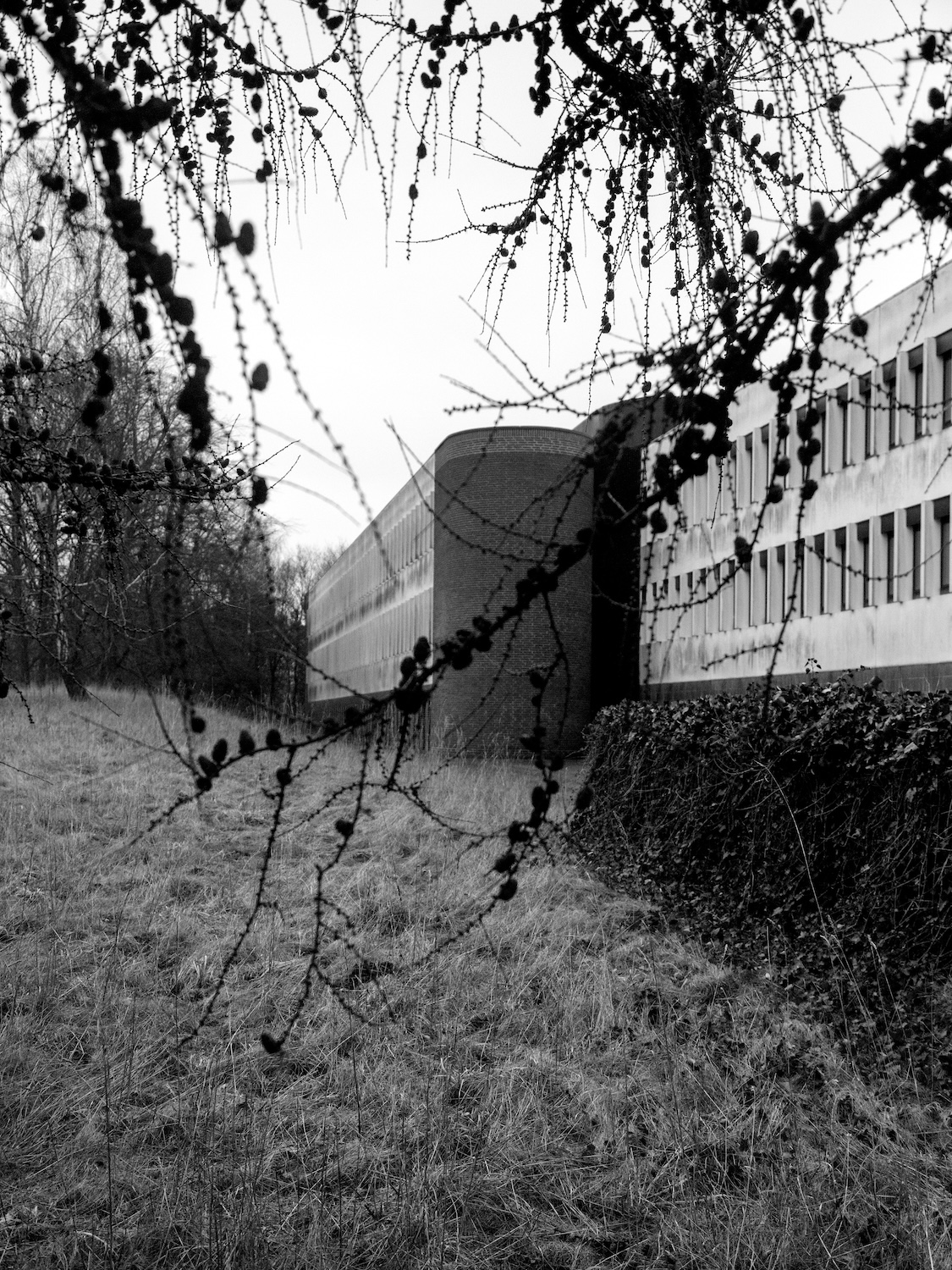
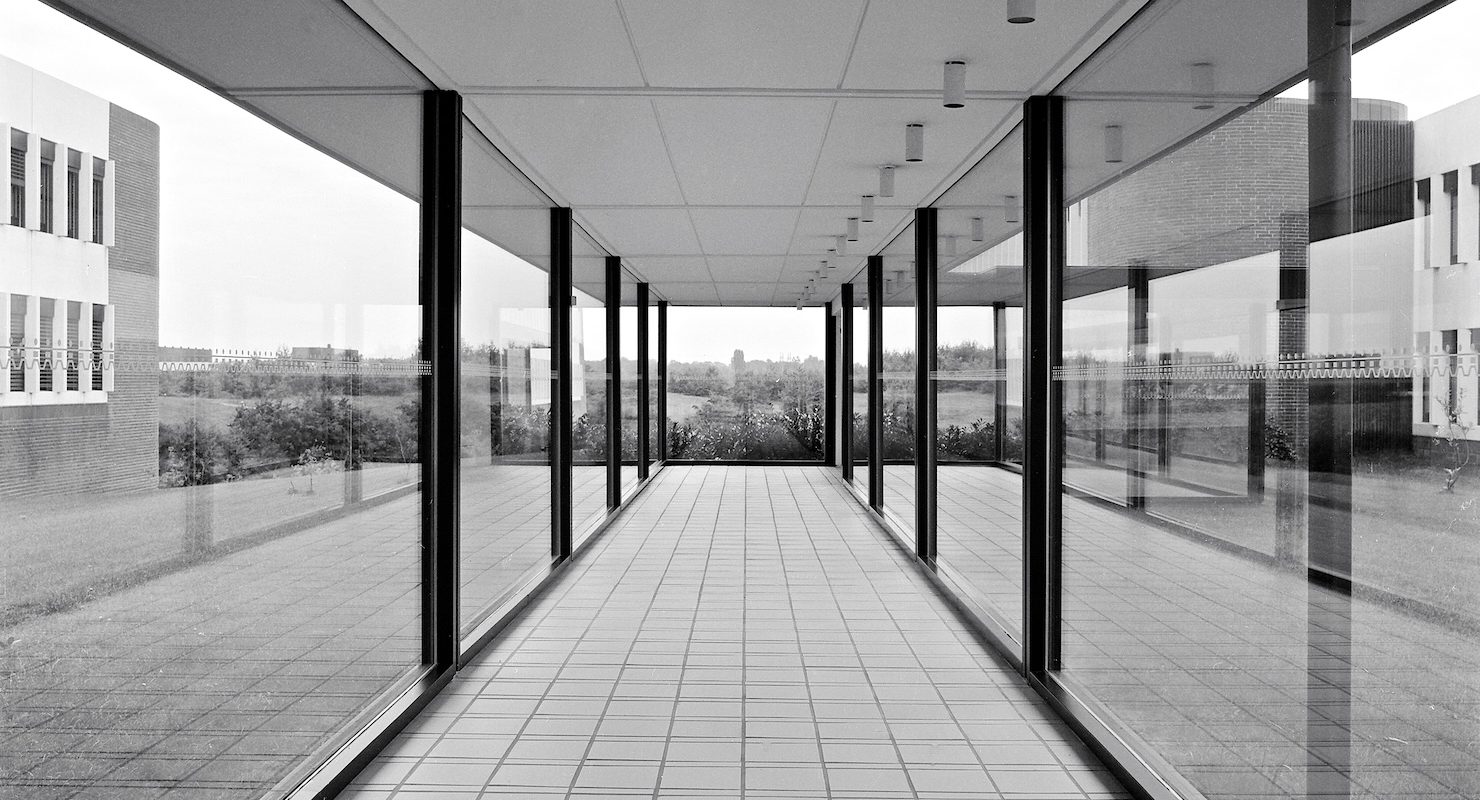
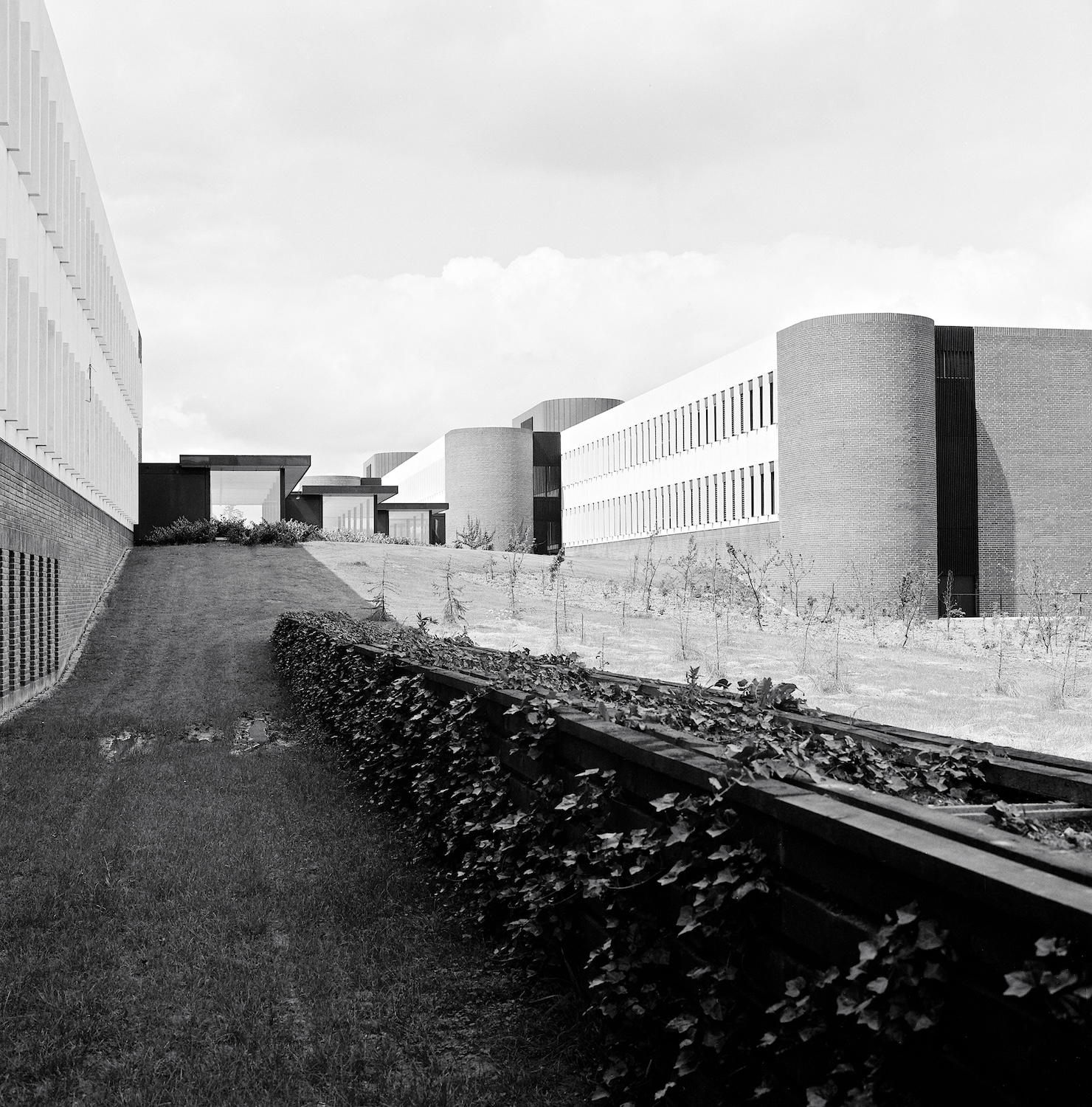
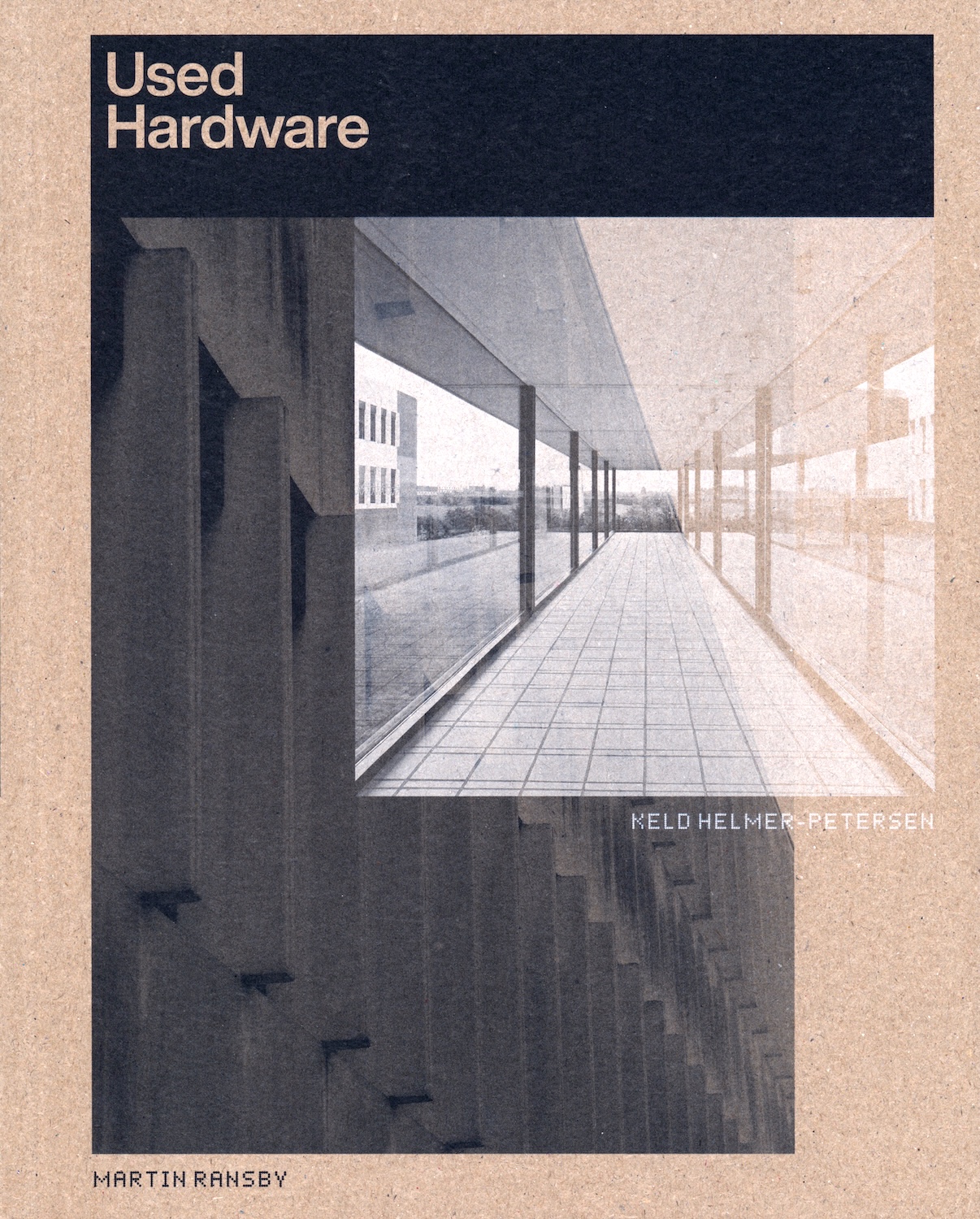
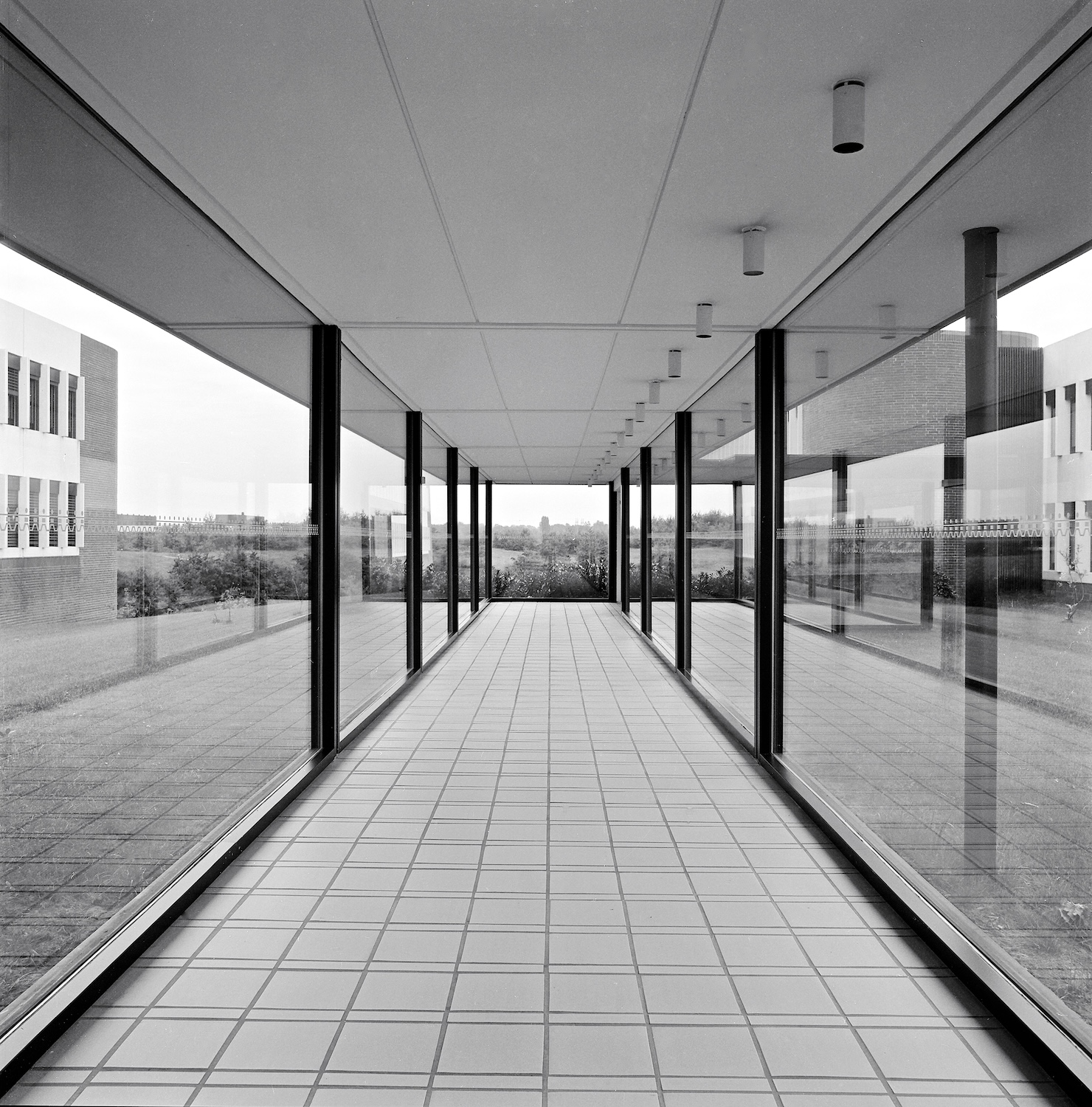
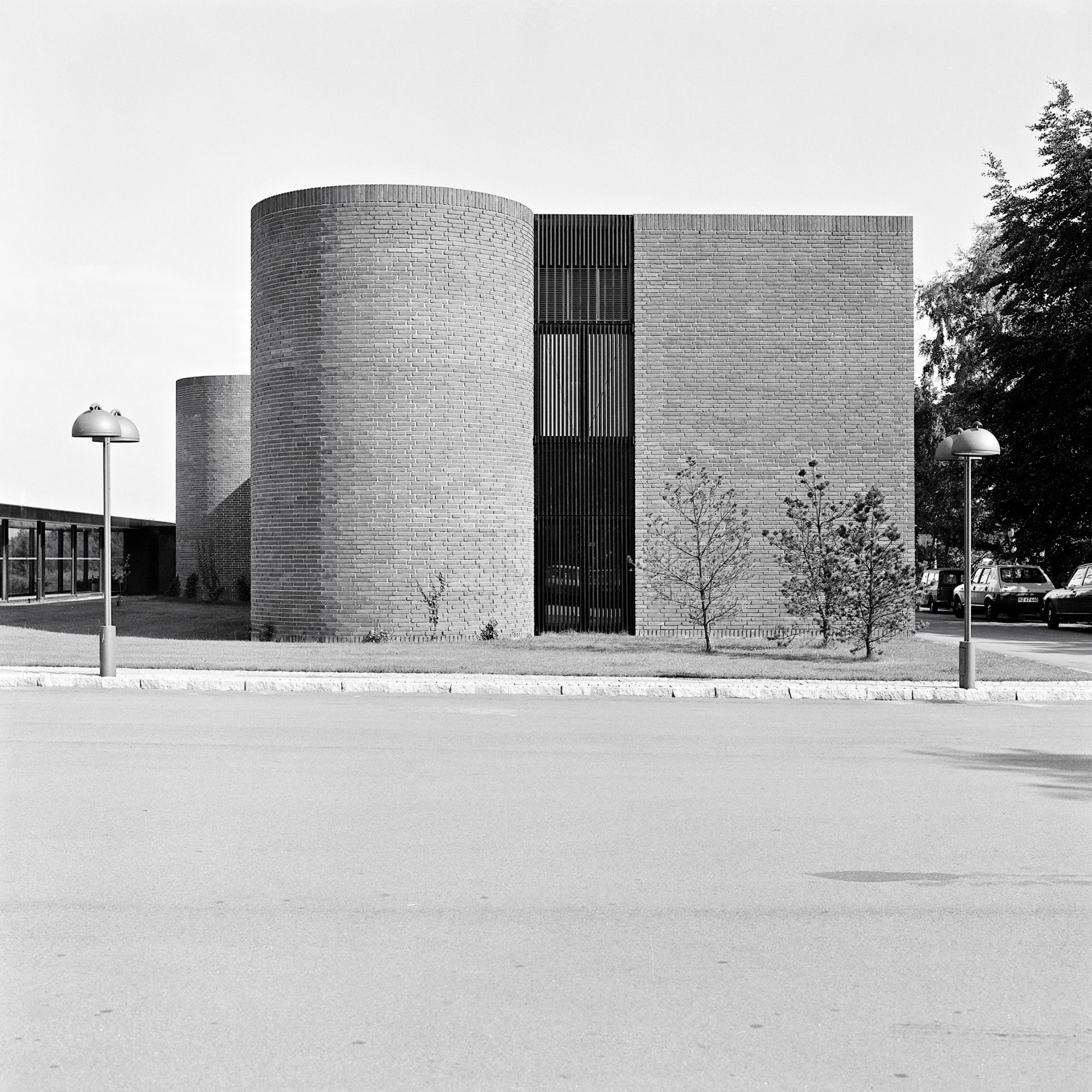
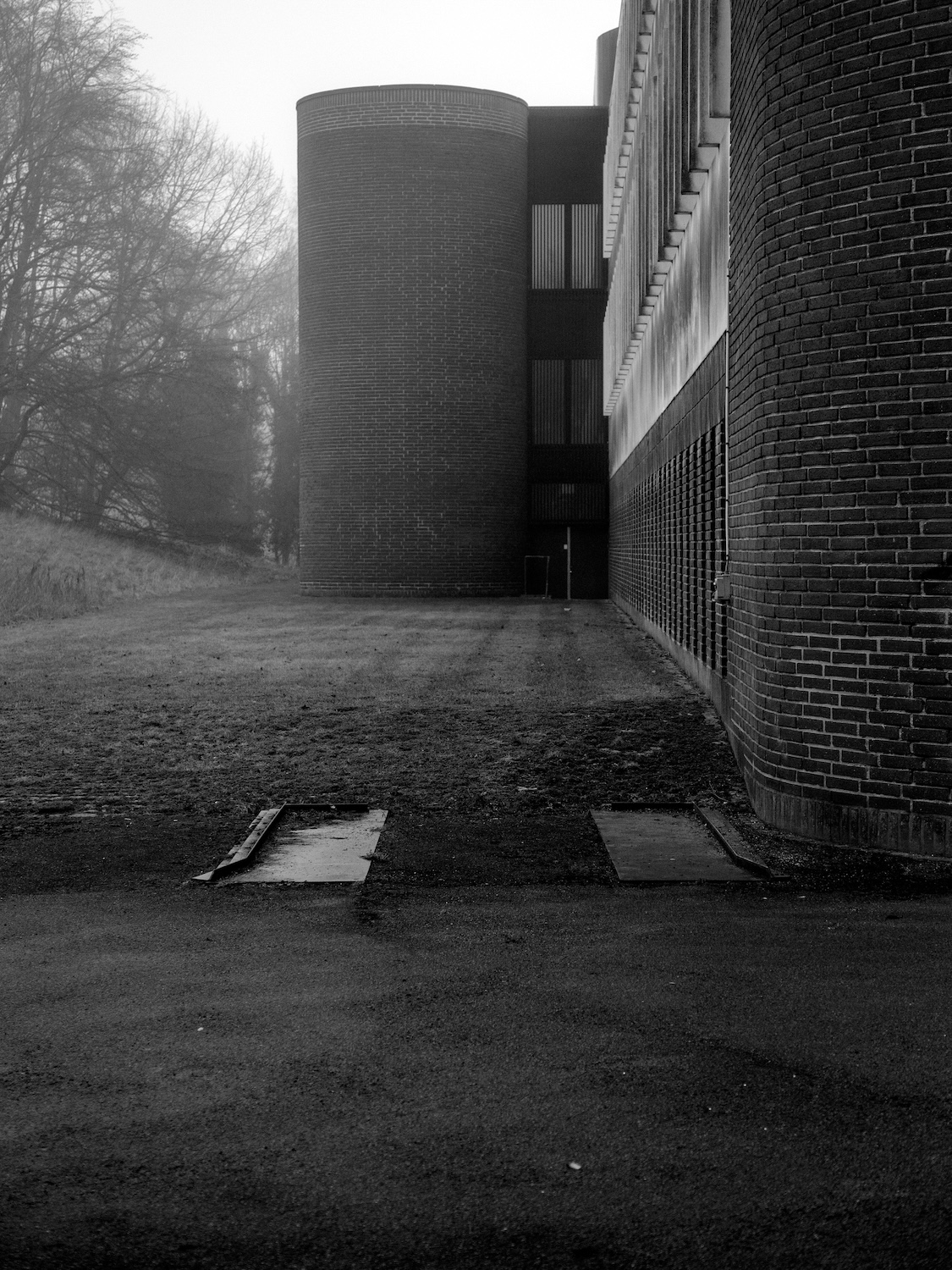
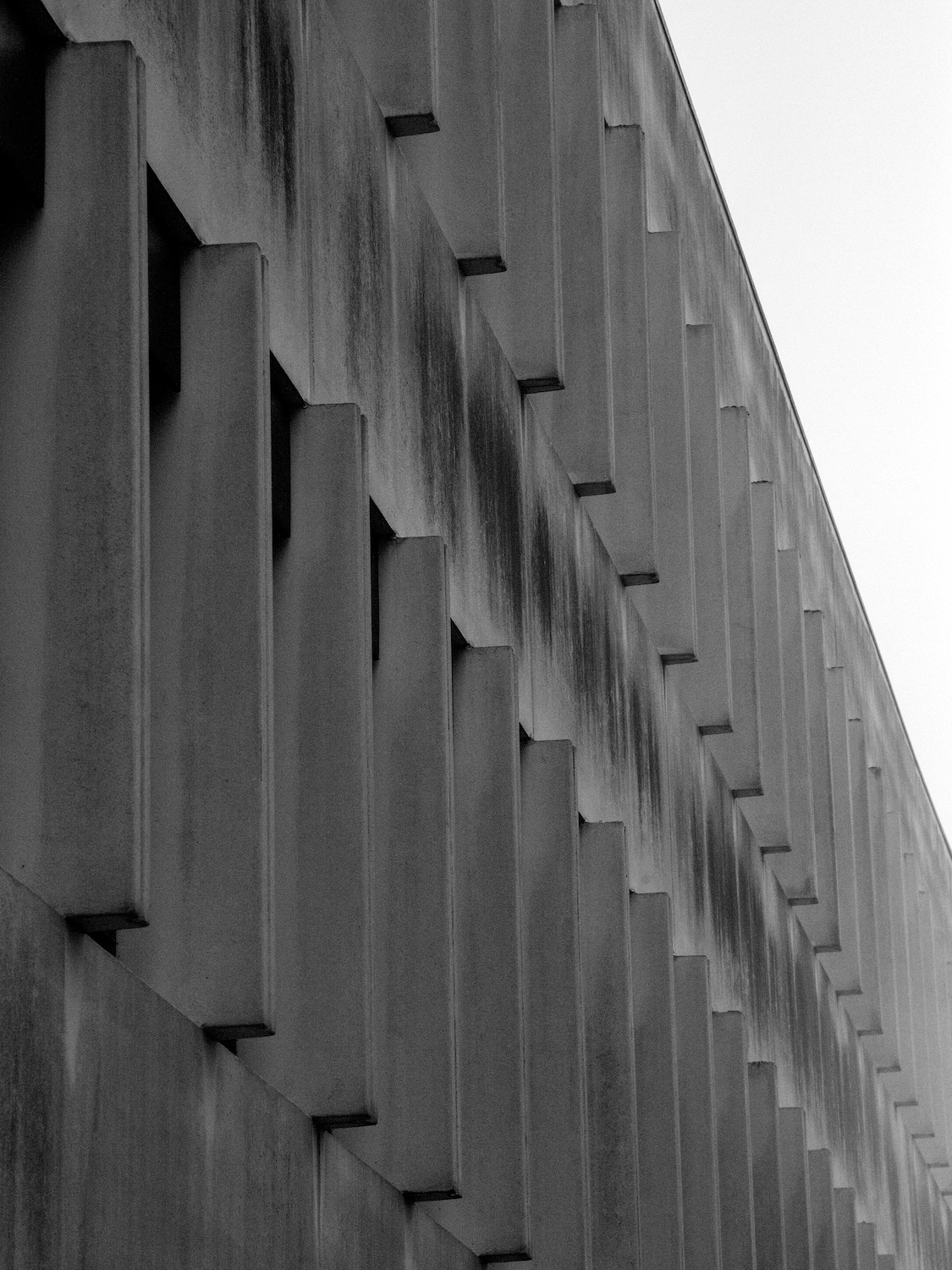
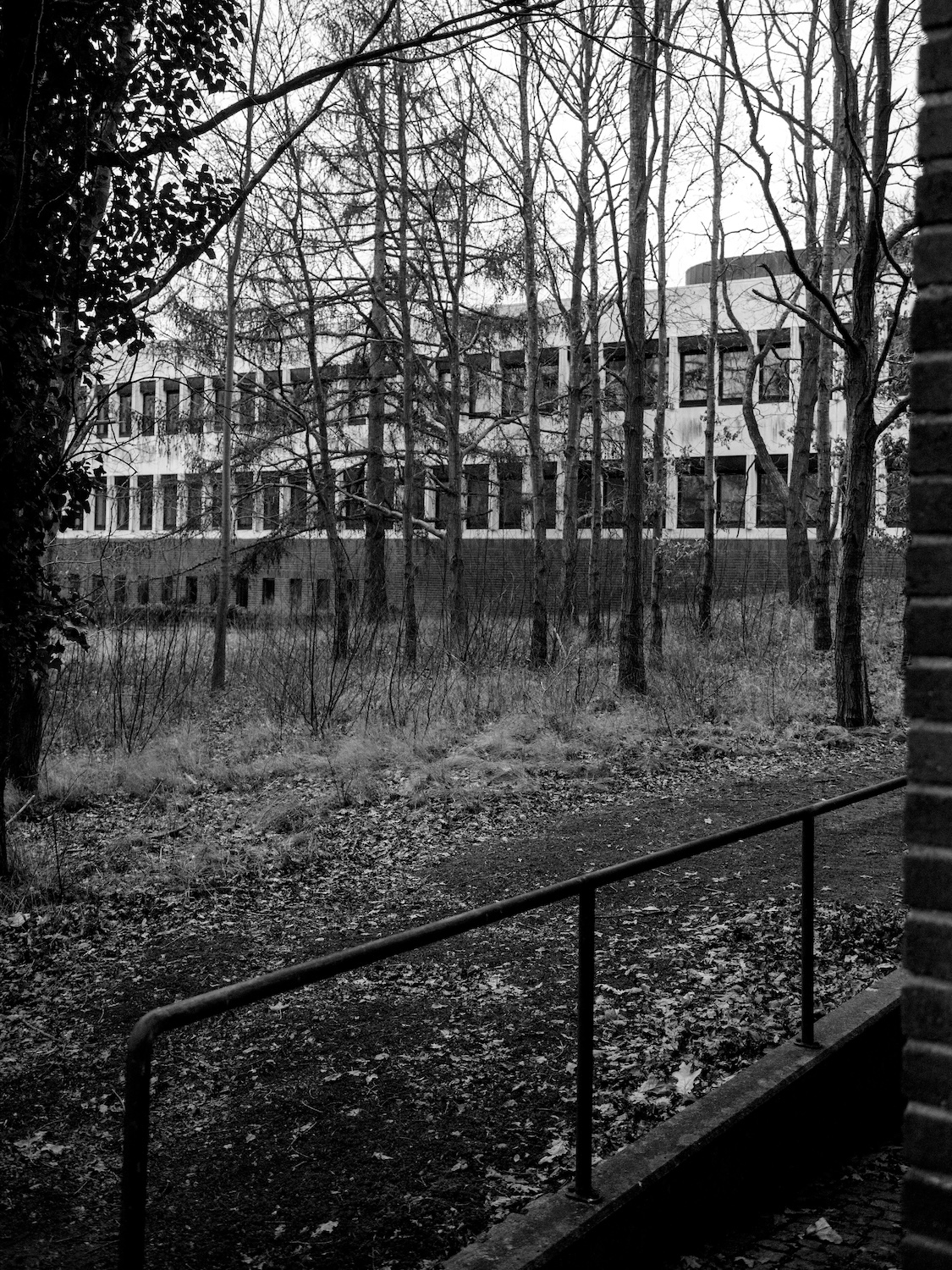
In this book, Used Hardware, published by Marrow Press, Martin Ransby has paired his photographs with those of the legendary Danish photographer Keld Helmer-Petersen. Their combined subject matter, seventy years apart, is the IBM building in Lundtofte, north of Copenhagen. Originally designed by Jørgen Bo, the headquarters of technology and computing has, since its opening in the late 1970s, become overgrown with weeds, and in Ransby’s pictures, it reflects the early 2020s, when many buildings were silent during the pandemic years. There is a cold, crypt-like feeling to many of his images, and pitted against the more celebratory opening ceremony/company photography that Helmer-Petersen’s photographs present, speak on what has come to pass over the intervening years, with questions about technology, labor, and ecology hinted at in the passing of time found in both artists’ photography.
In Helmer-Petersen’s photos, there is a feeling of hope, of futures to come. In Ransby’s images, there is a melancholic feeling of disuse: an unkempt, perhaps outgrown building that is not in disrepair but feels abandoned, the signal to the future on its way to being snuffed out. The artist paces the grounds, making long furtive glances at the facade before lifting his camera to document the dead-tech building. This type of scientific collegiate architecture also shares a bizarre kinship to the aesthetics of American federal architecture, with hints of utility and grandeur, ultimately surrendered to function. So, what do we make of these forlorn images that speak to techniology and architectural dead-ends? Symbolically, Ransby’s images suggest a change of optimism toward computing in the 2020s; a feeling of outdatedness presides, but what or who is being outdated is an interesting question. There is a feeling of the future being cauterized, cut short, and disabled. The wear of time is deeply embedded in the comparison studies between the two bodies of work.
There is an interest in these somewhat inoffensive types of architecture beginning to surface in contemporary photography that I find intriguing. Recently, in the work of Dillon Burns Robert, the artist has taken on looking at shuttered campgrounds along the Eastern seaboard and has made incredible images that share a similar structural thinking to Ransby-the emptiness, the observation of what may otherwise present as quiet, if not at times banal architecture that belies something much more polarizing under its facade with questions of education, knowledge, and utlization all in question.
Without a doubt, one artist who is sensitive to these questions is German artist Andreas Gehrke, who has also made a book about the IBM campuses in Germany and whose extensive body of work questions sites of power through their architectural elements. There is a liminal (yes, the word applies mostly to architecture) feeling in all three artists’ works, one that presents a type of familiarity in tandem with the feeling of the uncanny, one that suggests something being slightly off in these spaces. It presents as a type of horror vaccui, though it is contained in or around a space that is depopulated and teeming with questions of emptiness.
What I find most interesting about Ransby’s work is the combination with Helmer-Petersen. It gives context and shape to the passing of time, to hopes for the future, and to the world that has passed, in which technology was viewed through a progressive lens, which differs vastly from how we are beginning to examine it in the present. Regardless of the work produced during the pandemic, there is a sense that it also suggests something about our current predicament with data centers and the architecture of unwanted utility. The stop button has never pulsed brighter. Highly Recommended.
Used Hardware
Martin Ransby & Keld Helmer-Petersen
Marrow Press