
First published in 1975, Paul Virilio’s Bunker Archaeology has become a classic between categories of production. First and foremost, it is an essential book of photographs that typologically investigates the remnants of Second World War bunker armaments mostly along France’s Western coastline. These heavy structures, though short and squat, are impressive concrete-and-rebar boulders that sit along France’s beachfront. Often referred to as the Atlantic Wall, these structures provided defense against allied force in German-occupied France from 1940 to 1945. In the wake of the war’s conclusion, the structures, difficult to dismantle, were left on the Western seaboard of France, sentinel reminders of the trauma of war. Then, over the years that followed, something eerie began to happen: these guardian structures, with gravity’s suggestion, began to be dragged out to sea as the sand beneath them pivoted and allowed the tide to solicit the bunker’s gradual march toward the depths of the sea, where many of them lie in tumbled repose today, tomb architecture for marine life.
Second to this category of photographs is Bunker Archaeology, an impressive catalog of strange, almost vernacular military architecture whose purpose was revealed as short-lived but a persistent militaristic presence on the beachfront. In the book, Virilio begins what might be thought of as an early discussion he continued throughout his writing career: how power is situated in culture, on the landscape, and in the imaginary. His later work would address the role of art and war, and its effects rippling through cinema and the post-war condition. He would discuss the speed of the transmission of ideas and how fear works along the historical timeline, and where this point of accelerated deployment often intersects with our cultural lives during moments before and after war, with a late focus on the effects of the Gulf War and then September 11th on our collective consciousness. His oeuvre is a significant portrayal of the twentieth century’s key terms as they relate to destruction, progress, and architecture.
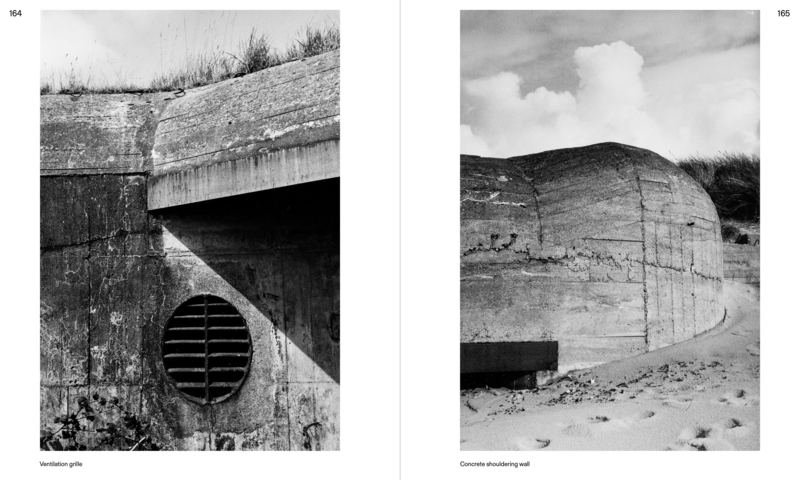
In Bunker Archaeology, he examines the architectural (Un)heritage of these bunkers and their relationship to power through the biography and design concepts of Hitler’s architect, Albert Speer, whose fundamental approach to the Reich and its architecture can be traced to this moment. The romantic idealism Speer sought through the Reich’s 1000-year imagined history had a great deal to do with his emphasis on the world and Germany’s culture as seen through its ruins, or through the Theory of Ruin. Like other great empires from Greece to Rome, the enduring architecture of these civilizations is still seen and idolized today, and Speer noted that permanence through material is one lasting way to manifest the ruins of a civilization 1000s of years later. Perhaps nihilistic, Speer designed architecture that would be seen as lasting, even in decay. Virilio picks up on this in the book and offers a material dissection of the bunkers and Speer’s history, and place within architectural tendencies, both in military and cultural terms. So, this is a book of historical architectural essays.
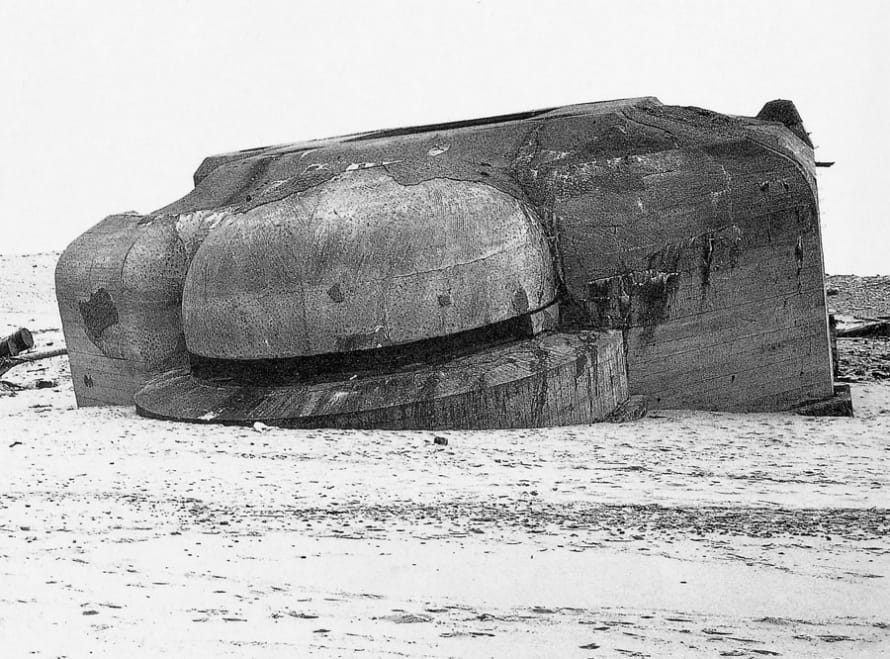
Finally, the book is a type of illustrated philosophical tract that operates between documentary photographic impulses and historical non-fiction, and that also expresses Virilio’s nascent fascination with the terms listed above. Virilio would go on to discuss these and other concepts, such as dromology, or the logic of speed, in his future works, which he can be seen now as ahead of his time if we relate dromology to the Information Age that he also spoke about, and the militarization of everything. So, this book represents a coherent and exceptionally well-executed genesis or bedrock for Virilio’s thinking. In many ways, Bunker Archaeology is both of and ahead of its time in understanding the dynamics of archetized power in the world in which we currently stride, amongst ruins, war, and the elemental discourse of forced control. It is timely, situated along the historical timeline of our forever wars.
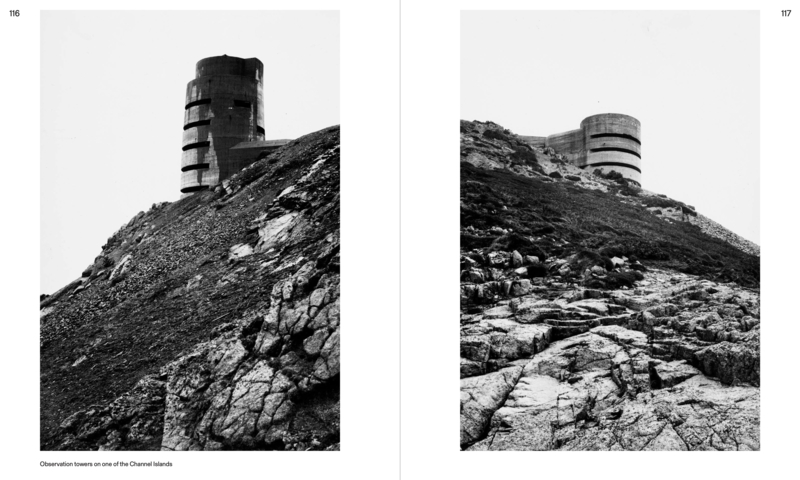
Spector has done a fantastic job of making a new version available. Wherein, I have three versions of the book, I believe there are 4-5 different versions available in different languages. What the publisher decided to do with this timely edition is to keep its form as close to the original as possible, while also giving it the grace of hardcover permanence. Whereas subsequent editions were able to convery the information necessary to keep the title in print, they were often of smaller format and aimed at the critical community of inteligensia, which is not implausible, but it deviated greatly from communicating the phenomenal photography that underpins Virilio’s discussion in favor of metastisizing its conveyance into an academic treastise, which eludes the casual viewer from wanting to pick it up for a look.
The new version presents as authentic with all those discussions in mind, but also gives the impression of a book of visual communication that is equally relevant. At first, you feel like you have an architecture or photography book in your hands, then upon opening, you understand that it is informative and wider without crutching the discussion into unnecessary abstraction. I am certain that this is the right way to view the book, without being able to ask Virlio who sadly passed away in 2018. This suggests a willingness to expand the territory or these topics to a generation of individuals who might not have seen the book due to the first edition’s scarcity or the intervening objects’ lack of the visuality associated with the original book. Placing the reprint in Spectoir’s catalog makes perfect sense given their ability to navigate the terrain between politics and art.
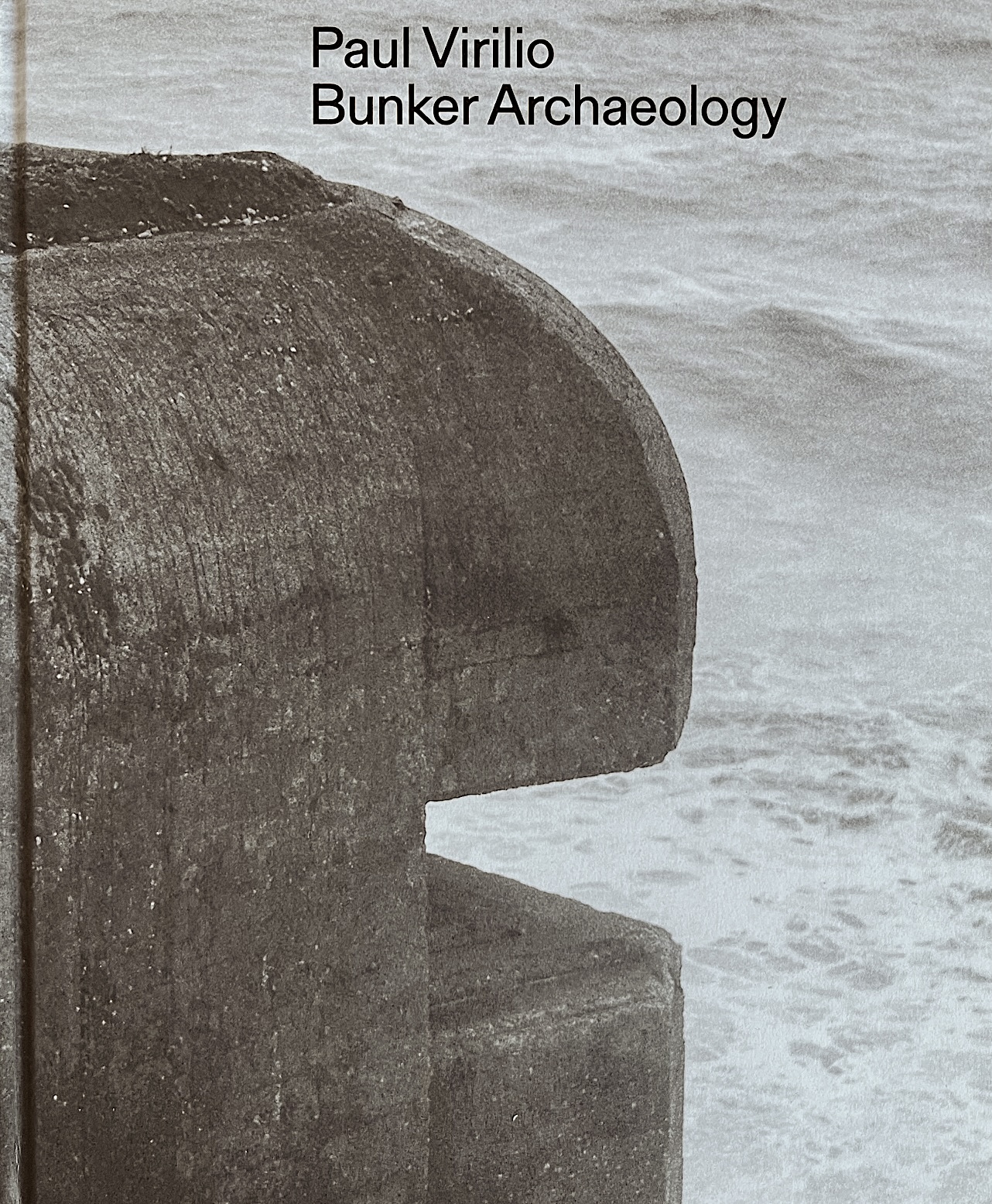
I could go on about this book for some time, as it has been a key influential tract on my own work, and has inspired generations of image-makers to make work that is effectively a poor stand-in for the original, though worth noting is Jean-Paul Gautrand’s book Forteresses Du Dérisoire, published in 1977, which examines the same structures albneit in a more sculptural, non-architectural light and from a decade after Virilio completed his project, but only two years after Bunker Archaeology was published. More recently, Noémie Goudal’s science-fiction-like approach to the same bunkers Observatoires may be seen as one of the more inventive ways to engage with the bunker objects, as opposed to the myriad of other projects playing to lesser or greater degrees with the same topic. The new book is available in German, French, and English. I cannot recommend this book enough, nor can I commend Spector enough for their execution of the material! Get it!
Paul Virilio
Bunker Archaeology
SPector Books