
The life of Sarah Schumann should be much better known to the world. As a proponent of the New Women’s Movement, a talented painter, collagist, designer, and all-around life of post-war intrigue suggests a profound tie to the German movements of the mid-century, and yet, like many artists, particularly female artists of the Twentieth Century, there is, until recently, a disturbing lack of recognition of her talent. To be clear, we often associate these histories as somehow hidden or secret when in reality they are marginalized, forgotten, or shelved for the sake of male voices. That is quite clear to anybody examining the history of art.
With Schumann’s Schockcollagen, or Shock Collages, produced between 1957 and 1964, there is a remarkable series of subjects to ingest and discuss. First and foremost, it must be recognized that this was not the only work she was producing during those years. There is a long line of output in her work, extending before this and continuing after her period of collage-making. At the same time that she was producing these fierce collages, she was also dabbling in a body of abstract color painting refered to as The Informels, which suggest, like Hilma AF Klimt before her abstraction as a basis to discuss spirtual condition and perhaps hermetic ideas regarding alchemy, the body, and the trauma of the “civilized” world that the artist grew up with in a war-ravafged Europe. Those paintings, in particular, are an inseparable and fascinating bulwark of the images in her Schock Collage series for a few reasons. First, the abstract paintings are devoid of subject matter, playing more toward a Kandinskian approach to abstraction, limiting the sibject for that of color field projections.
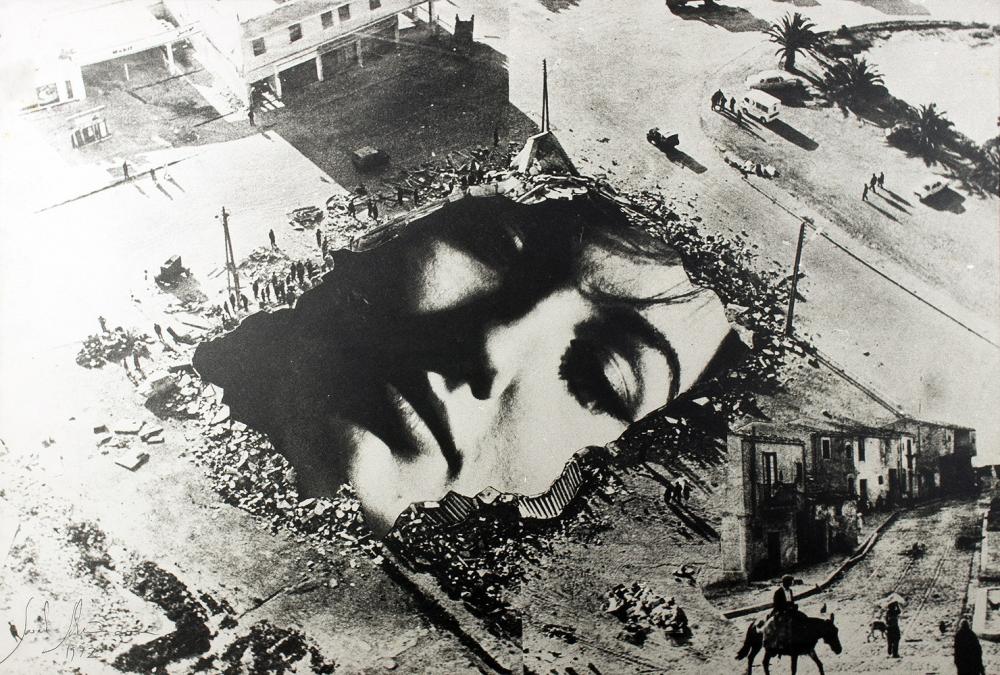
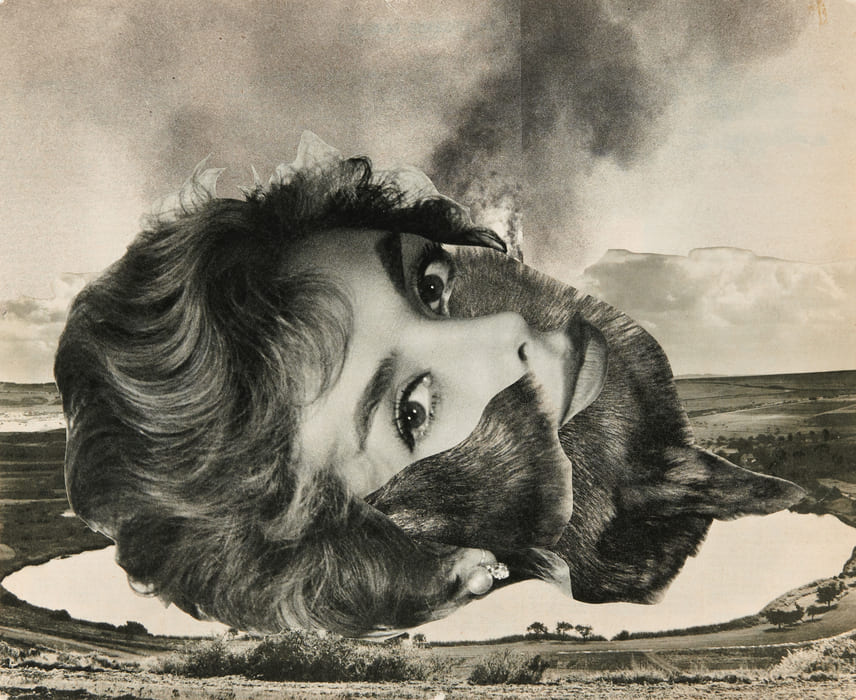
In contrast, the shock collages, at their heart, play the lucid uncanny dreaminess of the body coupled with a hyper-subject matter in their use of the body. There is a heavy feminist suggestion to the work, but it is counter-balanced with a graphic feeling of nightmarish violence with snarling hounds, cut bodies, and grotesques synthesized through skeletal remains and twisted flesh cavorting as if referencing the body at odds with its environment. Though much opinion has been placed on her choice of lifestyle, lovers, and deep relationships toward the feminist movements and same-sex arrangements and open marriages, what strikes me more than all the identity weave of retro-fitting historical biography to appeal to current trends is the deep anger and anxiety of the work that is reminiscent of John Heartfield, but on steroids.

Fierce or perhaps feral are the words I think of when I regard her work. I see her work in line with Hannah Höch, but with much less playfulness and a more direct suggestion of violent form, more reminiscent of works by artists in the wake of punk rock, perhaps Linder Sterling and Peter Kennard, than of feminist art alone. We can discuss the body as a proverbial battleground, but my take on her collage work with its hyper-subject prominence is a feeling of extreme abjection, both politically and personally. A deep and profound anger permeates the work, giving it a satisfying horror.
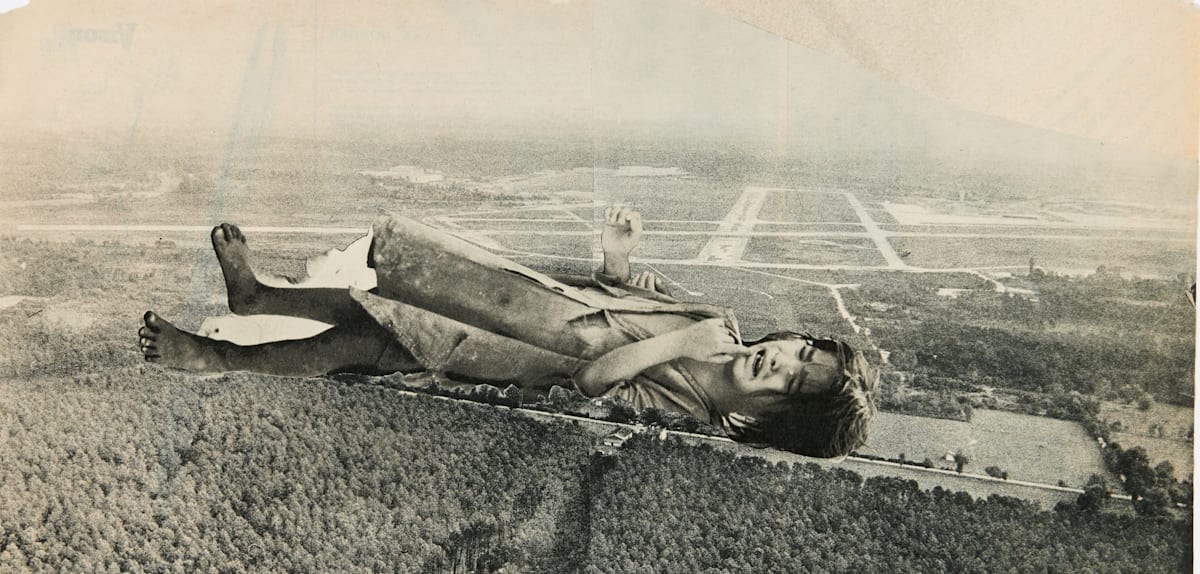
I reason that these colalges are not simply about feminism, thpough implicit, but that they extend the deep sense of pessimism in the wake of the Second World War and continue to hold their uncertainty and angst through the second half of the 20th Century making them incredible relics of a time that seems incumbent on return from the first quarter of the 21st Century, making their true hisoricity pertinent to their condition of political will and disatisfaction. Whereas this book offers great insight into Schumann’s history, I believe that in assessing the pictures themselves lies the value. They are not particularly ambiguous in their tonality, and I believe the context of her work is one of intense humanism and existential thinking rather than simply serving as an identity trope. With this stated, however contentious, I want to say that the publisher and authors have done a fantastic job in placing her career under the spotlight. This catalog is a perfect introduction to a voice that should never have been shuttered but should have been emphasized much earlier. Kudos to everyone involved.
A note on publishing. There has been a recent upward trend of exploring the canon of photography and its adjacent genres to find overlooked voices, and I am very much here for it. The canon of post-war art, as well as photography and subsequent movements and genres, is due for an incredible revamp. This catalog is one of the better attempts to bring this type of investigation to light. Along with the recent Harold Szeemann catalogs, I believe we are starting to undermine the established narratives in the historical timeline, and this is a great milestone in subverting the obvious. Highly Recommended.
Sarah Schumann
Shock Collages 1957-1964
Spector Books