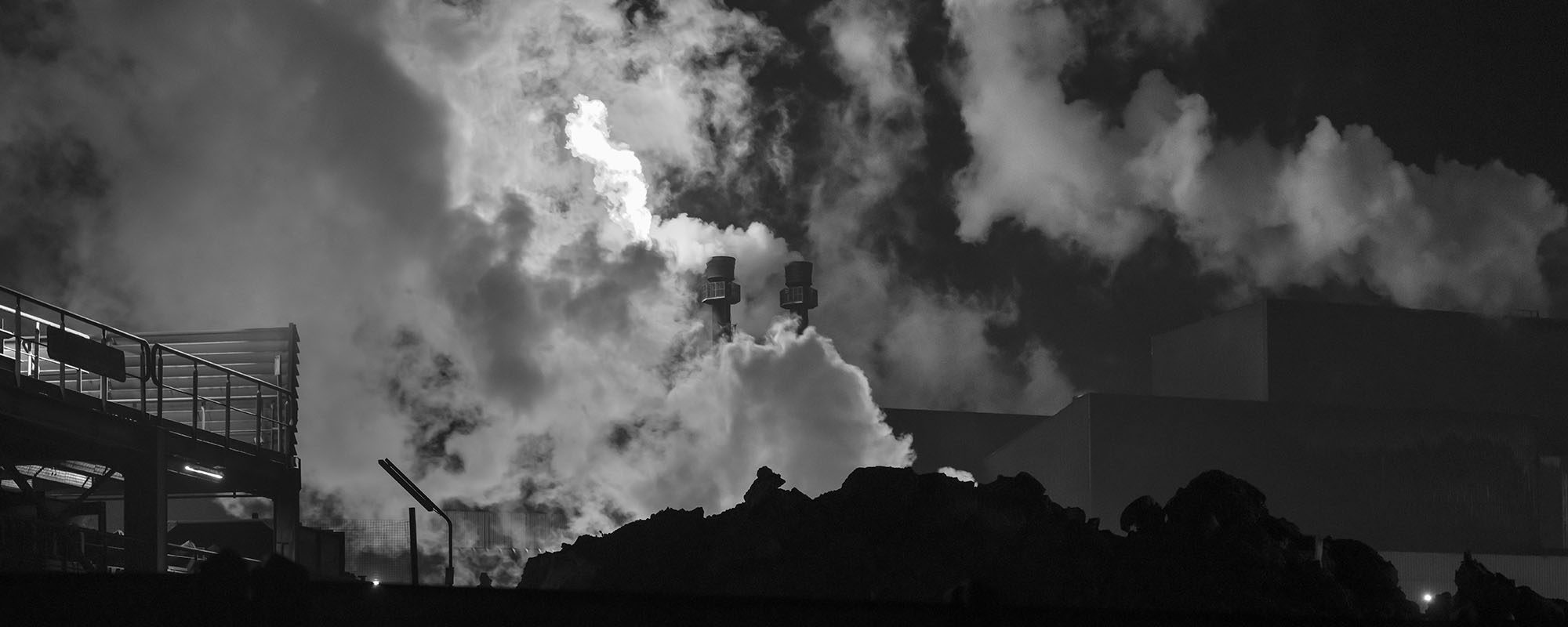
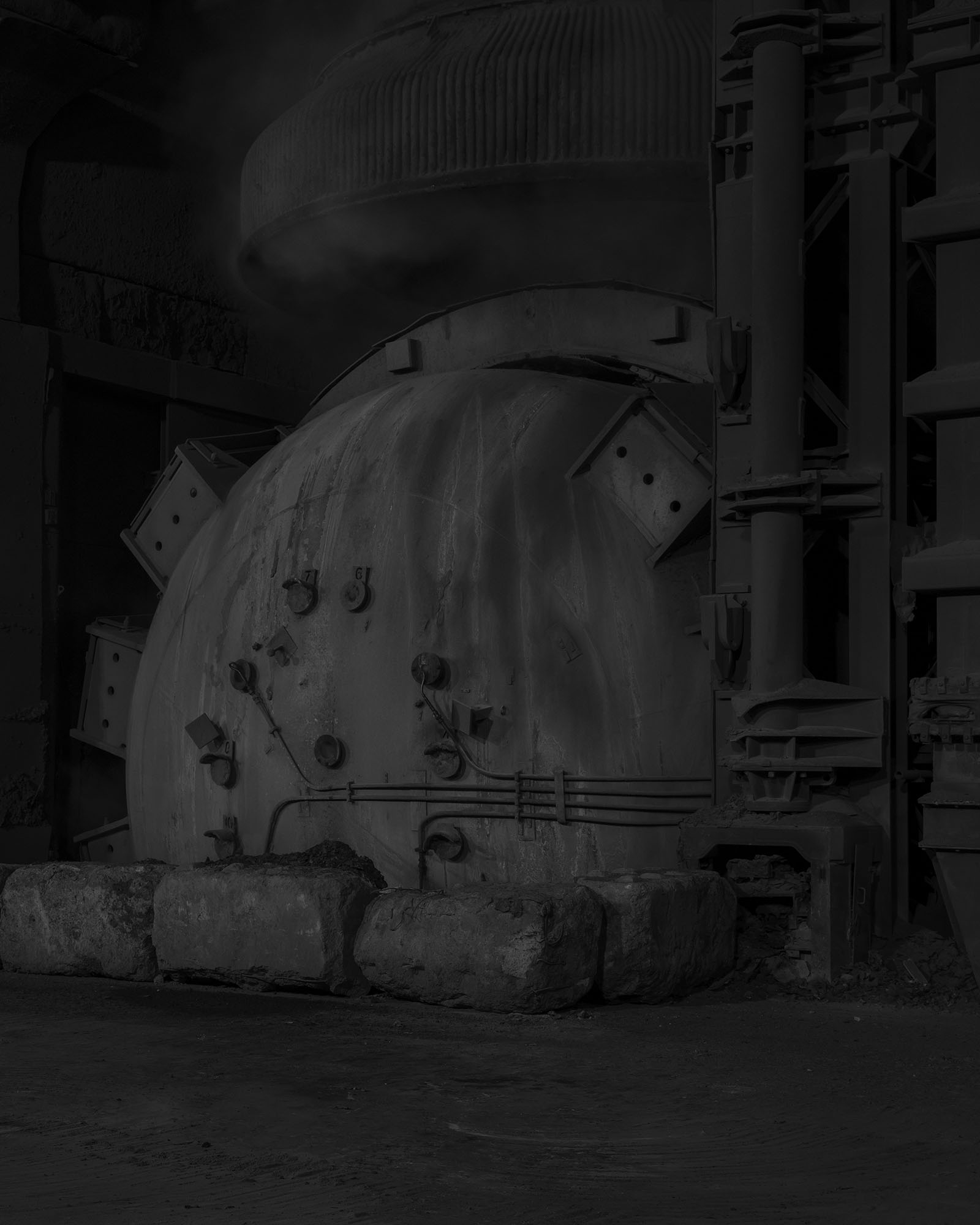
As if the war legacy of Dunkirk had not already been recognized as a pivotal shit eating point in its past, its charred hand to swollen coal-crusted mouth, poisoned by ethanol overload and toxic industrial habitat, history has now favored turning it from a battle-scarred historical footnote into a vast hellscape busy with killing off all life in its proximity. Perhaps it is facilitating a strong rebuttal from its war geography, a place of slaughter, to a place that slaughters, that finds its place, dotted along the black map of ecocide-friendly locales that we find our entanglement, a void-like continuum, a giant incinerator, here where we gloam and busk in its blackening light. One imagines the overused and overabused echoes of Orff’s Carmina Burana thinly reverberating off the sides of metal gas tanks, wires slapping iron girders in wet wind conducting a symphony of twentieth-century atrocity. A hum and crackle, a hum, and a slipknot…
O Fortunavelut lunastatu variabilissemper crescisaut decrescisvita detestabilisnunc obduratet tunc curatludo mentis aciem,egestatem,potestatemdissolvit ut glaciem.
waaa wah wa wahhhhhh bah ba bah bahhhhhh etc. cut to Excalibur, Glory, The Hunt for Red October, The Doors, Natural Born Killers, Detroit Rock City, Jackass: The Movie, Cheaper by the Dozen, G-Force, and The Devil’s Advocate. har har har harrrrrr
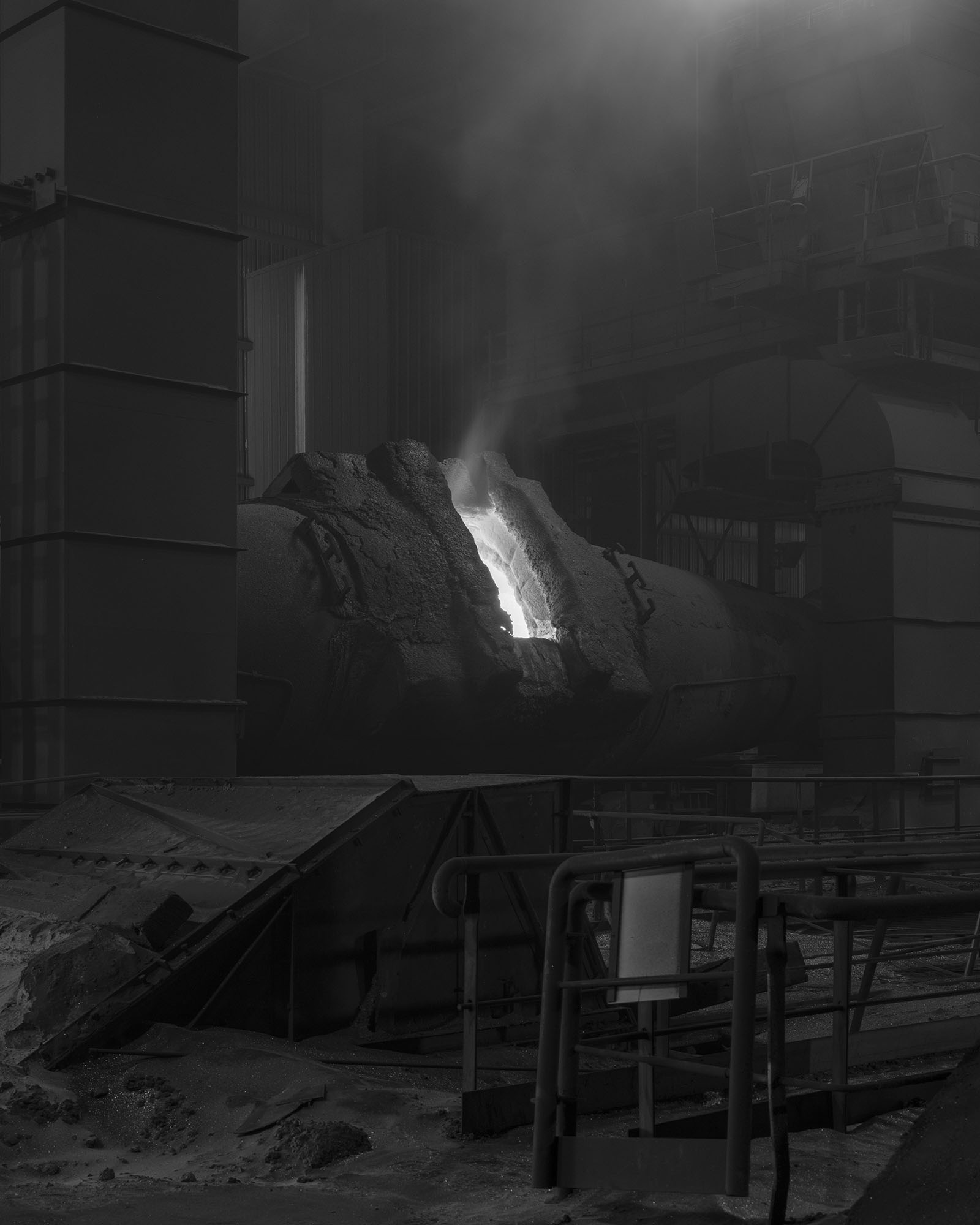
This age loosely refered to, with some abstract amount of zeal as the anthropocene is a dressed-up moniker for all the eschatological human desire to witness the end of something, a rapture, a rupture, a sick sense that God will punish us with physical trauma and death, only to exult us into the stratosphere, giving us a place in the white banquet halls of heaven. Of course, there are iterations of this religious attitude. We bear witness to this concept, this hyperobject of defeat, as we bear witness to (and are passively indicted in) genocide. Somewhere along the historical timeline, humans can’t get their shit together enough to stop the madness, murder, and abuse, yet here we are in the grand age of the apocalyptic sublime, staring down the carbon-encrusted barrel of sickness, trying desperately to navigate it toward our cake hole, with the promise of a significant payout. If you suck on the barrel of desperation long enough, everything looks like a beacon of salvation. How does one avoid a feeling of despondent inactivity in the wake of such a cataclysmic time?
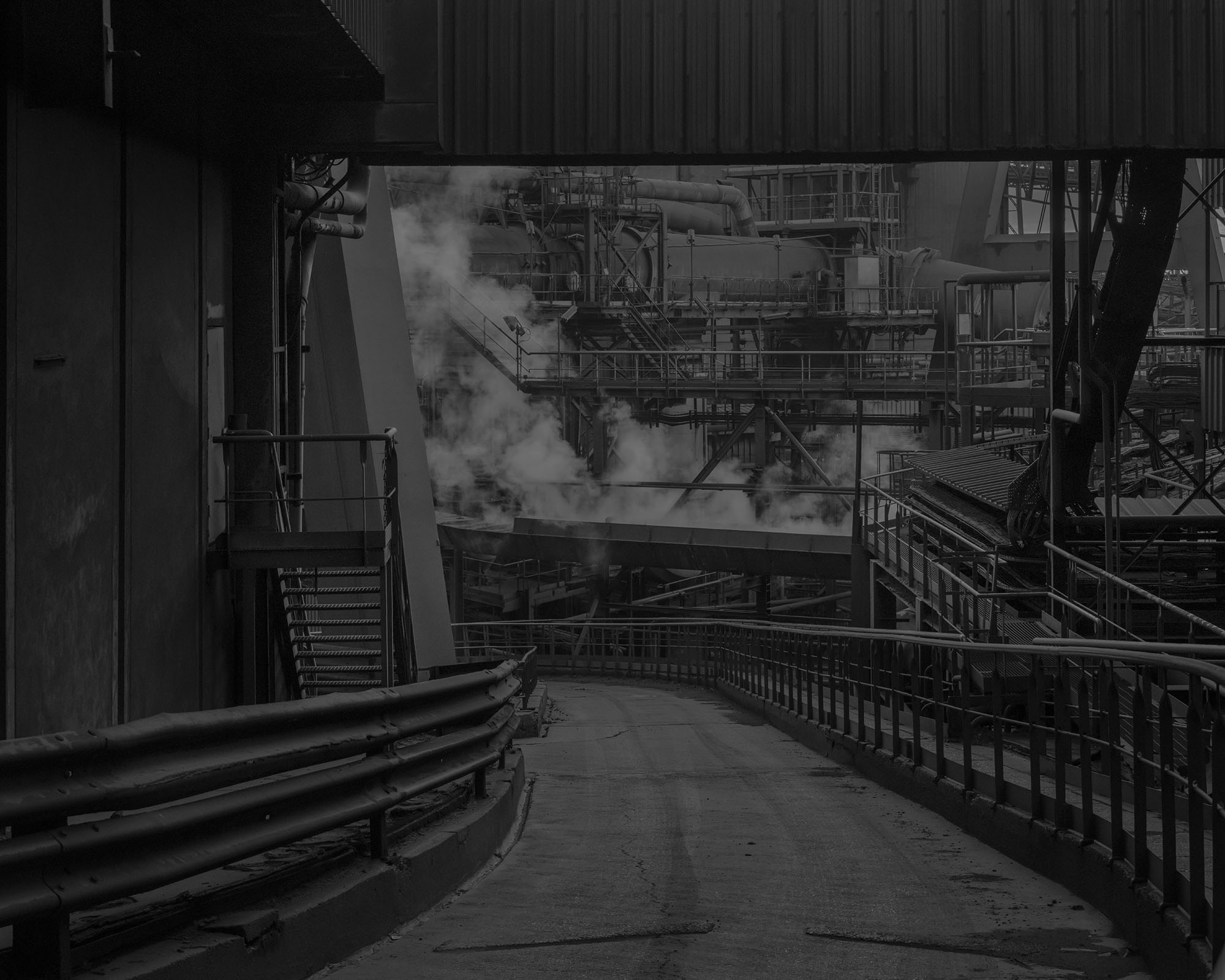
There is a history of extraction that photography has reasonably well mapped out. These geographies of extraction ultimately become a muse for photographers and artists. It stretches back to the 1920s and 1930s, with significant photobooks and photographs produced by E.O. Hoppe and Albert Renger-Patzsch, among others. This early pictorial addressing of coal and steel extraction would be followed up significantly in the 1950s and 1960s on the European continent and in America by Chargesheimer, Yves Auquier, Stephan Vanfleteren, Russel Lee, George Harvan, The Bechers, and, more recently, the collapse of industry in the post-industrial moment has been recorded by Olga Sokol, John Davies, Chris Killip, Bertien Van Manen, and others. Industry is epic. The scale of the extraction sites is large, alien, and is a space that photographers are drawn to, as it is atmospheric, spectacle-oriented, and a challenge to photograph.
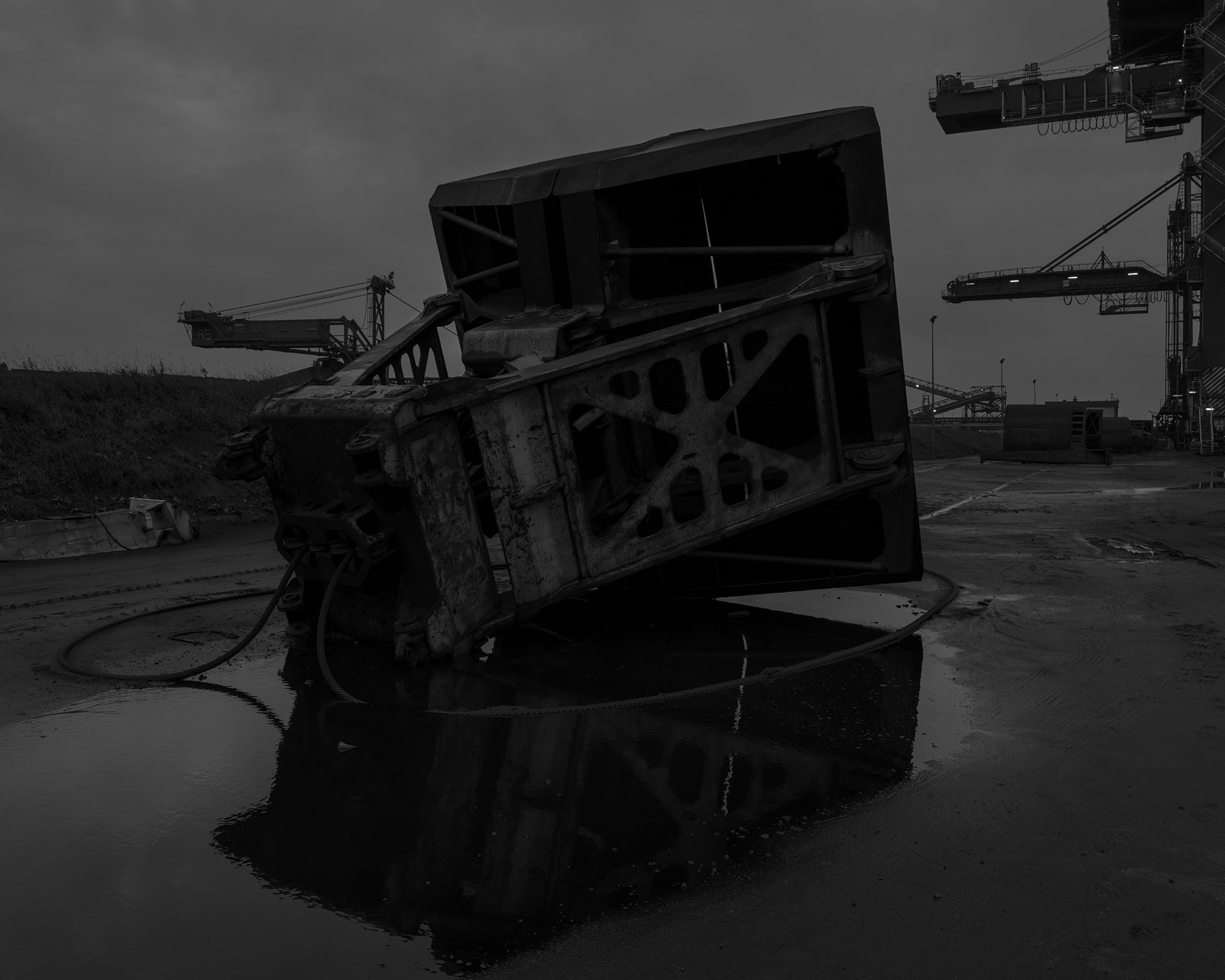
Having spent significant time on these sites myself, I can surmise that the draw, in its present tense, is the colossal spectacle involved. There is a sense of uncertainty in these spaces. The air is tinged with a significant smell of petrol, and the scent of metal and dust overwhelms, while the light bends through the edifice of such sites in strange, refracting ways. Resolving those factors is complicated by the knowledge of what goes on underneath one’s feet as they create pictures in such environments, where the earth itself is being hollowed out, and that vast tunneling and drilling continue unnoticed below the surface. Between the vertiginous and the subterranean, one makes their images of such spaces.
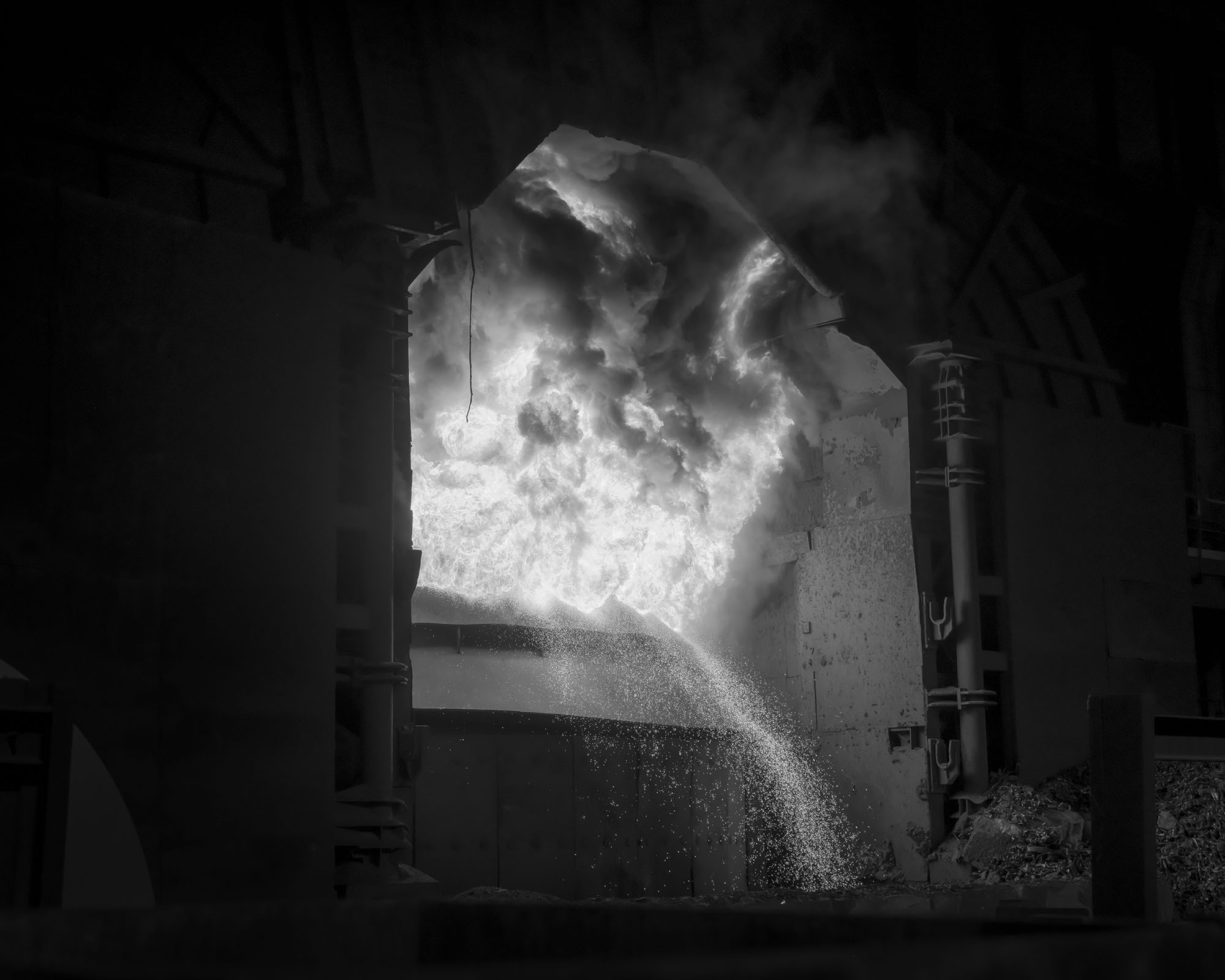
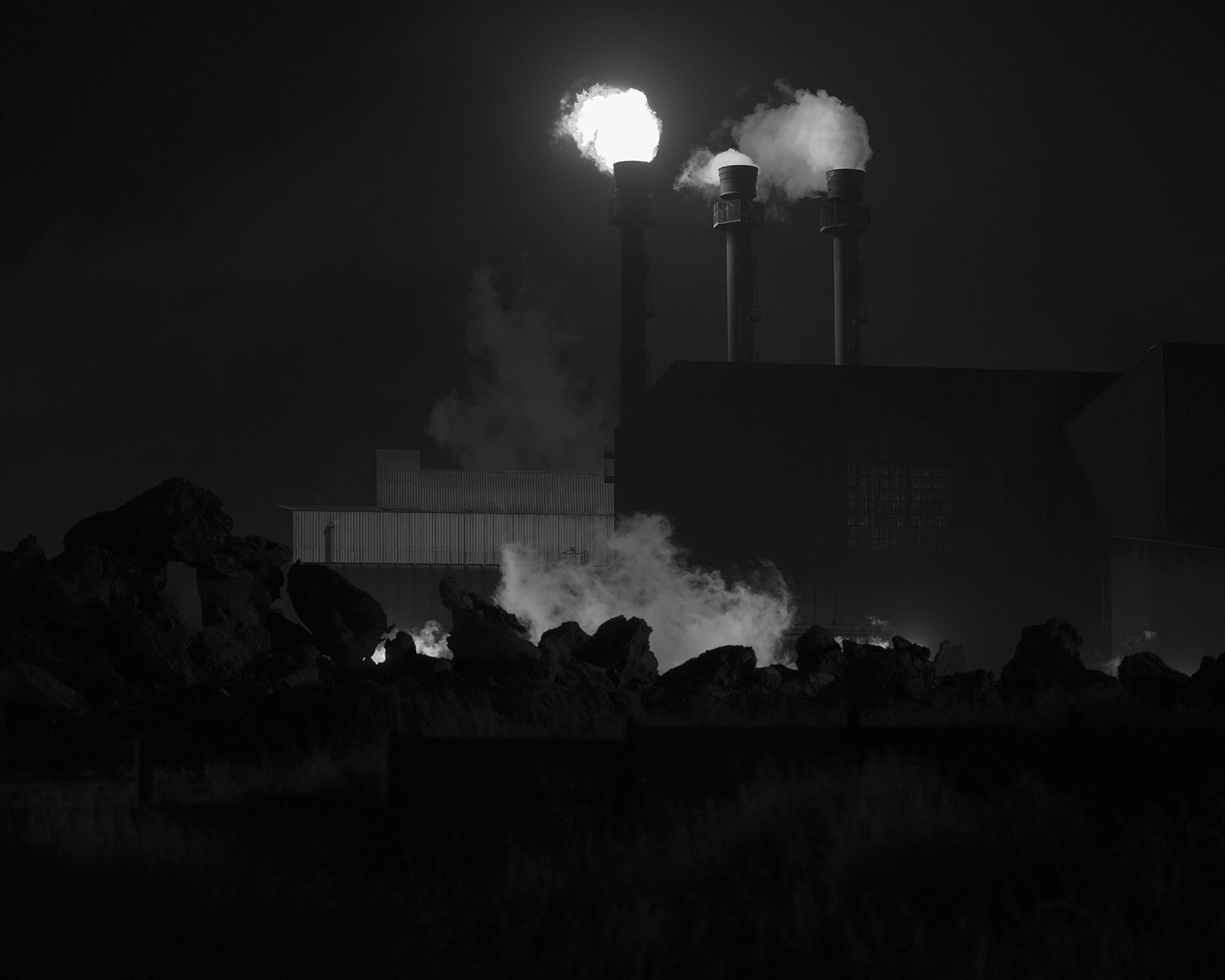
With Vincent Jendly’s One Millimeter of Black Dirt and a Veil of Dead Cows (Andre Frere Editions), the emphasis of the Dunkirk industrial front is one of sublimity. There is an emphasis on night, with fire illuminating the grounds in which he works. No stranger to night, his last book, Lux In Tenebris, published by Editions Images Vevey (202), featured a syrupy and disturbing atmosphere on board a cargo ship, with the abyss pulling at its sides. Lux In Tenebris was a way for the artist to reconcile his near-drowning in his youth, whereas One Millimeter of Black Dirt and a Veil of Dead Cows seems to reconcile our collective impending species death. It is challenging to speak about the work in aesthetic terms when so much is at stake. Still, this nighttime gloom and despair are reminiscent of Ronny Rønning’s Interregnum (Journal Books, 2021) and perhaps The Castle by Richard Mosse (MACK, 2018), both of which are significant books that use specific forms of sublimity to discuss larger topics.
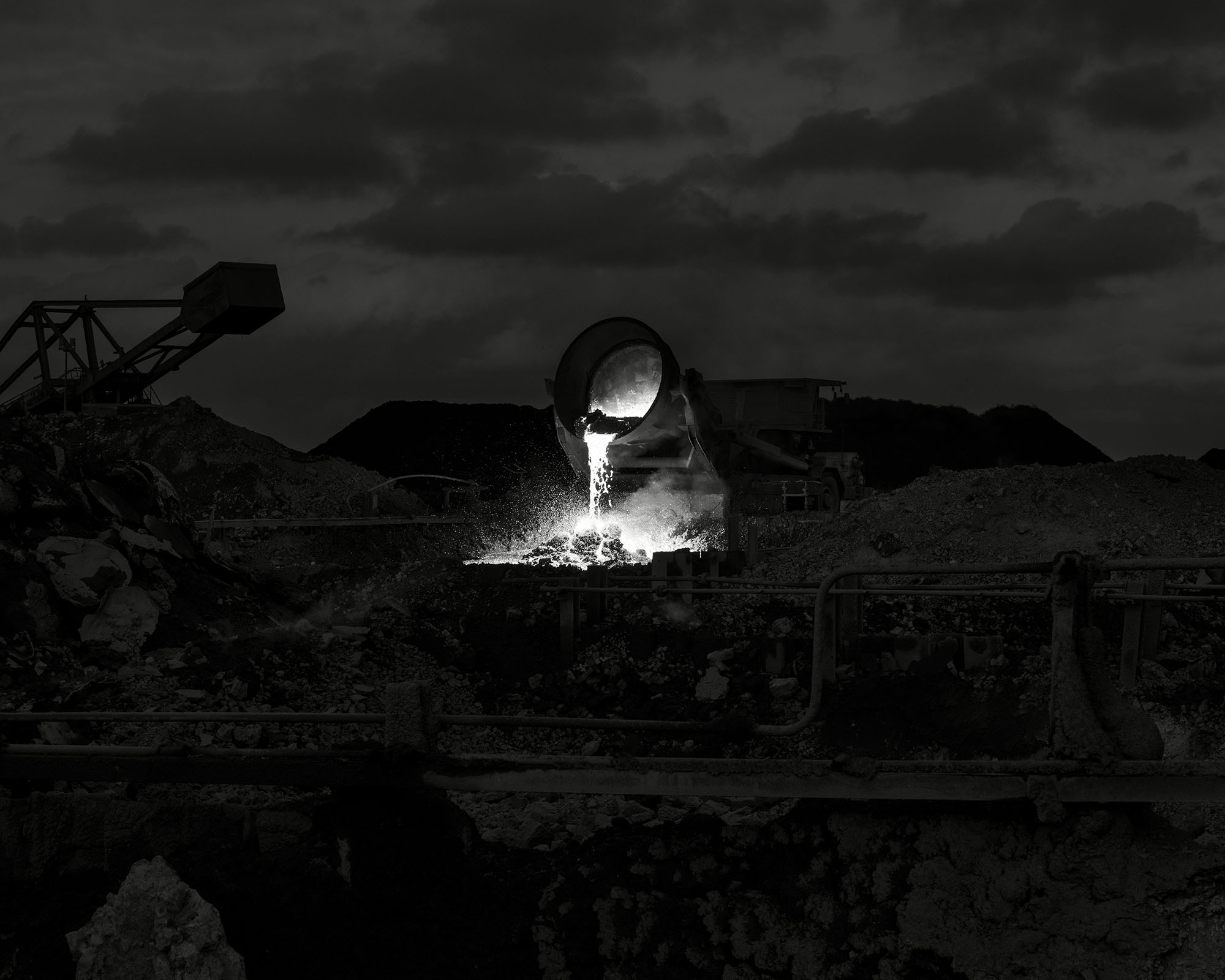
In the case of Mosse, it is the politics of war-induced refugeeism, and in the case of Rønning, the pandemic. I am reminded historically of the viscous black of Yves Auquier’s Pays Noir book from 197o when I look at what Jendly has accomplished in his examination of Dunkirk. I get the same uncertain feeling, though the directives between the artists, separated by over fifty years, reflect the times in which both projects were created. Overall, the feeling of Jendly’s work is one of tension, rather than preaching. However, one cannot fully understand the work without understanding the complexities of extraction and ecocide that we are enduring, from the loss of biodiversity to the clear problems associated with extraction and emissions. This is the second significant book from Jendly in a very short time, and with Lux In Tenebris, there is an emphasis on the book form carrying, by design, some of the concepts found in the work. With One Millimeter of Black Dirt and a Veil of Dead Cows, the emphasis is on coal and its dust. There is a significant dirtiness that literally comes with the book, as well as some hand towels to clean one’s hands with afterwards, a novelty that also indicts the reader as spectator, but also as a malicious force, as with extraction, we all have some blood on our hands. The book has my highest recommendation.
Vincent Jendly
One Millimeter of Black Dirt and a Veil of Dead Cows
André Frère Editions