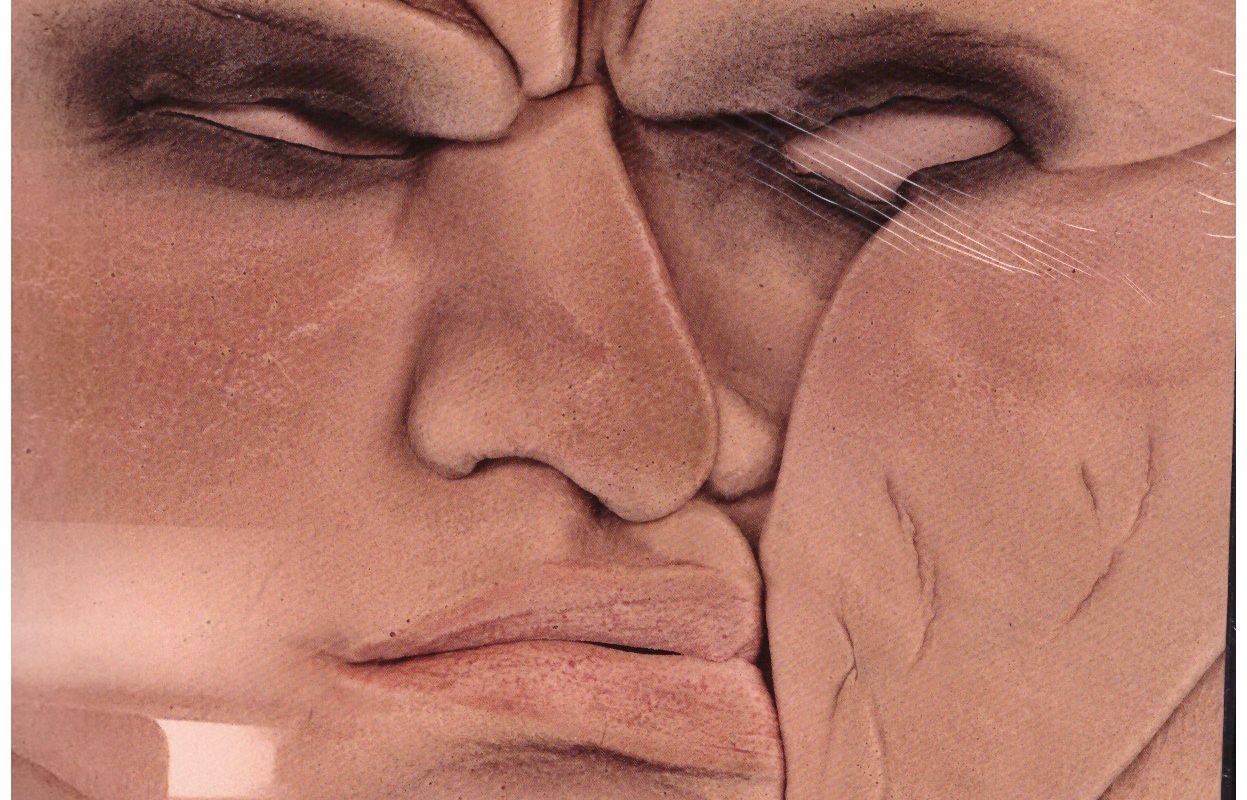
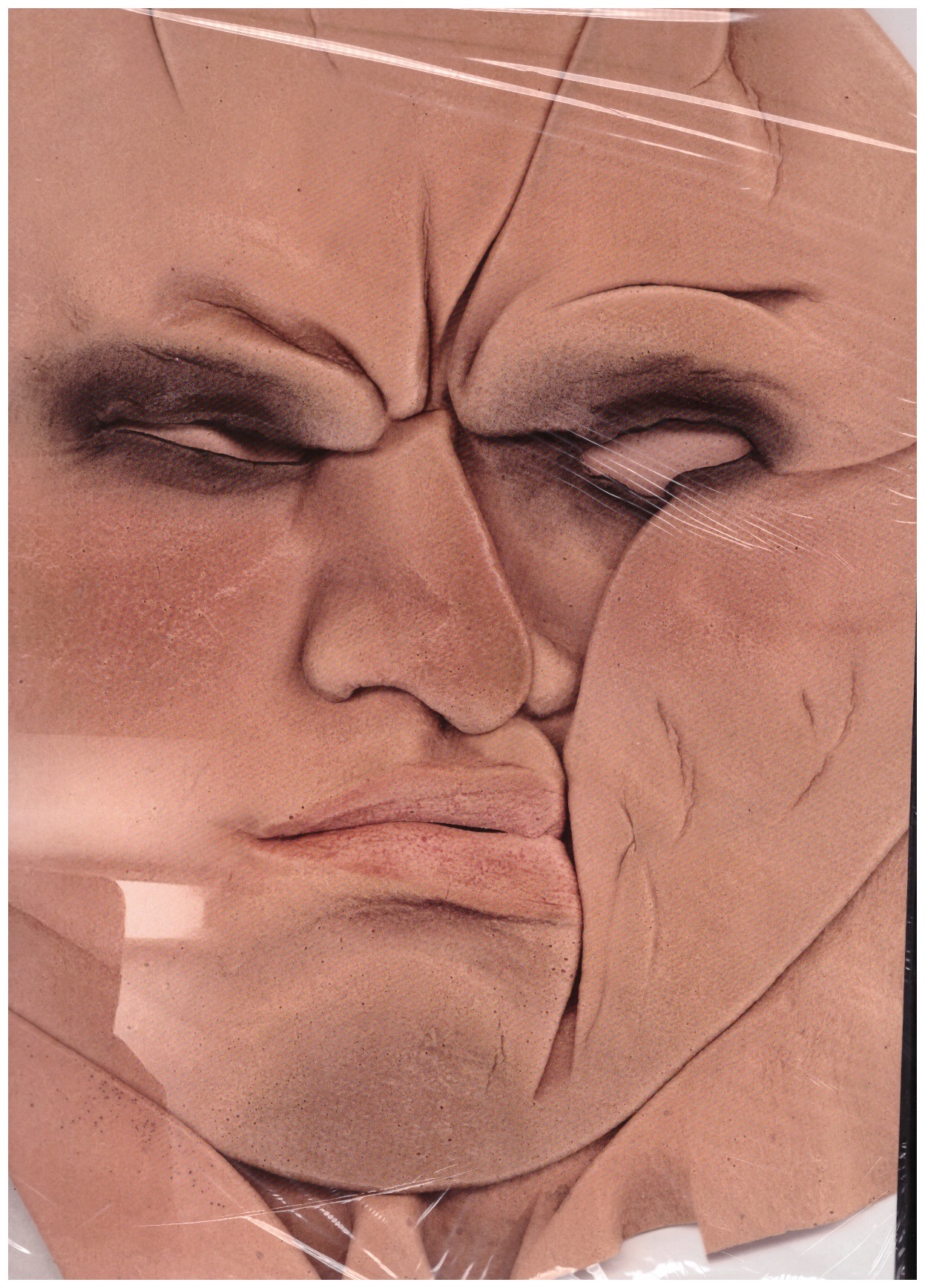
To you, Beni Bischof may be a monster. To others, he is an unofficial unsyndicated scribe for the madness of the last half-century of consumer hell that we wade through. They drew first Blood; it wasn’t me.
To give context to Bishof’s sprawling and prolific practice from the outside would be an exercise in deep-fried futility. To observe it from within the spray-painted raclette and wurst-strewn Disney princess madness inside the walls of his distorted memory castle is to self-indict oneself as crazy as a shithouse rat, right alongside him. I’m not a convert; I’m clergy, here. Speak softly and carry a battle axe; speak battle and softly carry an axe; speak axe and softly carry the battle…or something.
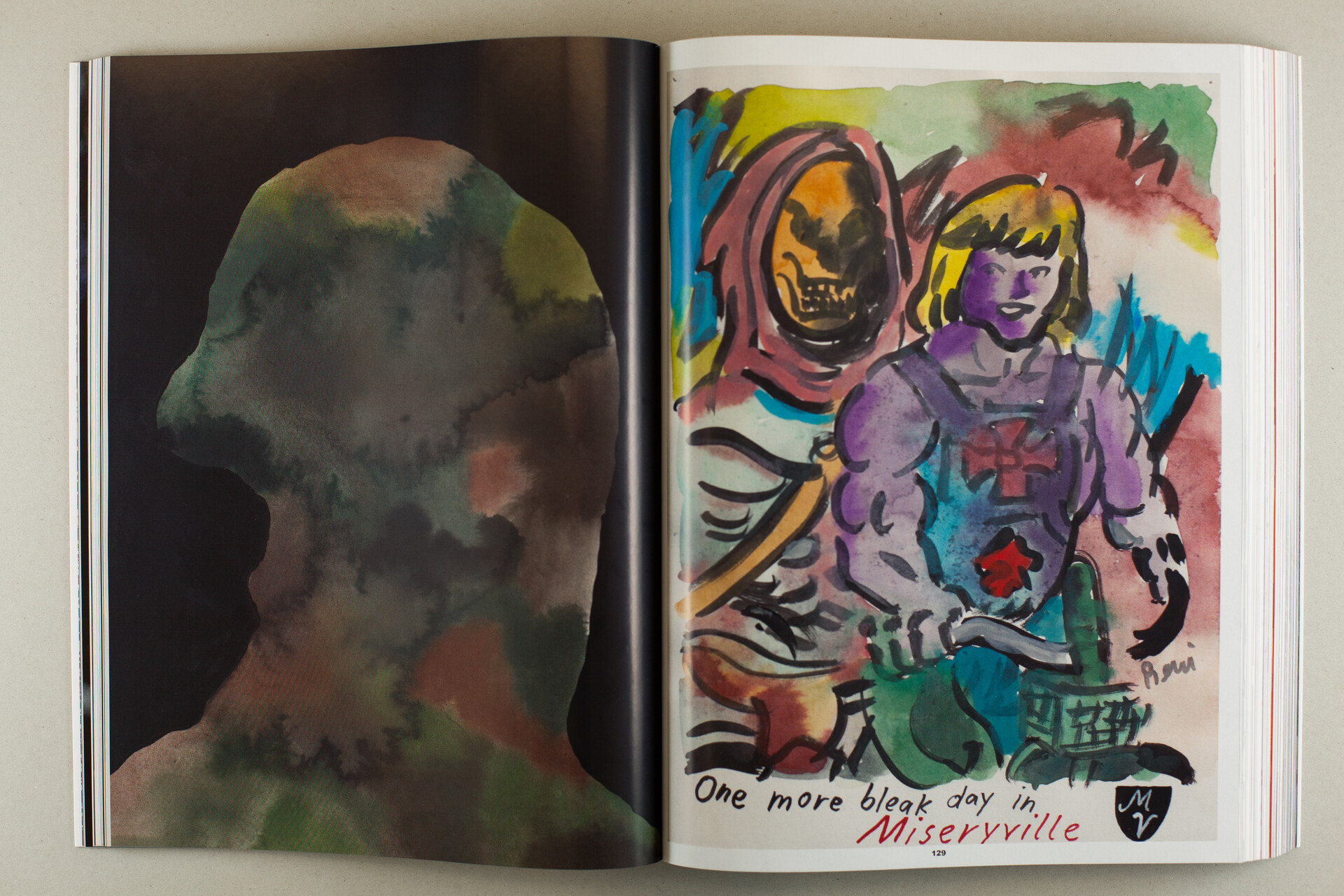
For the purposes of this review, I will be focusing on why the ritually unaccustomed stand little to no chance of infiltrating the world of pop-culture He-Man celebrity backwash that resides at the bottom of the Monster Energy drink upturned in the cultural polyglot’s studio. Of course, without acknowledging a history of absurdity in the context of ur-cult appropriation, jammed up the ass of Donald Duck, Richard Prince, the Internet, eBay, Tintin, Kippenberger, Dieter Roth, Paul McCarthy, and Rambo, it will be difficult to lead a donkey or dead hare to the rat-infested waters from which it is suggested it should drink the Kool-Aid. Slippery metaphors, run-ons, and inebriated slang are currency, not metaphors.
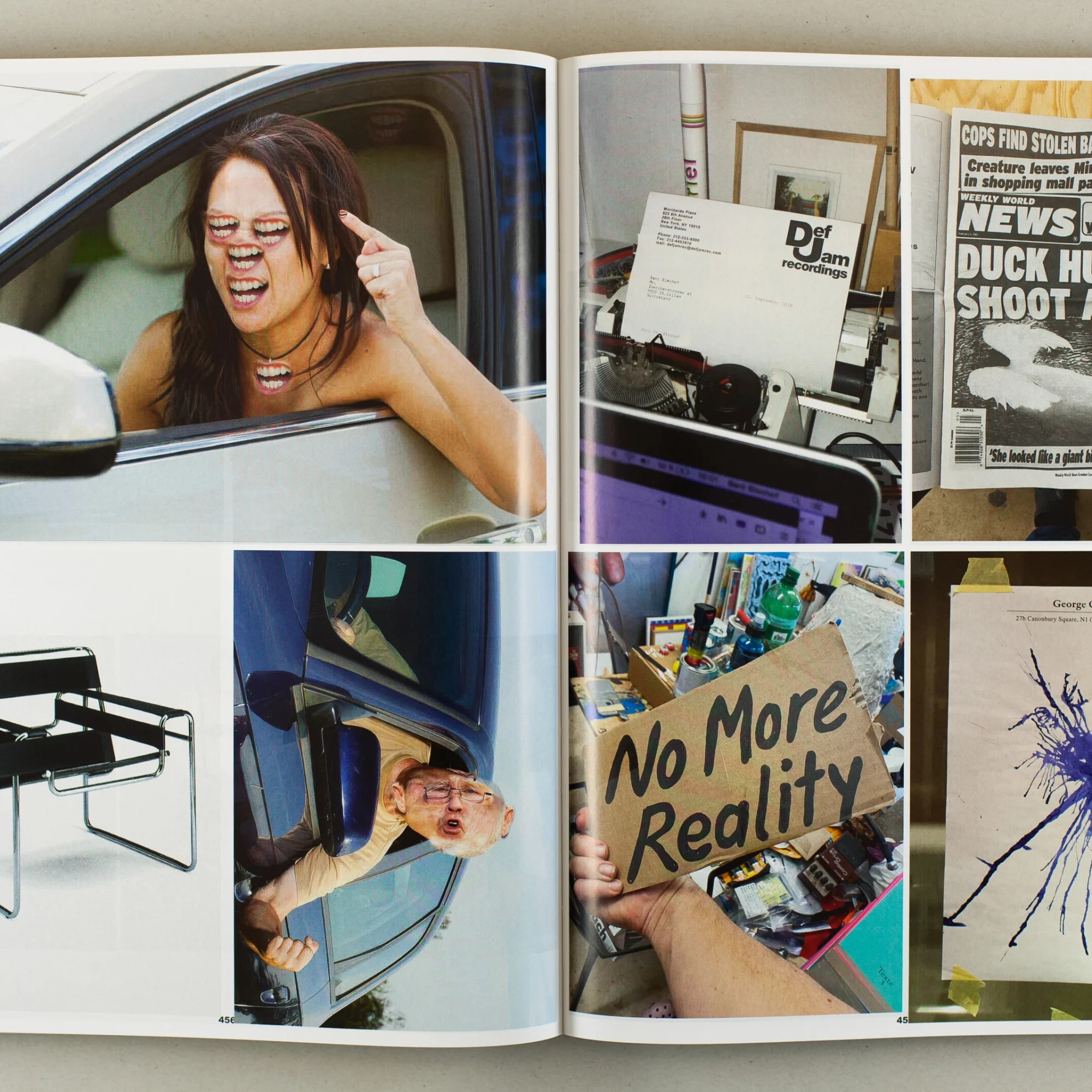
What I get most from Bischof is a profound sense of unease in how he obsesses and fixates on culture and has found a prolific way in which to down-cycle objects such as magazines, tech company letterhead, and the apocalypse into a convincing YouTube mash-up filled with joke paintings, similarly culled from the provinces of Richard Prince’s Reich, a dominion less indebted to ideology than the minute examination of cultural prophylactics, all LOWERCASE, no lubnrication. What Bischof excels at is marauding through the canopy of the capitalist gangbang to find recognizable artifacts, once culled, which he then subverts through his playful intervention. In doing so, he reclaims the right to administer meaning to the debris through that which is often recognizable, like an inside joke, but just hermetic enough to understand that the language he is speaking is somewhat specific to his generation (and my own).
Though he opts to include more recent developments in the post-9/11 world, he insists on digging up the corpses of our childhood memories to abuse and put context around the world we have voyaged since. It is seriously unserious, but to mistake his work for absurdity by itself is to dis-communicate the drive at its base. I might argue that his sometimes cynical arguments are as much a sign of the times and a wary warning of the end times, when the symbols shatter and what is seen as innocent or banal quickly becomes a harbinger of overconsumption, political agony, and disruption. He is the Cabbage Patch Kid, kidnapped, fed sugar, and kept in a dark basement (sorry, that’s a really Austrian thing of me to say) until he can break through his Snickers chrysalis and morph into the Garbage Pail Kid he was always meant to be, to shine in the unholy and uneven light of our last days.
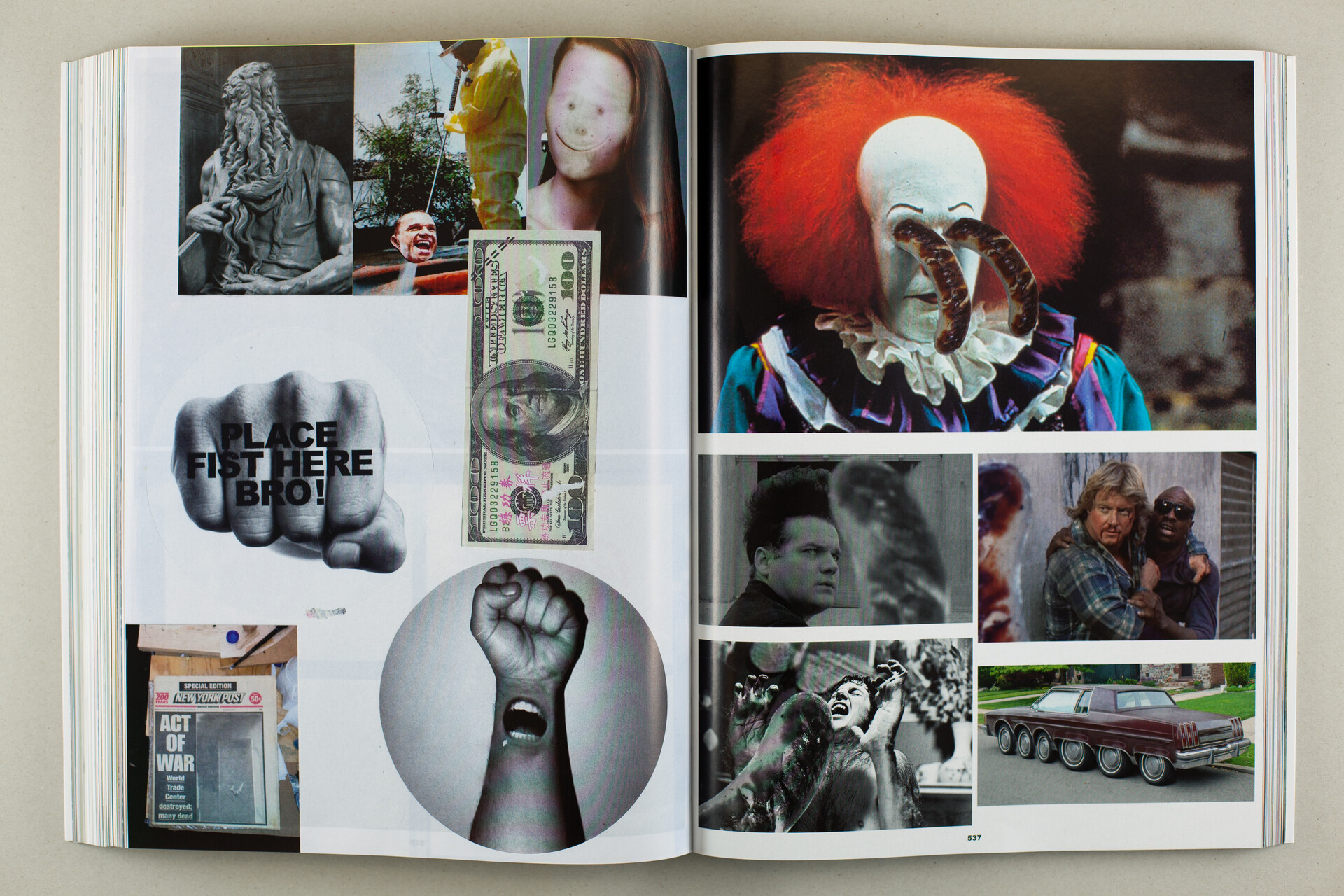
Bischof is the blotter acid messiah of maximalism. He exhibits a production-line sincerity focused on all manner of media, from sculpture to painting to the dead-eyed dream carousel of installations, culled from the carnival of comical souls collected from the ether and regurgitated on canvas, penny rides, and paper dreams. His work is what one might expect to find from an artist in Nevil Shute’s On the Beach, half-painting his way into and out of psychosis, locked in an eternal battle with an invisible and radiating sky-enveloping cloud of driftwood, eschewing sanity for documenting, in his own way, an inevitable end to the human colony.
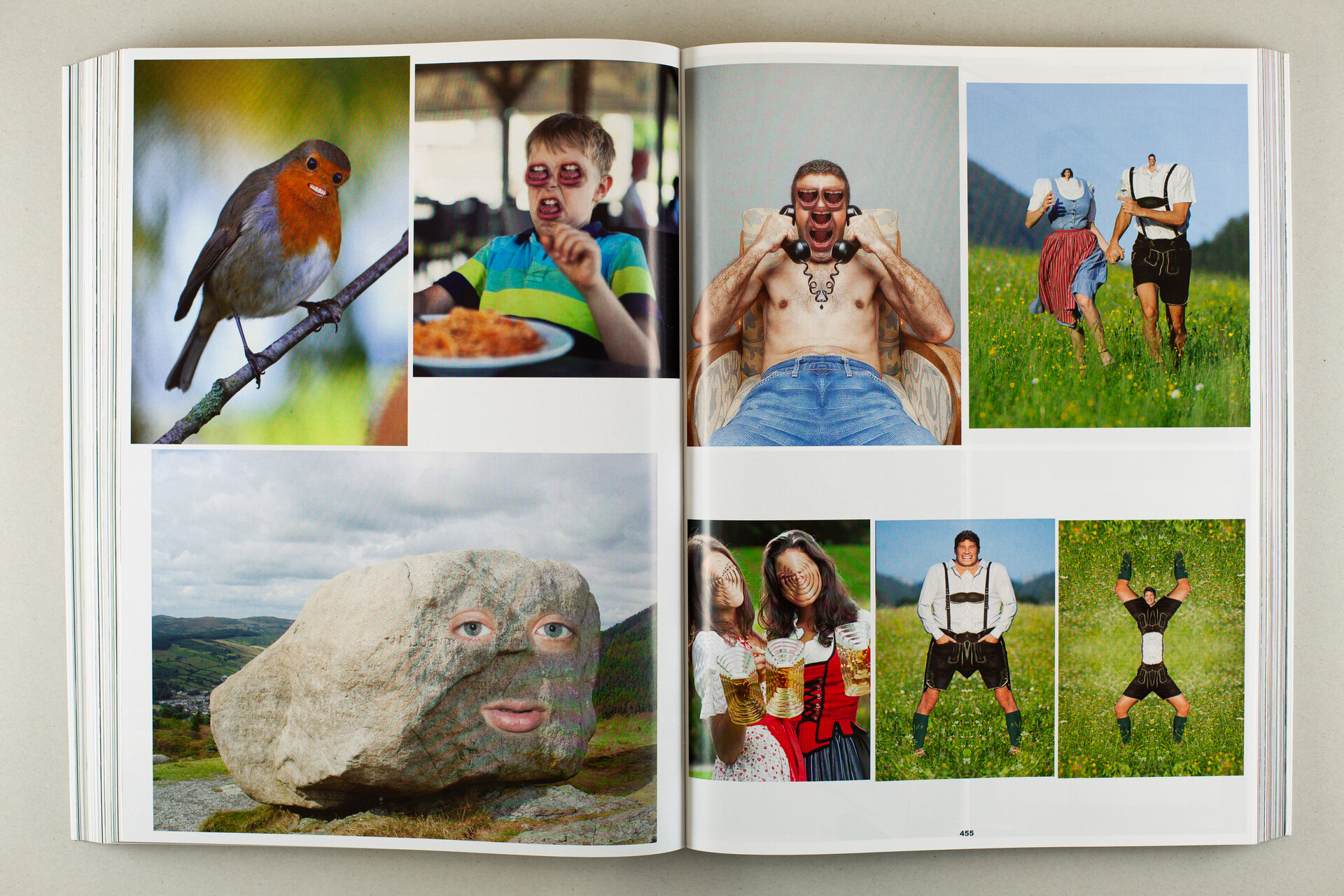 I mention On the Beach in particular as I could not think of a better literary adaptation of Bischof’s activities. I think about how tirelessly he must work to assemble this countercultural trove of material. His output is incredibly vast, and some of that must be down to the simple act of gesture he implies while making the work. Whereas some of his objects and digital re-imaginings of photographic appropriation must take a bit of time to produce, he also sees the value of smaller gestures. I often think that artists, paralyzed by gesture and paintstroke, must suffer uncontrollably at the weight of their output. Whereas that does not mean Bischof is unserious about his work, it also suggests that he is able to make works by reacting to what their initial form offers, and that this reaction is not always overkill. This keeps his production loose, his ideas expanding, and he does so in a manner that is entirely convincing.
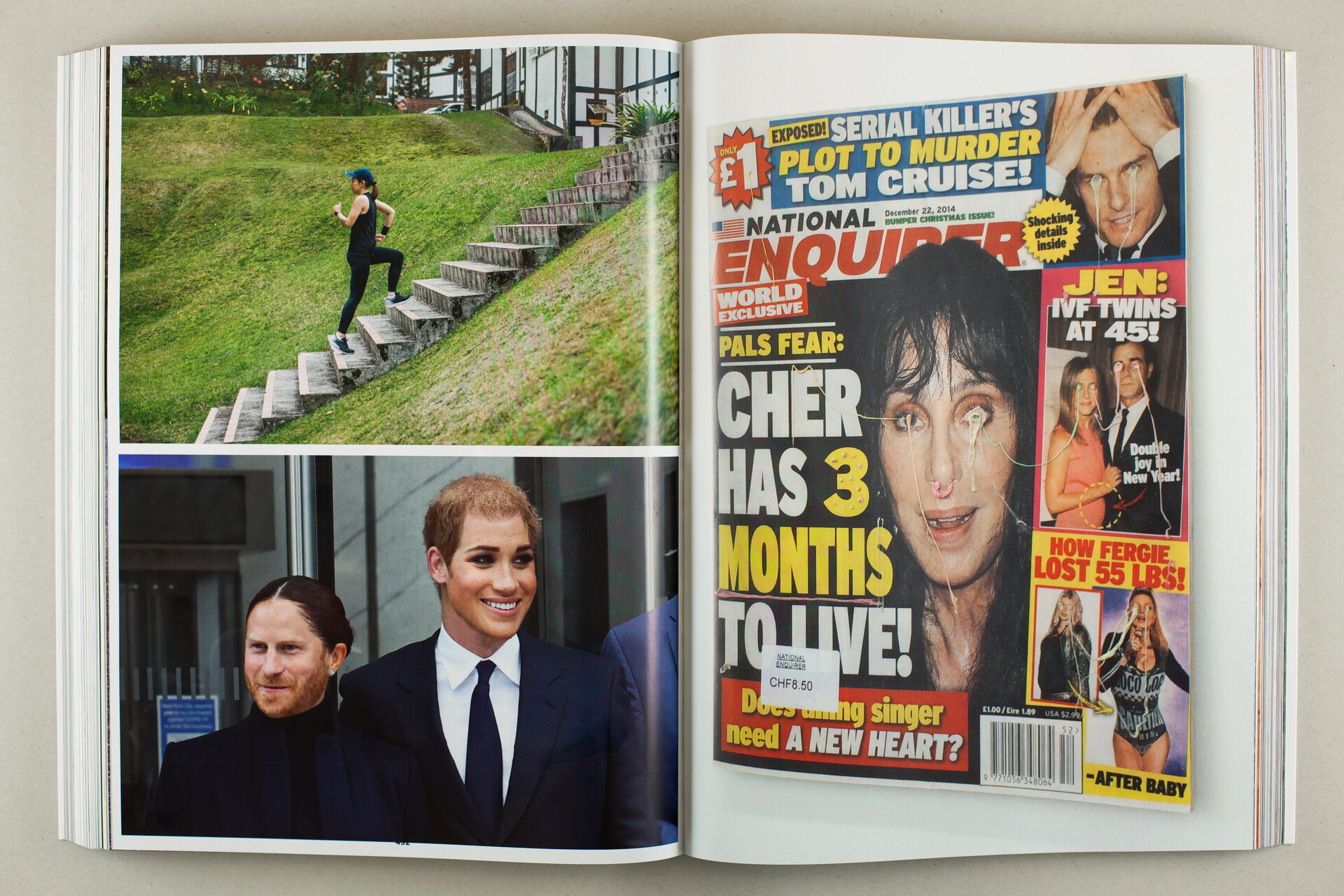
Psychobuch 2 follows his opus, Psychobuch, published in 2014 by the same great publisher, Edition Patrick Frey, and, like that volume, showcases the sheer amount of work the visual artist has been producing. As he works in zines and text, as well as artist books, there have been smaller offerings in between. I encourage people to check out his volumes of text-related books, also published by EPF, as I think they are a bit of a sleeper in his oeuvre. Psychobuch 2 is an essential continuation of the out-of-print volume one, and it shows Bischof’s progress, though one is left wondering about the gap between the volumes, given his consistency. The topics remain similar, but I think there is a deeper emphasis on painting over his previous focus on the photographic side of his practice, though Metacars, Rambo fetish, and tabloid appropriations do make an appearance.
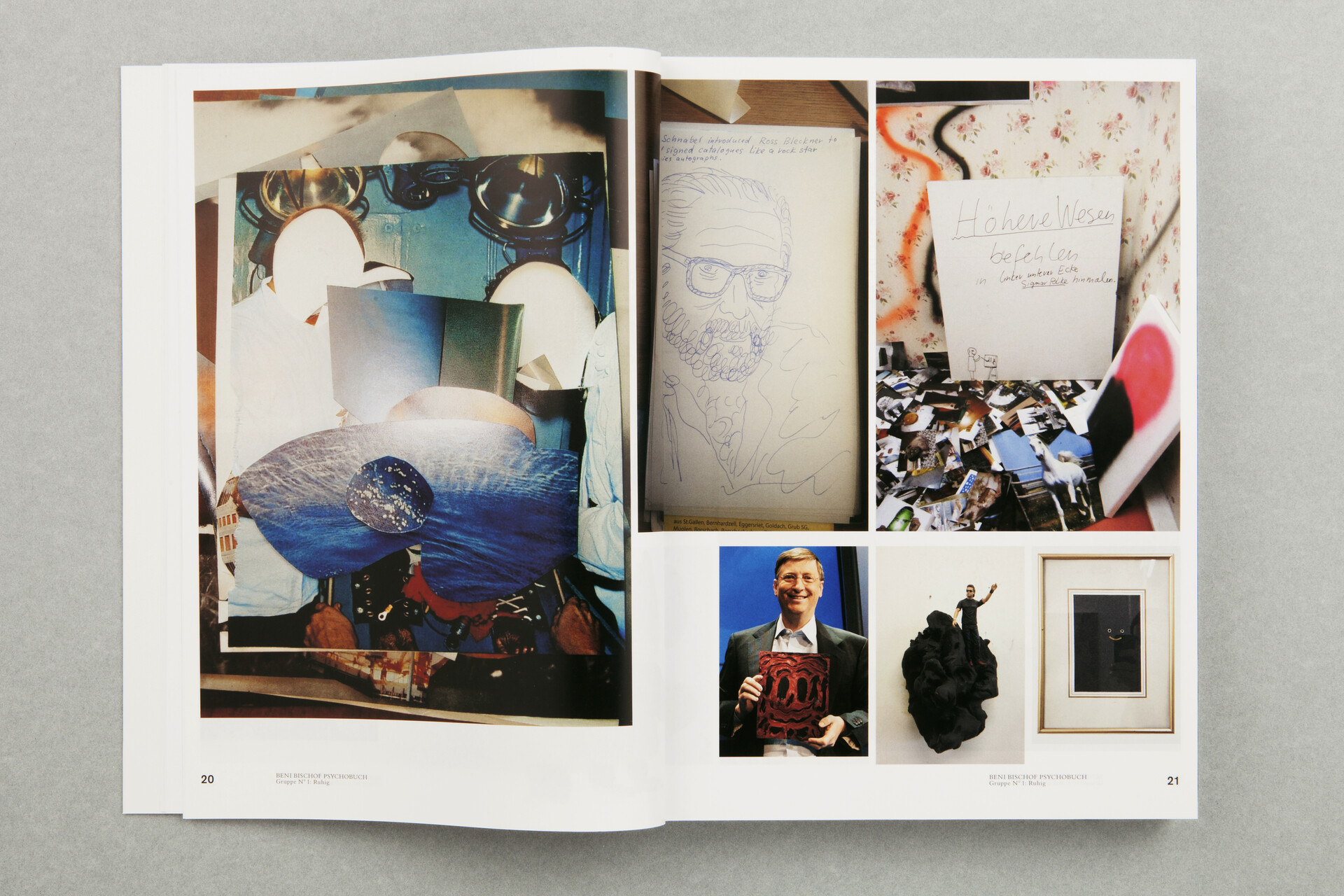
What I enjoyed seeing were his company letterhead drawings (?) from Google and other film and tech companies, which merge to create, even if as a secondary dimension, a discussion about the times we find ourselves in, battling against the machine, the surveillance state, and the rampant destruction of all life on the planet. Everything suggests a cavalier correspondence mimicked for the purposes of humor while keeping with contemporary topics, as it cannot be all Playboy caricature and He-Man inside jokes. Whether he intends it or not, he is a great caricaturist, an analog Balzac, a commentator on the contemporary times we wade through. Though humor is the conduit to his work, at its base, I think it’s much more serious than perhaps he would even acknowledge.
 Of course, it is with my highest recommendation that artbook-interested parties pick up a copy of this book sooner rather than later, as it will inevitably sell out and become expensive or hard to find on the secondary market. I certainly look forward to a third and fourth volume over the next decades. I think of Bischof as a rather unique voice in contemporary art, an artist who understands and has grown through the analog world of magazines, newspapers and television as it used to be, and has since, like myself, been asked to wade through the onslaught of cultural garbage associated in one part wonder, two parts disdain, the ignorance of the Internet age and is coping, as I am, with the cacophony of voices seeking our attention.
In reference, I am reminded of Richard Prince’s playfulness, particularly his use of film stills and lobby cards in his work, as well as his appropriation of existing material for repurposing, such as pulp covers. There is a reminder of Hans-Peter Feldman’s use of everday advertising in his collages, particularly weekly grocery catalogs, and a general function of Roth and Kippenberger’s uses of common objects and materials repurposed from byproducts to high art. There are others, but these are the cohort that spring to mind with Bischof, though I suspect there is a deeper well of strange Swiss art from which his lineage derives.
Beni Bischof
Psychobuch 2
Edition Patrick Frey