This book is something of an outlier in the photobook legacy of eminent British artist Jem Southam, whom I usually associate with a type nouveau pastoral, a celluloid Constable traipsing the foggy lands of Ole Blighty. His notable contributions to the photobook include The Moth, Four Winters, The Pond at Upton Pyne, Rockfalls and Ponds, Raft, Starlings, and Red River, among others. He is a noted master of the exterior. His landscapes often brood and give the impression of a cinematic establishing shot where the narrative has a 50% chance of leading toward the home front, with kitchen-sink conversations regarding the pain of existence, particularly within the confines of family, and yet people get on with it. The other 50% of those images have me hunting for bodies, bog or other, along the surface breaches of the waterline. For these reasons, I gravitate toward his work. They exhibit a type of ambiguity in my reading of their intention and potential, which likely says as much about the author as it does about the land itself. They are also somber and beautiful, reflective, and deep.
I still find the cover of his book Red River, the first edition from 1989, to have a biblical feel. The cover “simply” depicts a blood-red flowing river/stream, copper in value, shot at eye level as if Moses himself had decided to reach out the basket, camera in hand, and levy an image of the world he escaped for posterity. This is from a kid who allegedly knew water well. One cannot help but feel imperiled by the photograph, which poses questions about the nature of water itself and, by extension, the mining network from which it stems, unbraided and restless to the lip of the wheat field. It is claustrophobic, choking, yet still reveals a beauty in its syrupy viscosity that provides intrigue, a sensual feeling of floating, however dangerous the current. What Jem’s works outline, in their broader category, for me personally is a sense of self within the historical timeline of a landscape, observing what has resisted change, but also what is changing through negligence or violence. To think of them simply as landscapes belittles their potential to speak to ecology, industry, and the continuation of human presence in a specific geography.
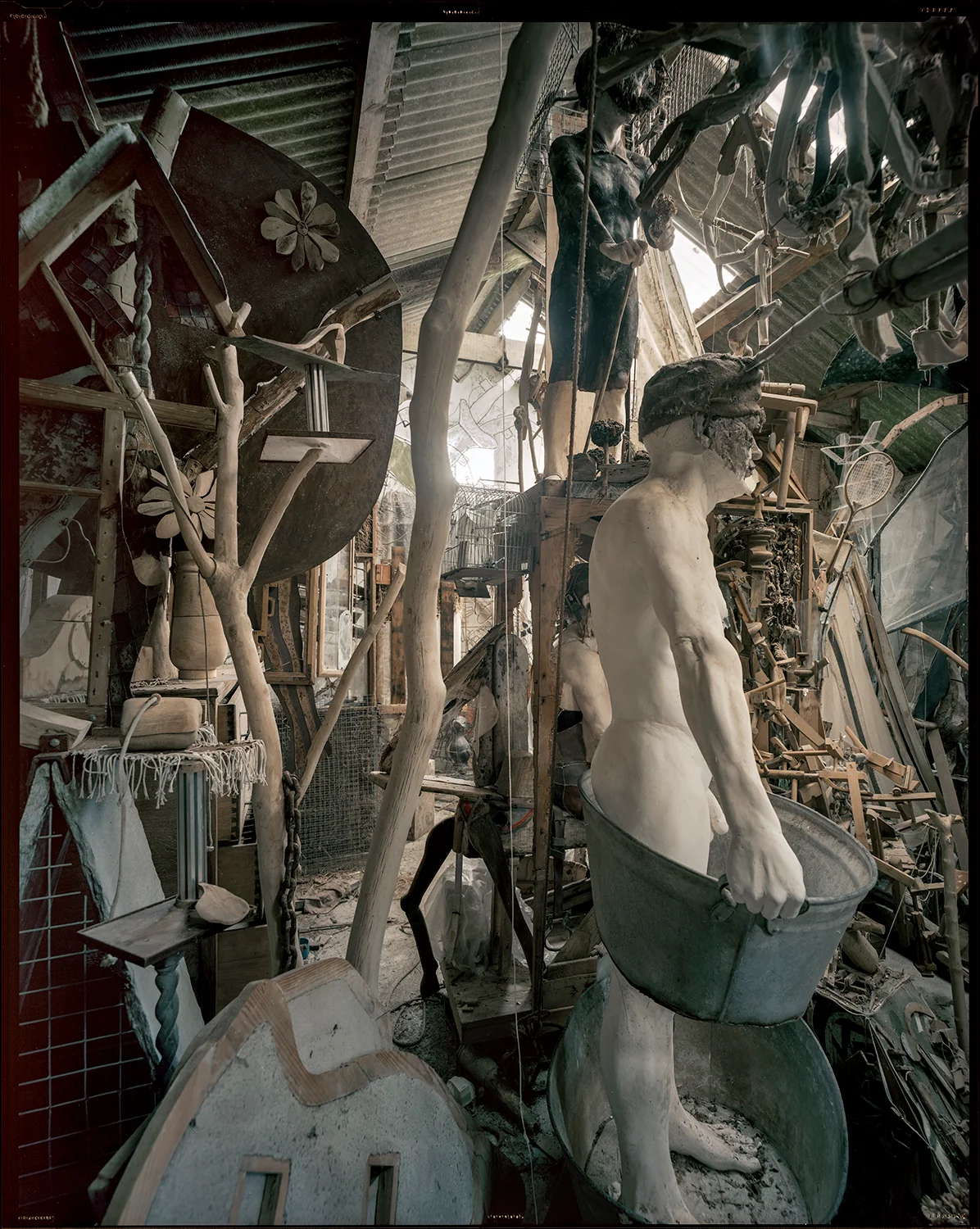
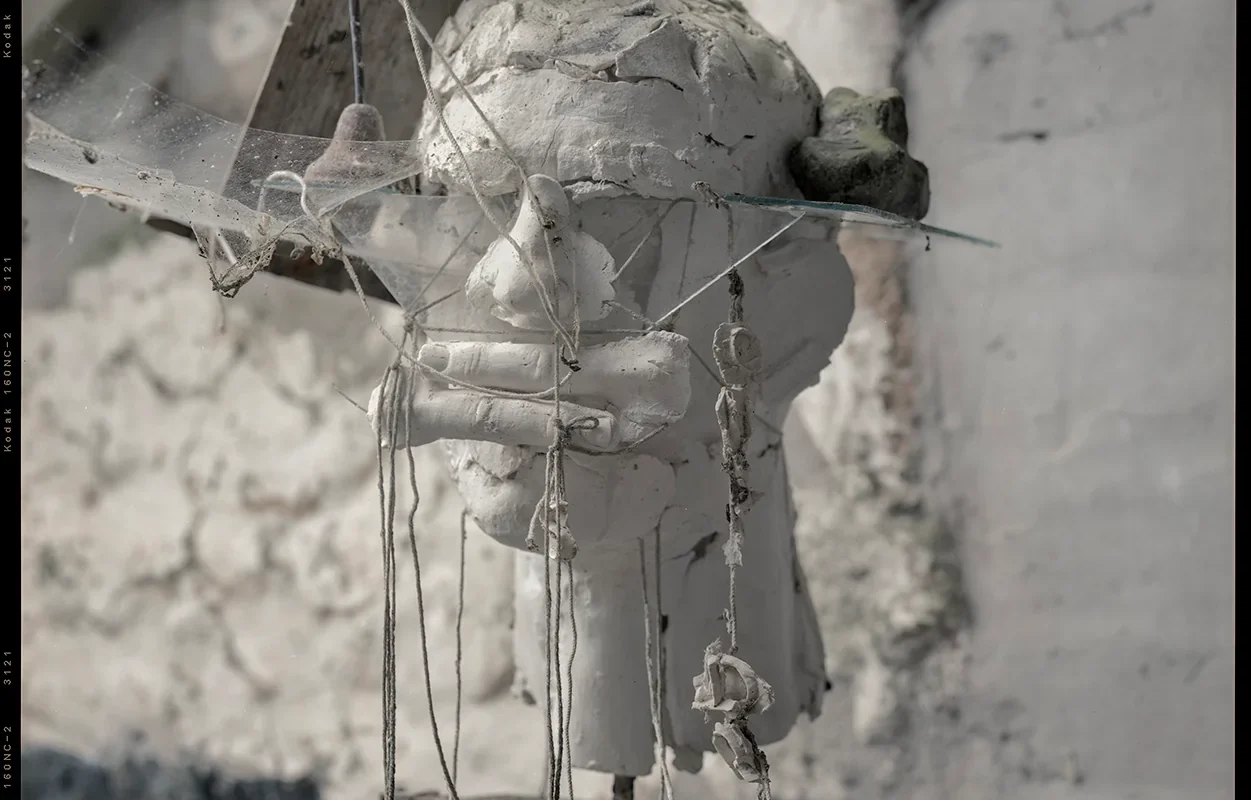
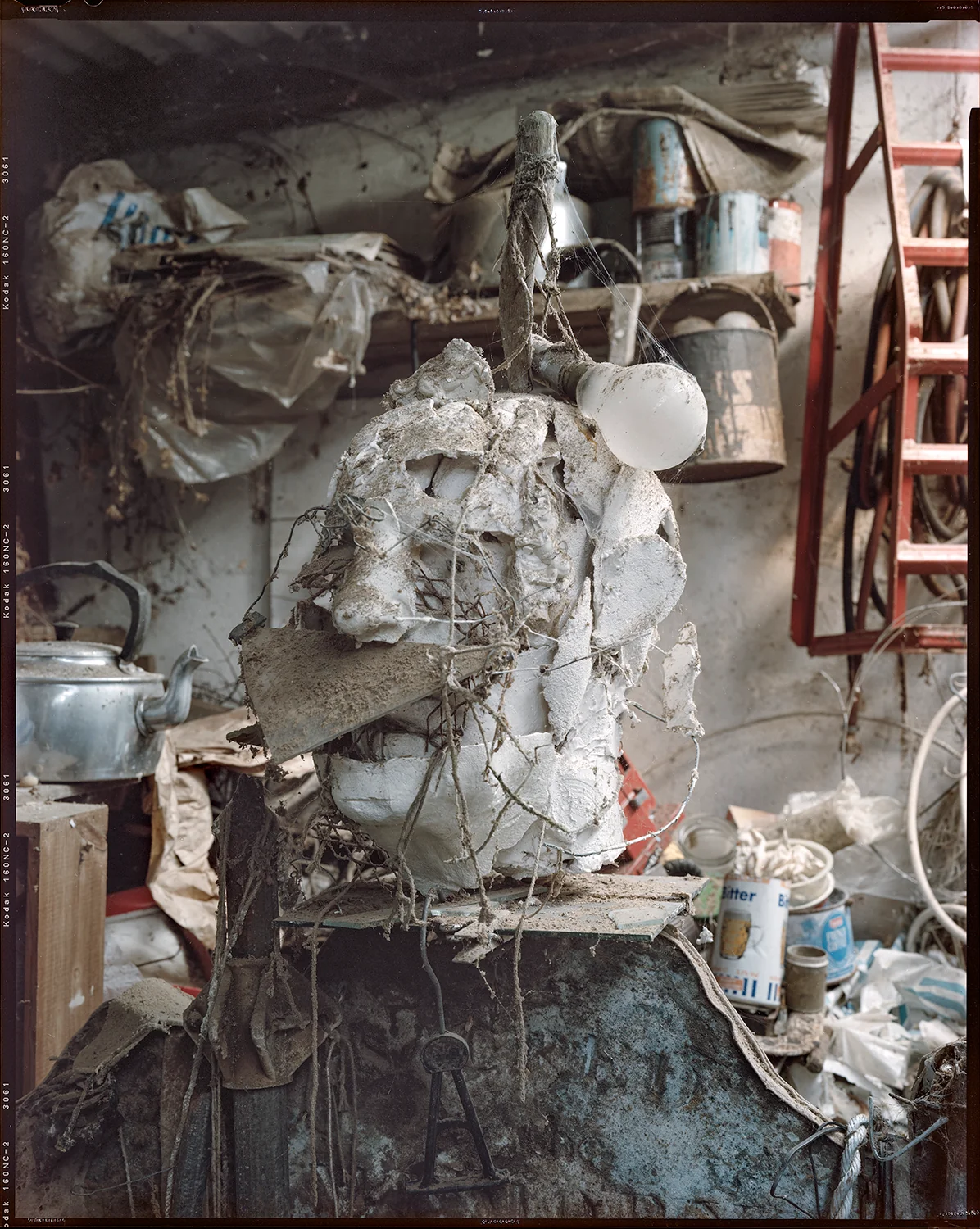
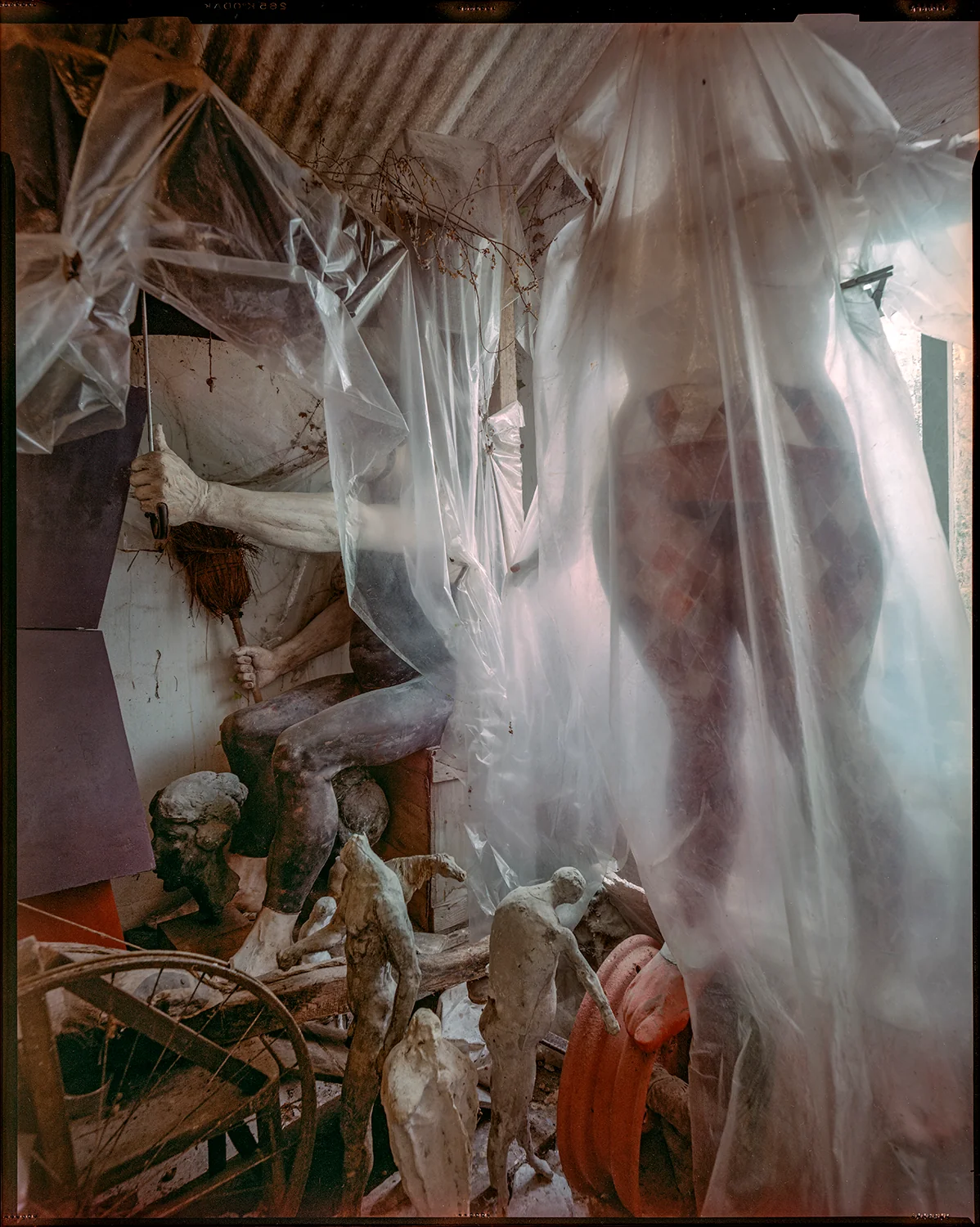
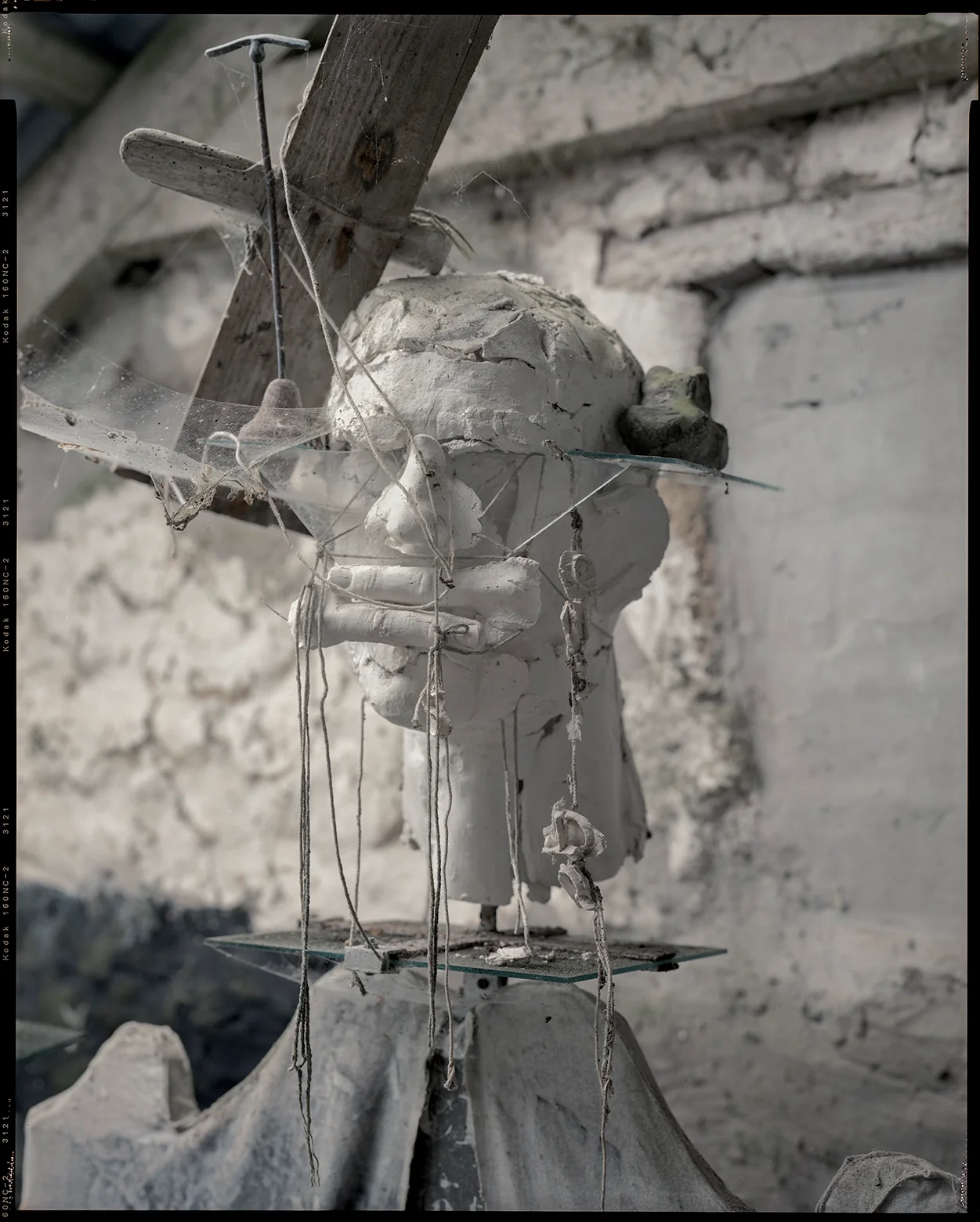
With Ray’s Sheds, the interior has become manifest. Southam, starting in 1983, on an assignment, found himself in the seven sheds/studios of Ray Exworth (1930-2015), a sculptor based in Cornwall whom Jem would remain in conversation with over the following years. The result is this incredible archaeological survey of the sculptor’s studio and work, and a brilliant note to Jem’s own career, defying our expectation of the artist working more often than not outdoors, in the fog of Britain. Ray’s Sheds is an incredible dive into the vernacular bric-a-brac of a sculptor’s process and space. Where I see a kinship with Jem’s other work is that quality of compression, and of claustrophobia that occasionally happens, as mentioned above in his landscape work, is amplified here to the delight of the eye left to roam over so much surface in Ray’s sheds, catching on tools, plaster, sculptures, and all manner of rafter, wire, and material exchange, reminiscent, in a very overstretched analogy, to David Cronenberg’s eponymous character Spider from his 2002 film in which Ralph Fiennes, a bit of an outsider, autistic possible, sculpta vast webbing through the rooms of the house he shares with his mother/s as both psychological trap, and security blanket-would be an accurate metaphor for the production of art, perhaps.
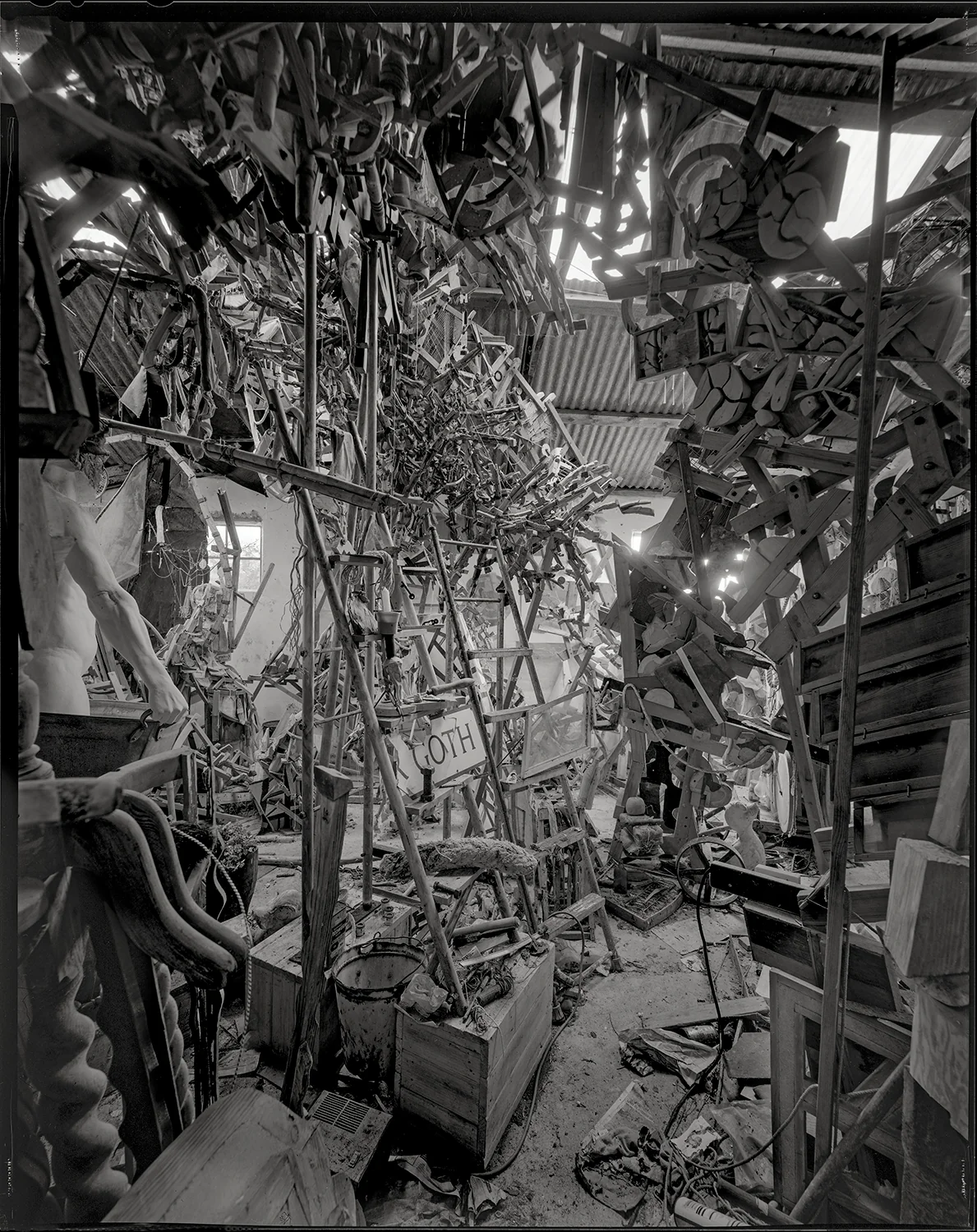
The art of Exworth is detailed in Jem’s photographs and no doubt provides an incredible survey that is essential to understanding the sculptor, but it is not exactly a document thereof, or Jem would have photographed it differently, in a typology, or catalog type of format, which this is certainly not, thus intertwining both artists’ subjectivity in the exchange of images and objects bound together in this incredible book. The sculptures within are more than objects to be seen in isolation; they ask the environment to place understanding around them. They feel intrinsically bound to the shed, but also to Jem’s framing. I am reminded of the installations of sculpture by George Segal, Ed and Nancy Kienholz, Mark Manders, and, most of all, the Polish polymath/artist Tadeusz Kantor, whose figures, in installation, breed deep introspection and cannot be limited, like the Kienholz’s work, to their totality. This is exemplified clearly in form, but also in how Jem’s considered photographs embrace the object and the environment equally, creating a type of utopia within the frame, however fantasy-led.
I received this book as an add-to request from the kind people at RRB, who thankfully never seem to tire or retire from the photobook game. I really appreciate their support of artists like Jem, and that they saw this as an opportunity to expand the landscape of his career for some of us who haven’t seen this side of his work. Perhaps it is a one-off, but I find it incredibly rich and an expansion of an artist I already deeply respect. As for Ray, this book exemplifies an incredible trove of material and a considered legacy. This is the very essential type of book that transcends a number of categories, be it photography, art, catalog, or archive, that makes it break out of the simple confines of photobook production, something we desperately need in the day where books are becoming less and less interesting, more formulaic, and frankly boorish. Highest Recommendation for this title, no matter which angle you wish to view it.