Throughout the 1990s, there was a distinct emphasis on the body and its decline. Work produced during the 90s, whether from the aids crisis or the ideological shift away from the Catholic church toward an atheistic and bodily autonomy, signaled a visceral approach to photography. The documentary Vile Bodies (1999), produced by Chris Townsend and Channel Four, capitalized on the use of the body within photography and included artists such as Joel-Peter Witkin, Nick Waplington, Sally Mann, Wendy Ewald, and Andres Serrano, amongst others, whose work raised questions about how we observe the body in its form of death and imperfection. Serrano’s work, in particular, along with Mann’s, courted questions oscillating between the visceral form of death in the former’s Morgue Work and the youth and what is permissible to be seen in the latter through her Immediate Family series.
I bring these particular works to mind as the discussion surrounding mortality and the body seems to be reverberating again, thirty years later, though at present it is centered on technology, identity, and what I presume to be a post-COVID discussion of the body’s fallibility. Whereas works concerning the body in decline are slightly less apparent, I believe a discussion is percolating about transhumanism and what the corporeal self means in the 2020’s. On top of this, ideological questions about the future of biodiversity and of human life in the wake of automation and AI are also pertinent. There is an anxiety surrounding gender, race, and autonomy that has been amplified, and many of the root structures that undergird these discussions circulate concerning the body and unbridled technocracy, pestilence, and control. Artists are responding.
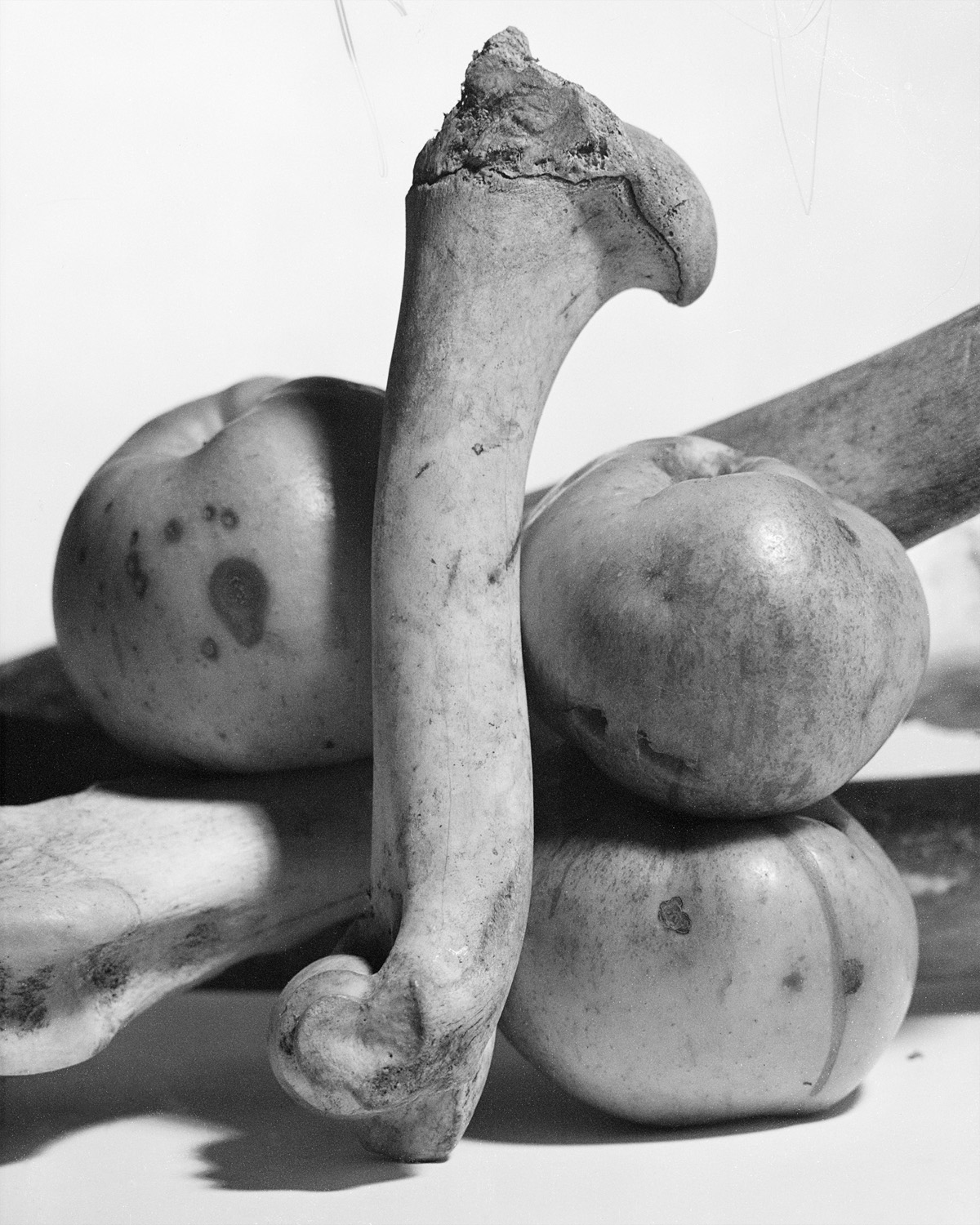
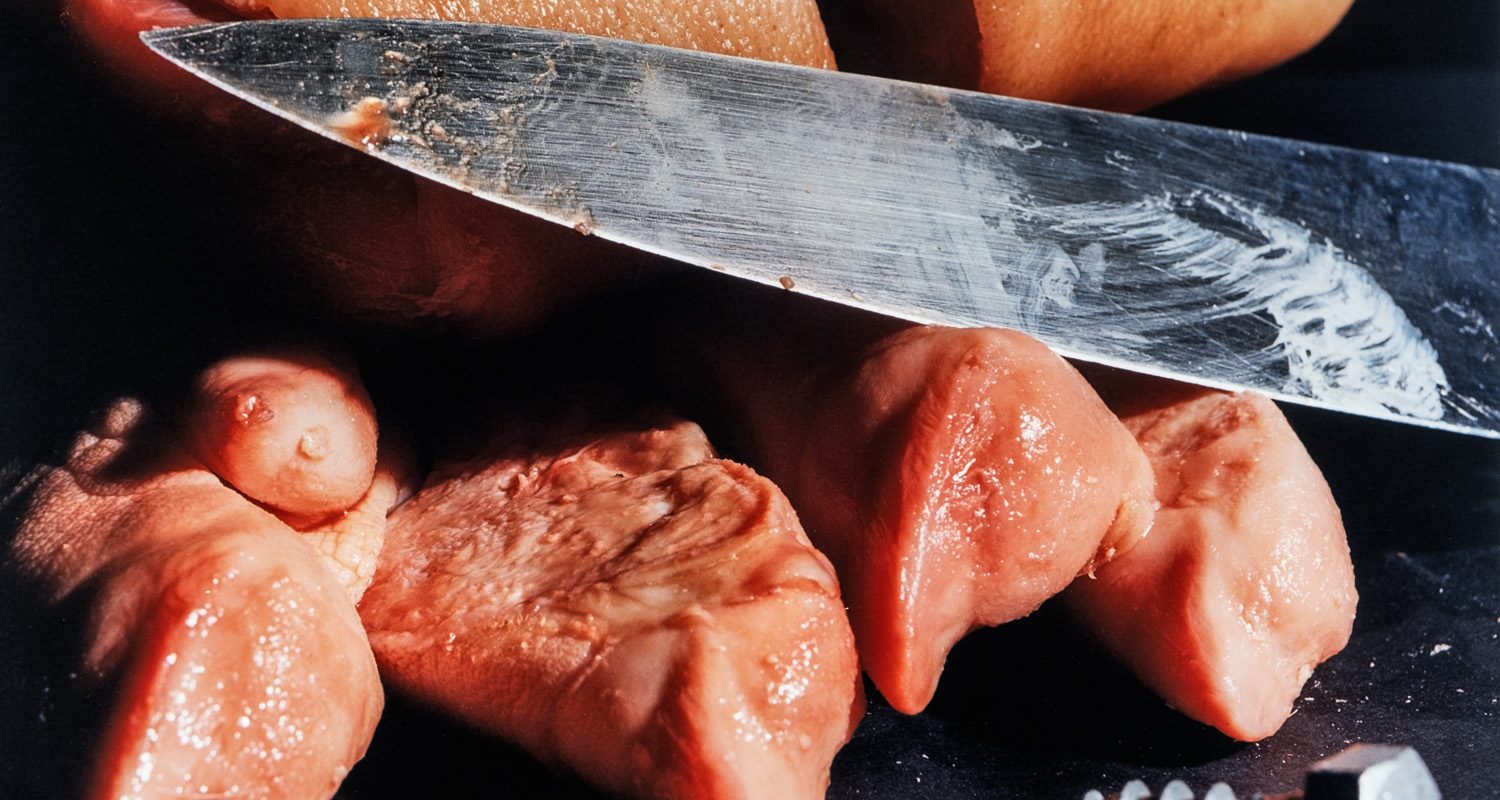
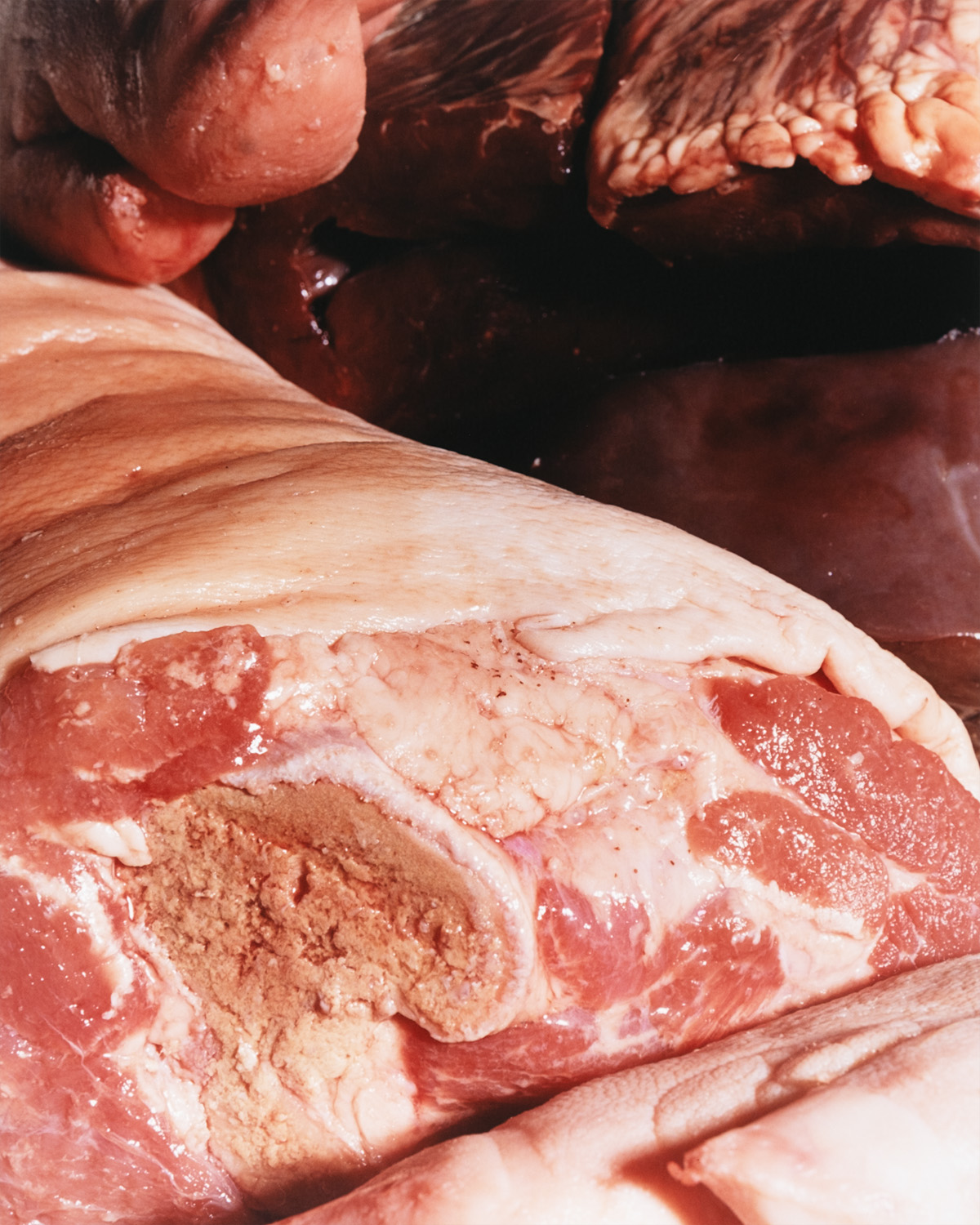
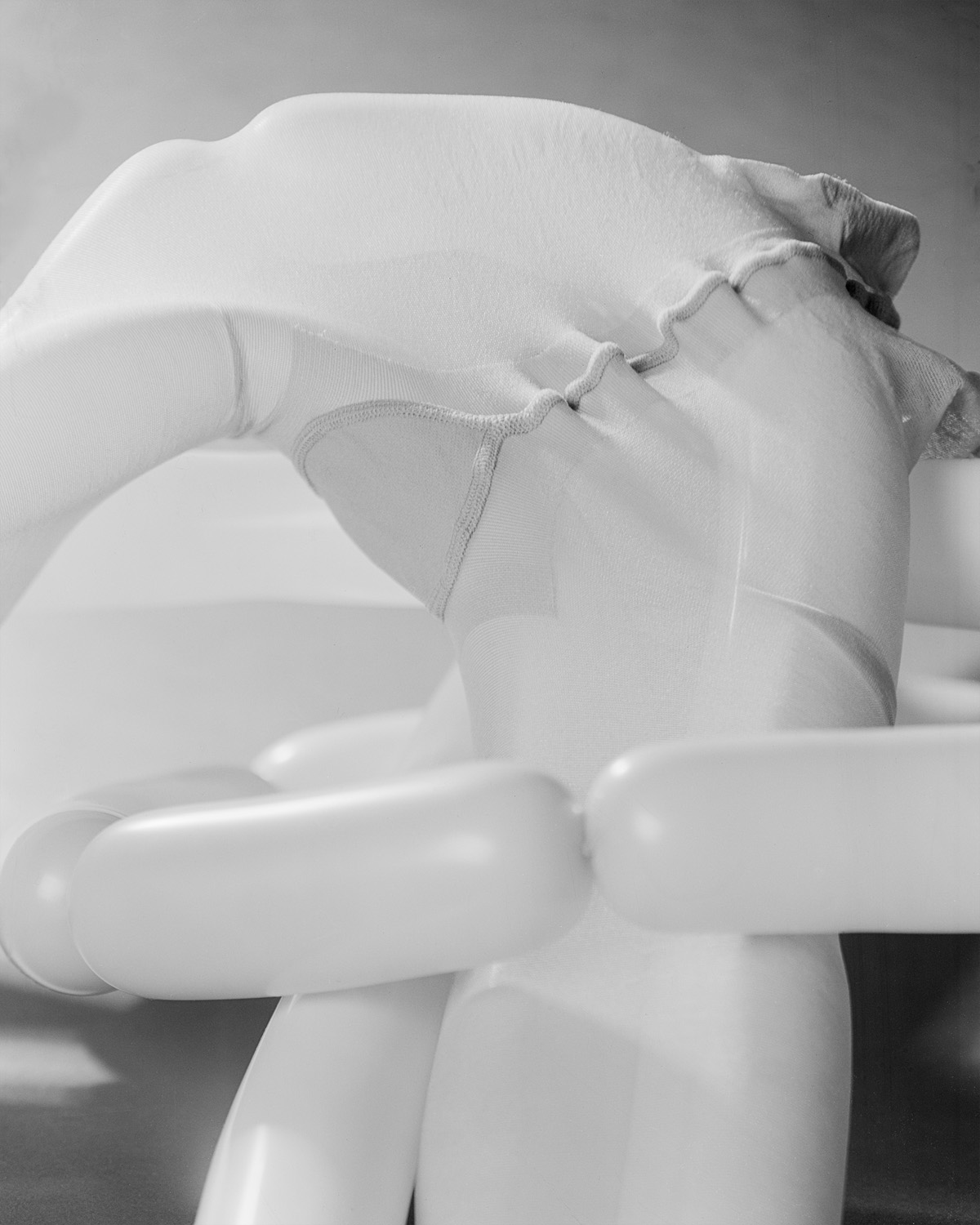
With Isak Uitto’s small-editioned artist book Maskineri, I found myself returning to central themes of the body through the artist’s use of symbolic referents that almost feel compelled by a mid-period David Cronenberg film like Existenz, in which the work relies less on technology beyond the metaphorical title Maskineri (Machinery) than the visceral dismemberment of meat and other symbols regarding fertility and ideology. The work itself depicts meat, eggs, and the crucifix, littered amongst bones, graters, sausage casings, and gloves, presenting a world that I feel Paul McCarthy might see as a blank canvas for which to roll around and dirty up with ketchup and cum.
That said, Uitto’s still life images are clinical and clean, but suggest the violence of disarticulated joints and severed tissue. The use of pig is effectively a discussion surrounding a murderous tendency to see the animal as close to human as possible, shifting the discussion from food production, a la Michael Schmidt’s Lebensmittel, toward something more necrotic and potentially antihuman.
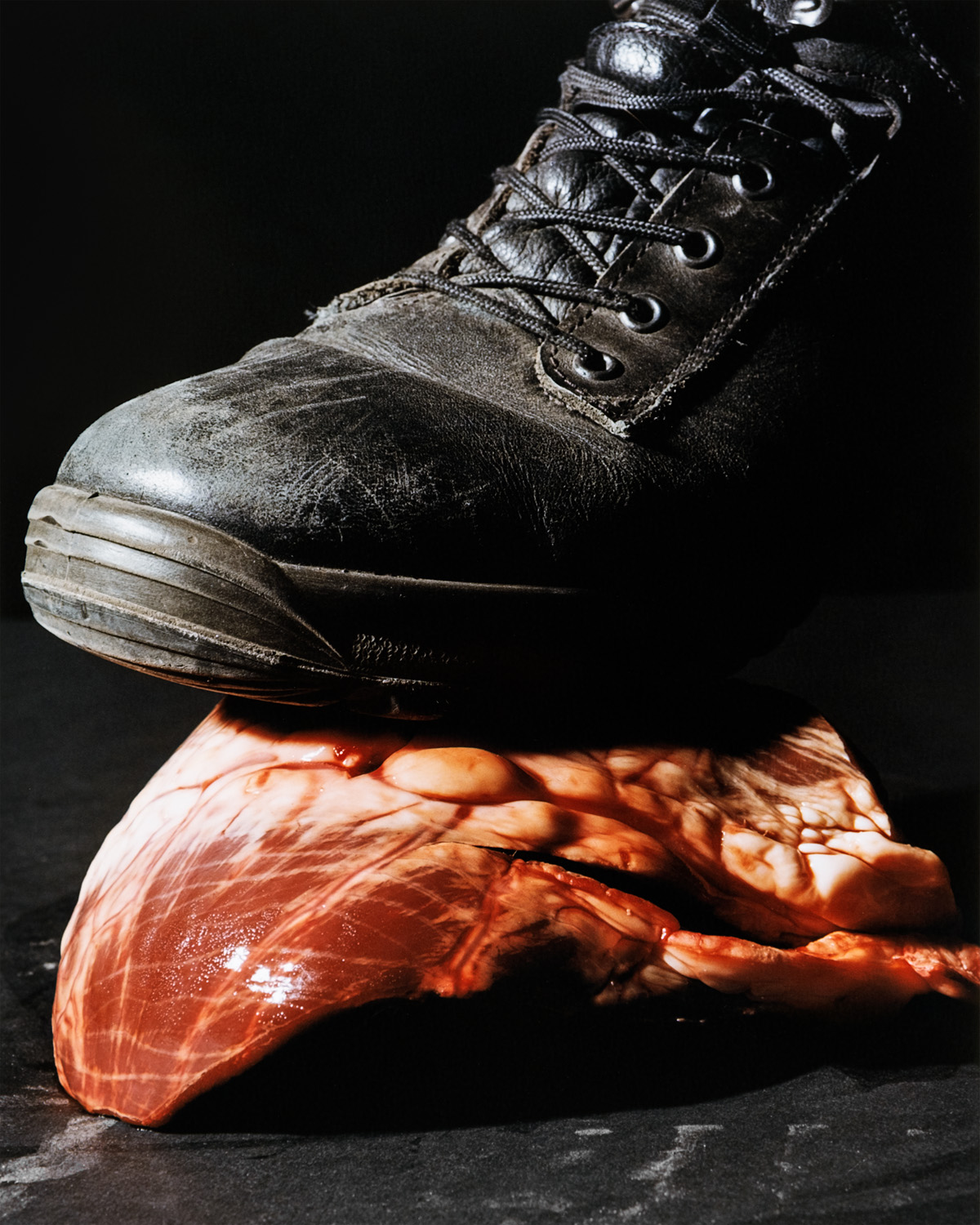
I imagine the symbolic load of the work to come from a pagan discernment of the overreach of Christianity through the use of the crucifix, tipped to the side here and there, without lending itself to the realms of Andres Serrano’s Piss Christ. That said, it could just be a placeholder for any ideology, as the cruciform shape is the most recognizable form to transmit general ideology.
I’m guessing Uitto has a musical background that may come from Black Metal, but I could be wrong. I am putting his Swedish ancestry in with the meat, and grinding it up to try to understand the underlying motivations for his aesthetic choices of symbolic dismemberment of ideology, as well as flesh. What strikes me as poignant is the way the work is shot in a relatively clean manner, given the often messy nature of meat production. In Uitto’s photographs, the meat is clean, the bones are dry and scrubbed, similar to the way Irving Penn photographed human bones, stacked with precarity in mind, before exposing the film.
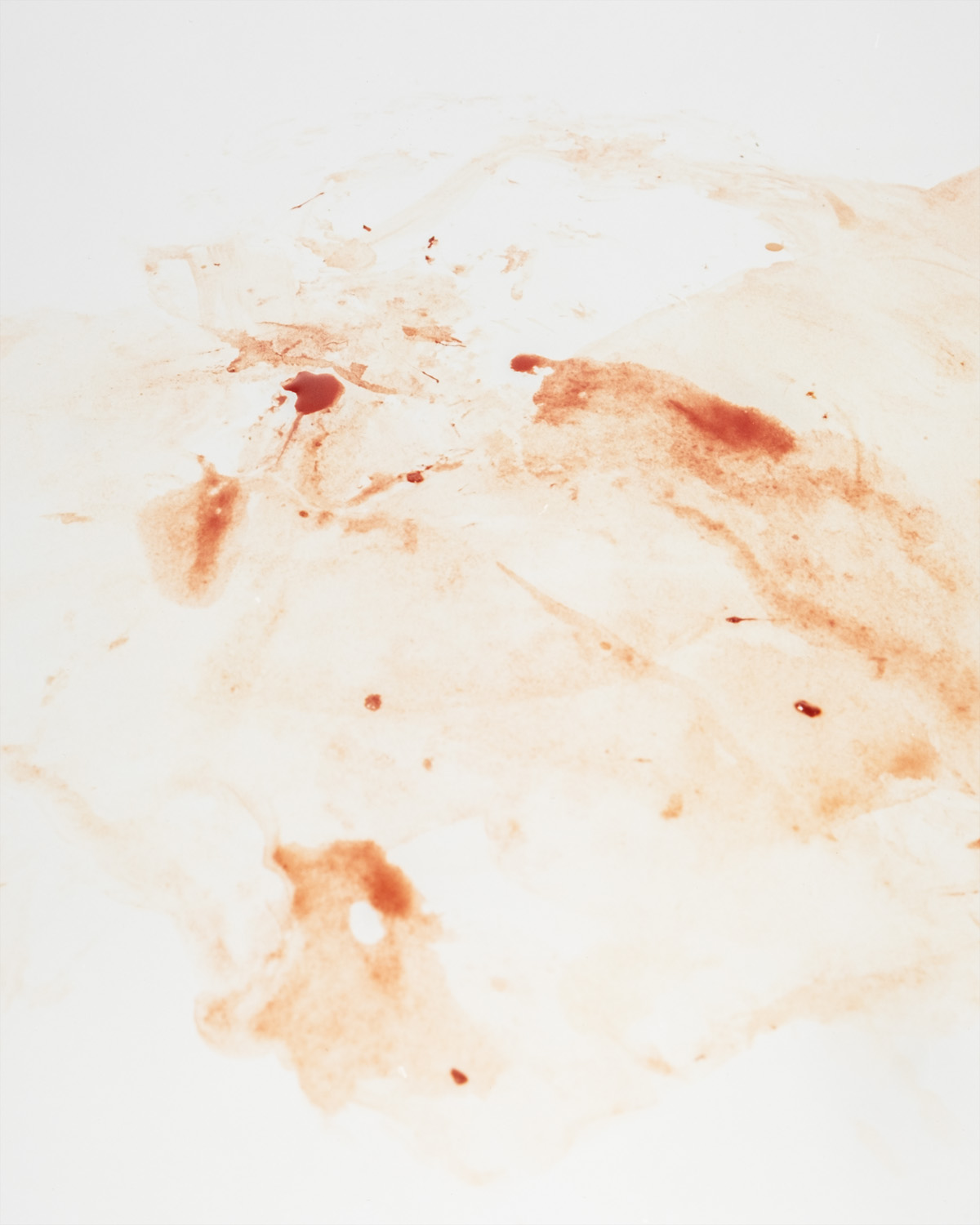
With this in mind, I find Maskineri a refreshing body of work when everything else feels very manufactured for market accommodation, or with identity needs in tow. It has become so very laborious to look at photobooks these days, so finding a title that swings aesthetics toward the abject and death feels, perhaps contrarily, fresh. There is very little coming through the net that has any spice of originality or that bucks against the trends of obvious politics.
Uitto’s work bucks against this trend and presents a link back to the visceral (one world, one meat) interest in photography and its ability to selectively encourage a haptic and squemish potential for discussion. I hope he keeps this spark in the work, and instead of stopping for the salutations of polite society, goes even deeper into the bodily terrain, shedding all manner of courtesy, leveraging filth and grotesquerie to new levels, pushing the envelope while regarding the obvious death drive within the work as powerful and worthy of longer contemplation. Perhaps it’s just a bad breakup, and I have it all wrong, but at heart, we continue.
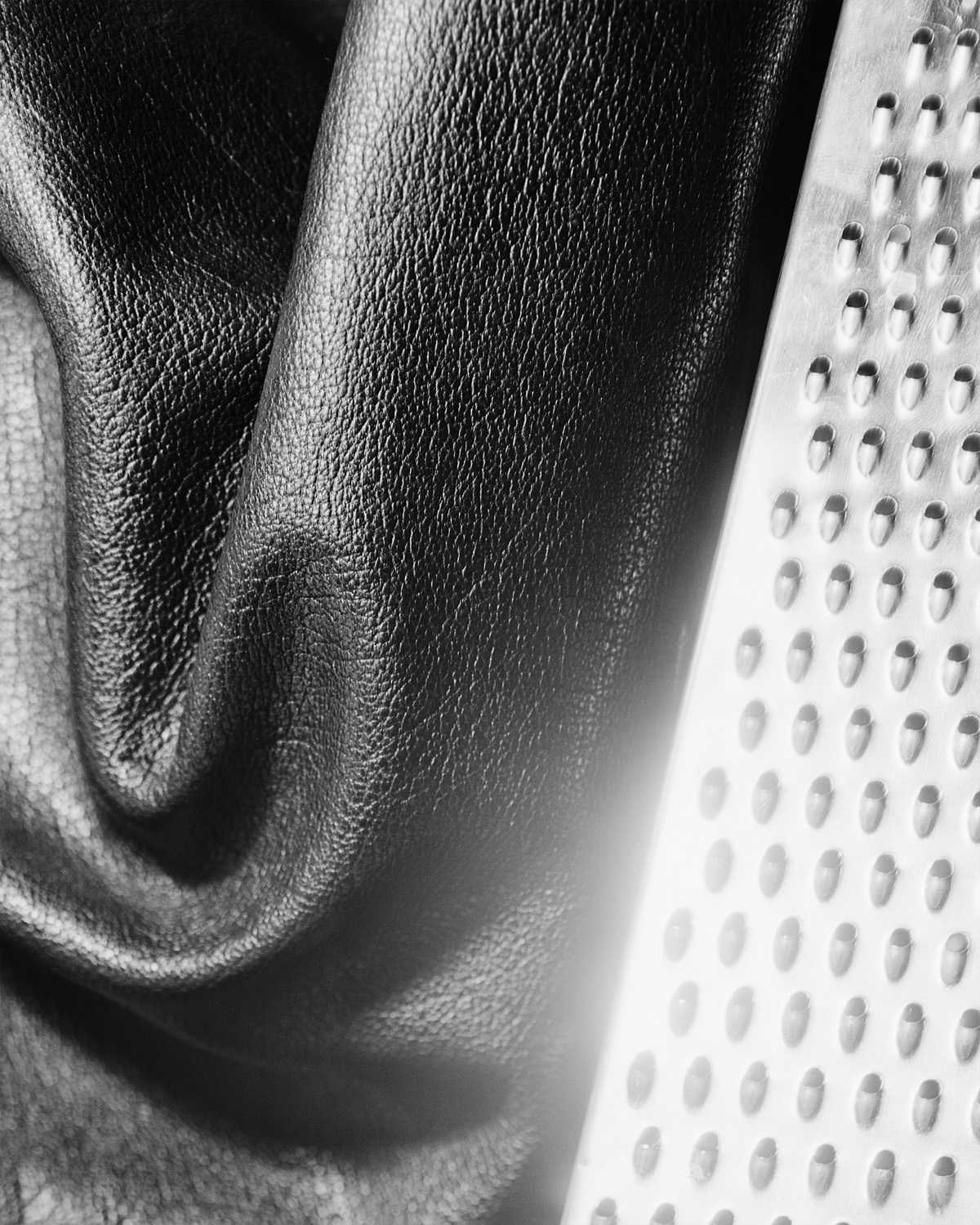
You won’t likely get a copy of the book, as it is severely limited, but you can watch the artist’s movements, follow him, and reach out. The work shows promise for the future, and if I had my druthers, I might suggest further research into the Vienna Aktionists, Christopher Williams, Paul Outerbridge, Kiki Smith, and Inose Kou. Again, I find the work refreshing, well-executed, and a return to fundamental realities in a world of division and strife.