
In the ever-expanding historiography of photobook culture and history, once we escape the tedium of nationalism embedded in the ceaseless photobooks from “X” country, we can finally begin to untie genre, and to make sense of what attitudes that exceed these nationalistic behaviors have been present in the making of books throughout the 20th and 21st Centuries. For my two cents, I am actively looking at the condition of the photobook as it relates to true crime and have been fascinated to see how photographs, in general, stretched beyond the obvious into various permutations of visual culture. While not strictly about the photobook itself, there is obvious crossover within the photobook medium of said material, if not in droves, in much more material than I had quantified in my initial suspicions. This pursuit has led me down several fanciful rabbit holes, and I am enjoying, if one can use such a word, the pursuit of these macabre and desolate titles.
When thinking about the many iterations of pursuits available in the photobook medium and its genres, a few different permutations have emerged over the past decade or so. First are photobooks dealing companies. There have been round discussions on the matter from Jeff Ladd, Bart Sogredrager, and Gerry Badger, amongst other interested parties, looking at the phenomenon of the company photobook produced in the 20th century, with predominantly European industrial companies producing annual books with relatively well-known photographers for their staff and company affiliates, a sort of proof of work, if that is not too obnoxious. As a lost format, it is profoundly interesting to see artists like Germany’s Paul Wolff produce these no-expense-spared books with surprising avant-garde design and high-value production.
The second point of interest concerns the title I am reviewing here: the children’s photobook genre. Though not a new topic of internets, David Campany’s article on the matter appeared in Irish photography magazine Source in 2008, and there are further investigations appearing on the subject as early as 1999, with a book from Mus White on the matter entitled, Fromt the Mundane to the Magical: Photographically Illustrated Children’s Books, 1854-1945, published by Dawson’s Book Shop. I suspect there are other articles and nods even earlier. This points to a rich fascination with the subject matter. For people who collect photobooks, the subject is often considered playful to the point of nostalgia or kitsch, and for those interested in design, they create a rich tapestry from which to look at all the possibilities of illustration when the subject matter commands something less overtly serious,m designed with children and aptitude in mind.
It is, I imagine, similar to the way people study the history of anime or cartoon production. The great thing in the case of the Children’s photobook is that it is not preferential to photography itself, but to the intended audience of children, who will read it apart from theory, the condition of art, or its histories. This gives the children’s book an almost unparalleled freedom to create books in which the directive stems less from the confines of serious art than it does from its functional joy, a lesson we might all think about as we pander to the world our very serious projects about the very serious world we inhabit.
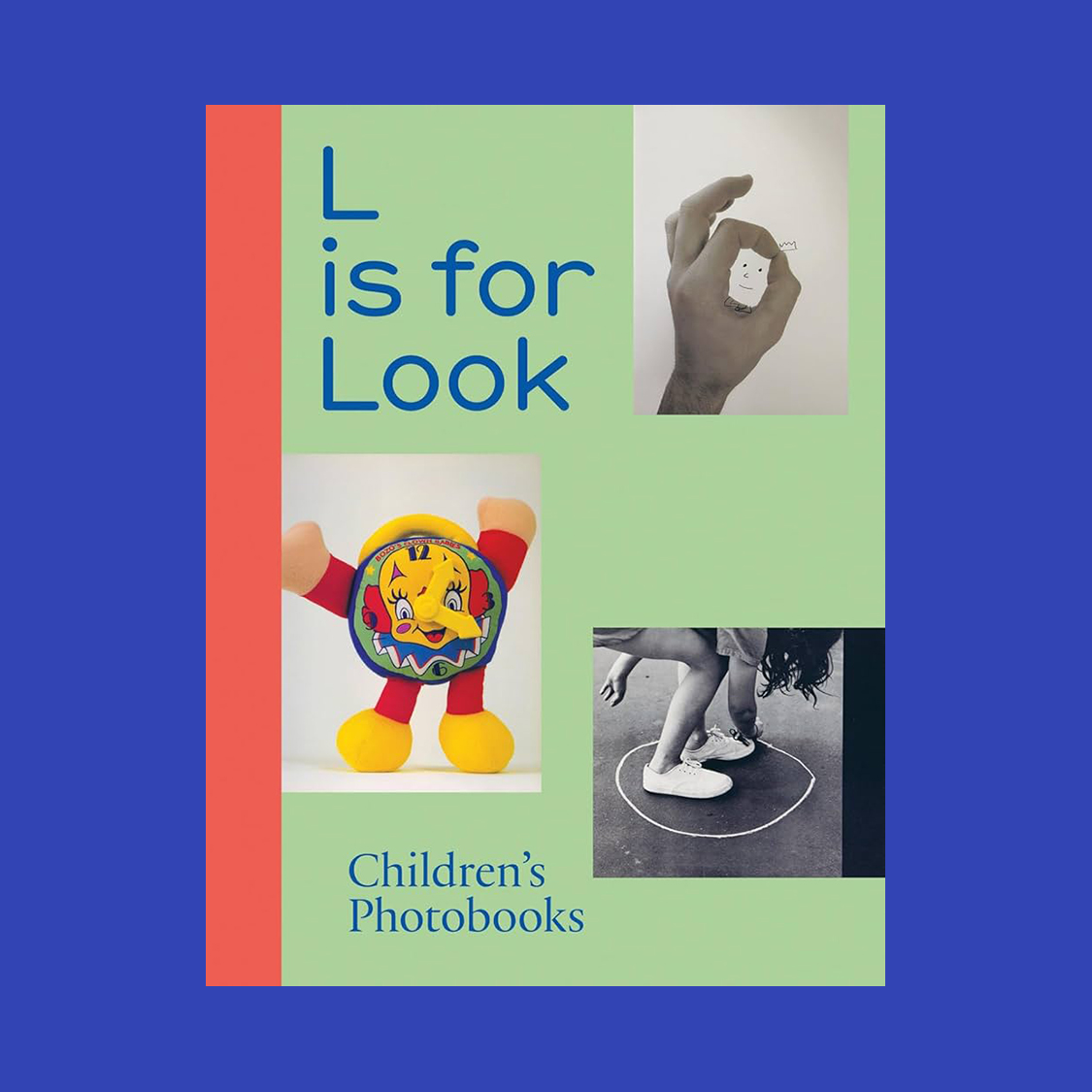
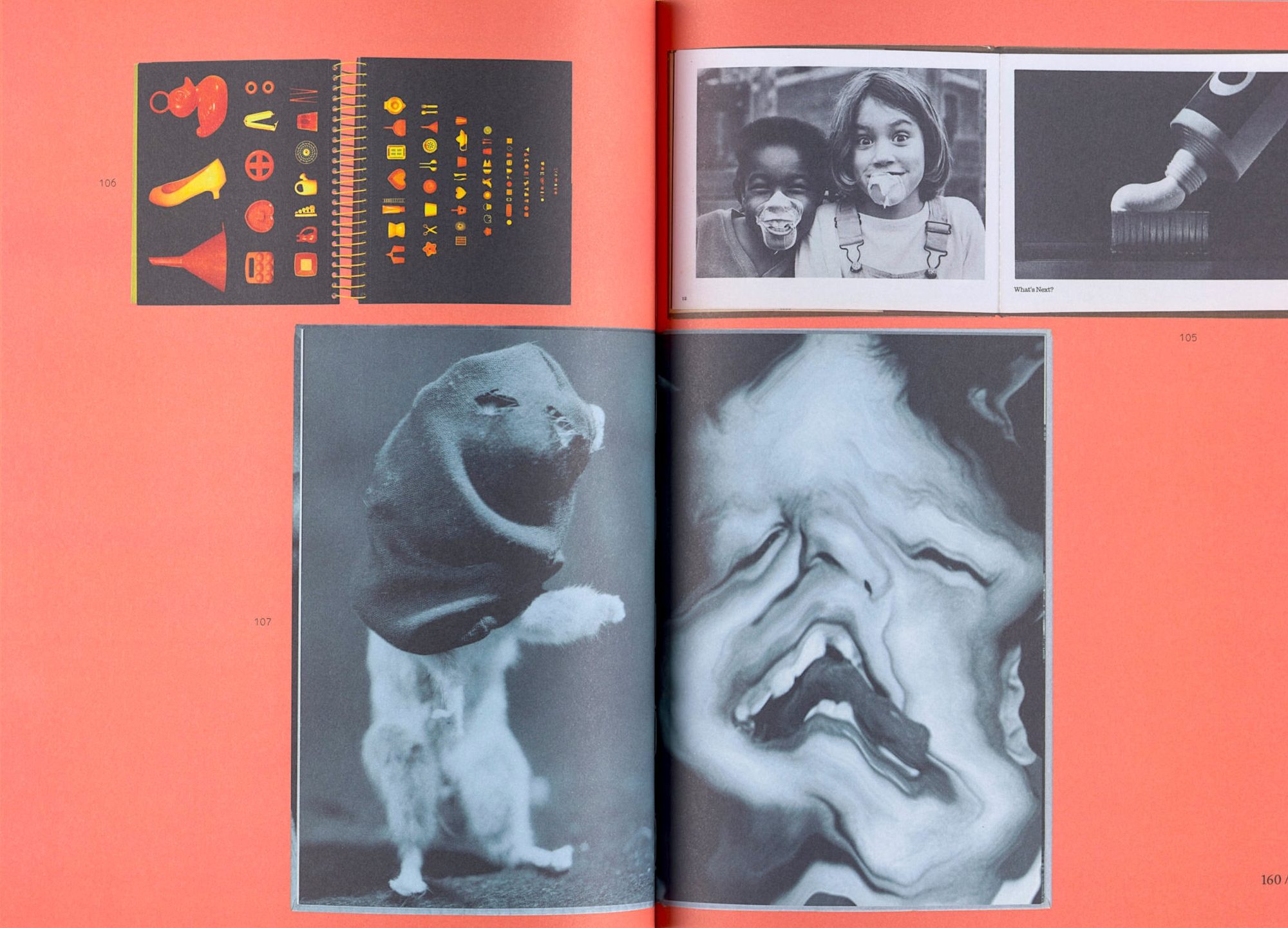
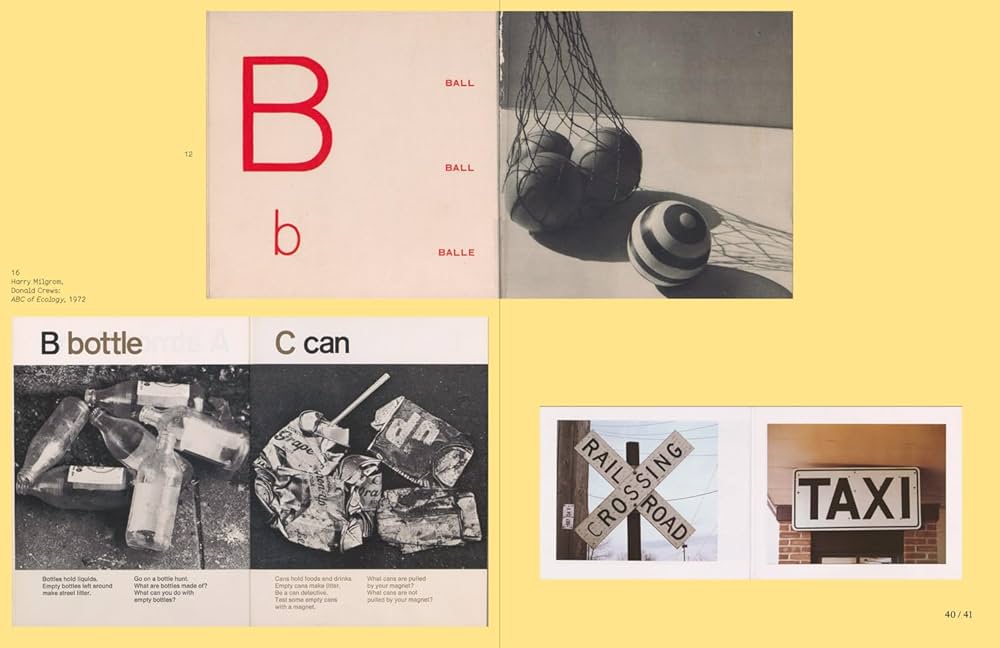
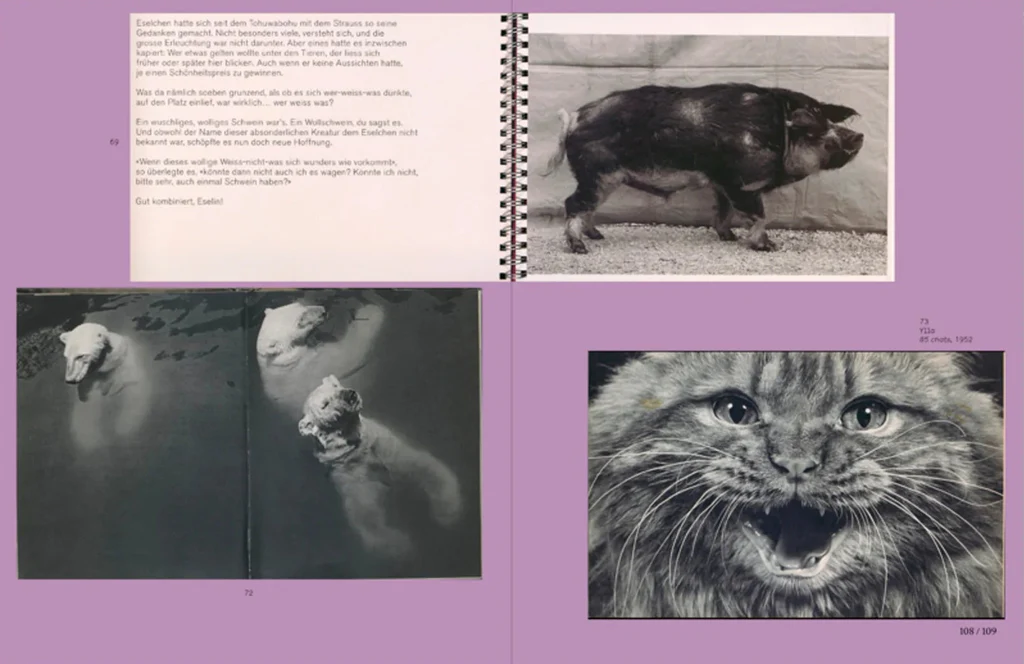
With L is for Look (Spector 2025), one of the great things about this addition to the discussion regarding the children’s genre of the photobook is how the team used the audience of these (now) historical books to speak to the reader of the historiography. Brightly colored and significantly playful, with different-colored pahges and layouts that speak to the original books, we are, as the adult audience to which it is intended, left with a book that gives a serious topic its due without breaking the code for which it has previously been delivered. What is created is a celebratory overview of the Children’s photobook, with illuminating examples, amply illustrated throughout, something we do not get in former articles, and attempts to show the history of the genre.
Whereas the Mus White book is fantastic as an opening gambit on the subject and traces the history of these books back to the 19th Century, L is for Look details the 20th Century production of the work and does so with a sense of wonder, transmitting the sense of joy found in the original readings of the books. This should be considered as an exceptional decision by the curatorial and design team. With this, they were also able to devise a system of information that still contextualizes the movement throughout, with stellar essays and great text interleaving, and half-pages summarizing what is on view without letting the text completely overshadow the experience of seeing the books, which is crucial. In many ways, the book occupies this blissful territory of utility, history, and play, making it compelling and well worth picking up for the photobook connoisseur.
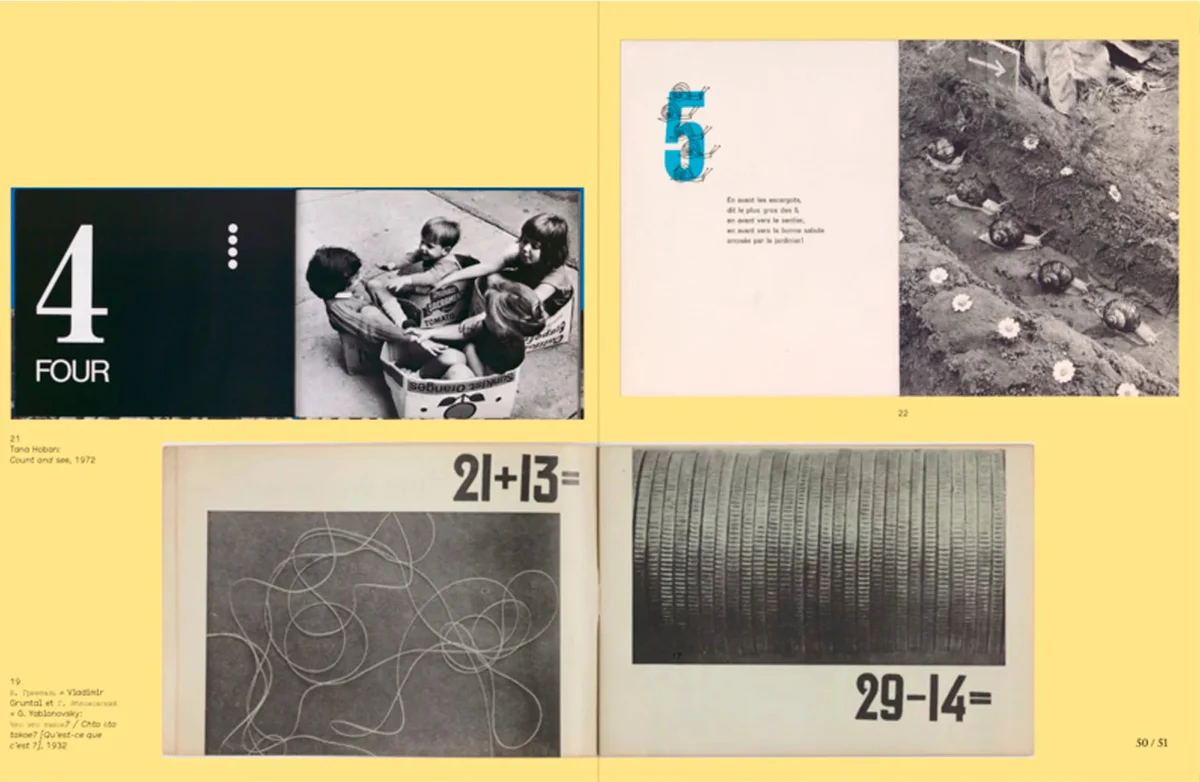
Whereas I personally have little interest in collecting the books outlined within as perfunctory means to enhancing my library, I love seeing what the team has chosen from what must be, if we expand the territory, thousands of childrenb;s books out there with photographic illustrations. I feel that the essays reflect a conscious discussion of how we interpret photographic imagery in our formative years and how these considerations are part of a legitimate, like folk art and family albums before it, way to discuss the broader… picture (cough, cough) of photography.
I thoroughly recommend this book to both photobook creators and collectors. I feel that designers and artists can benefit from understanding how different target audiences, by way of design, and execuation can be used to expand our collective posturing over the production of our so serious books and that in looking backward, we might find that creative spark in reading and delineating photos that children and children;s book authors seem to eclipse us on at every conceivable corner. There is an incredible amount of possibility in these books, and L is for Looking is a sorely needed investigation ont the matter, no matter how many articles or books have been written on the topic previously.
L is for Look Children’s Books
Spector Books
Anne Lacoste, Paul Cottin, Rose Durr, et al.