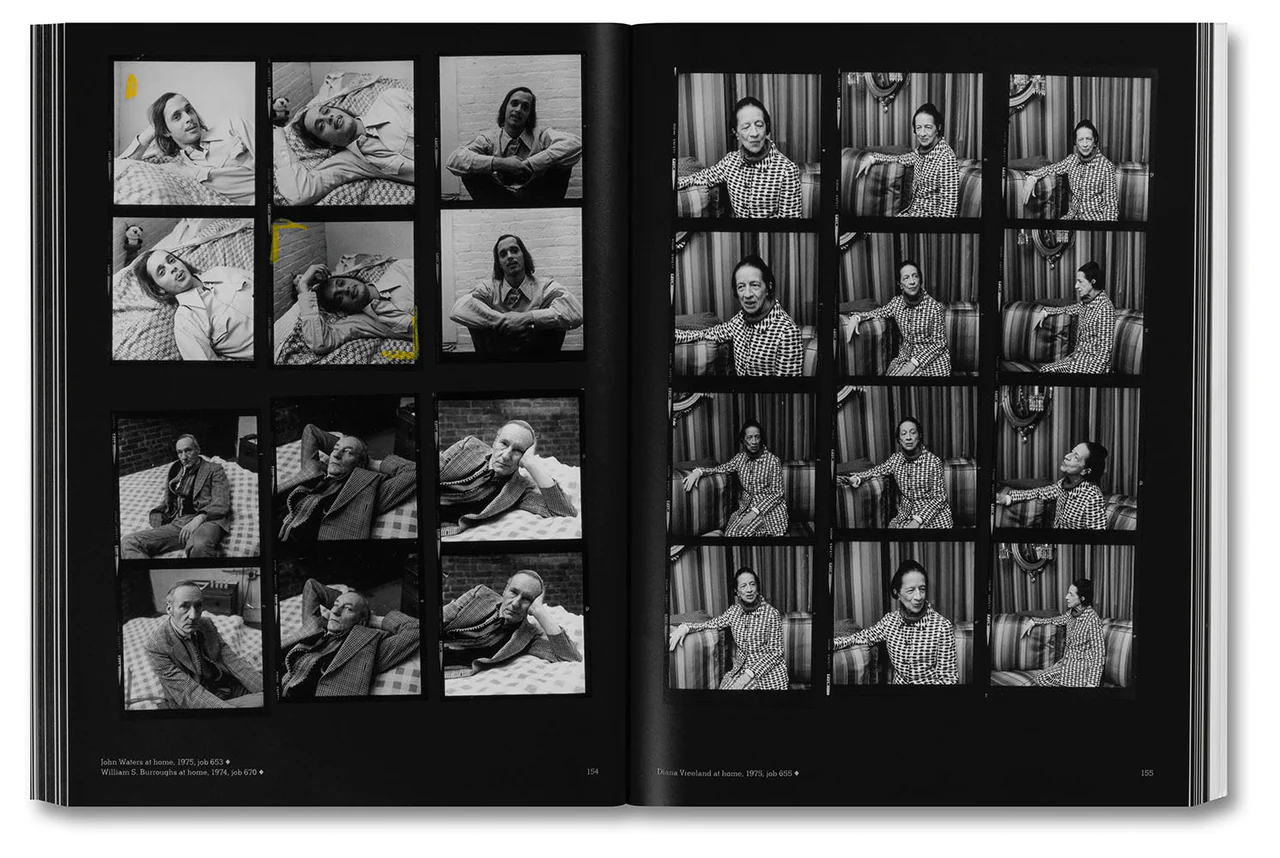
 This is the second book from MACK offering a look into the theme of contact sheets presented over the past year. The first was David Armstrong’s book Contacts (I mean, how else should you call these, Sheets?), published last October, which similarly examined a brilliant tranche of Armstrong’s work through the diminutive, if plentiful, images on his contact sheets. Both artists share some crossover in themes. Both Hujar and Armstrong are very talented portraitists and have captured that thin slice of bohemia mixed with notable fame found between Boston and New York. With Armstrong, his deep friendship with Nan Goldin is, and many of the other “Boston School” artists of the 70s and 80s brought him close to Hujar’s circle of similar associations in New York.
There is some extended overlap between the artists and their shared history of LGBTQ within the scene, also bringing their intentions closer into alignment, namely to document, as part of their practice, the men and women whose efforts at gay liberation are now considered historic. These two books are to be seen first as documents of the artist’s creative life and, second, as a form of historical archaeology. Both tomes outline the artist’s process through giving the viewer a more comprehensive look at the photographs/frames that were not chosen as part of the iconic output, giving the reader a broader sense of each artist’s approach to subject and camera, which may seem a bit inwardly geeky, but does not diminish from the subject matter itself.
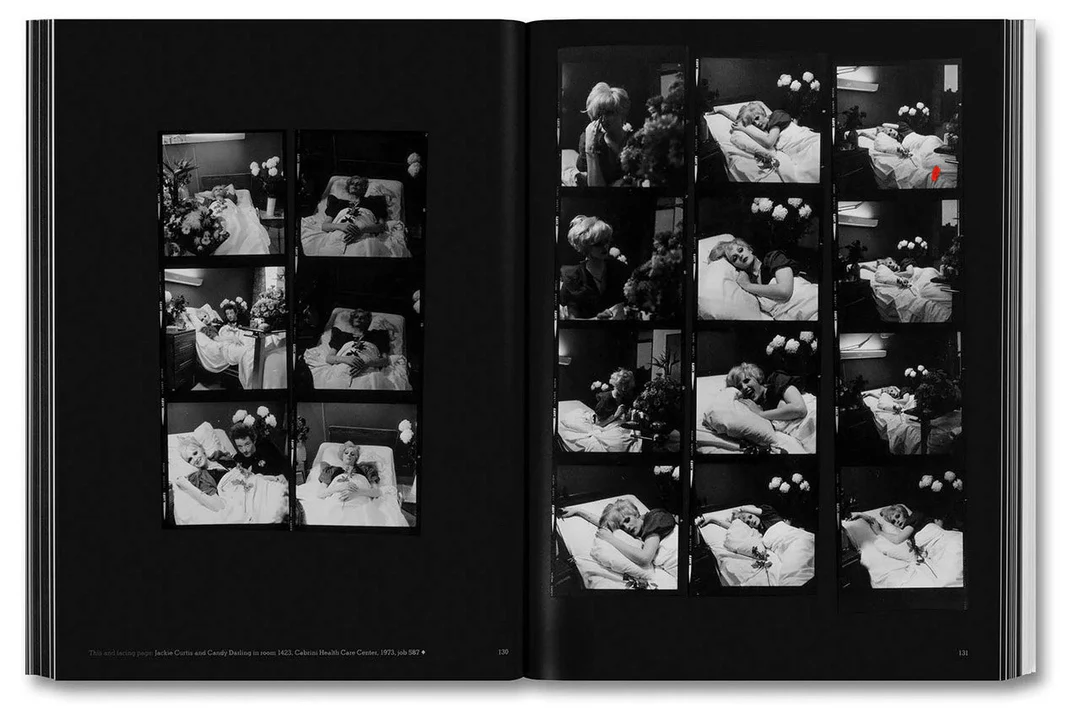 With Hujar: Contact, the resounding experience of thumbing through the many photographic frames presented within is at once nostalgic for some of us who have followed Hujar’s work since the 90s or earlier, presenting iterative portraits of the key individuals that have aligned his career and life, sometimes associated to his exceptional book Portraits in Life and Death, from 1976, these characters begin to emerge from the overflow of images and one, if familiar with that book begins to pose and trace circles over the faces of those subjects, looking at adjacent images, imagining how the book might have been different with a slightly different protrait at a different angle, realizing, for example, among other things, that there were actually very few images of the Palermo Capuchin Crypts, when perhaps one expected more, acknowledging Hujar’s deep skill in getting the images that he did in such a low-lit and existential environment ( I have photographed it several itmes, it is overpowering). Paul Thek becomes an essential character in the book, Hujar’s boyfriend and an eminent artist in his own right, and we trace the relationships, desires, and camaraderie throughout the book and the city itself.
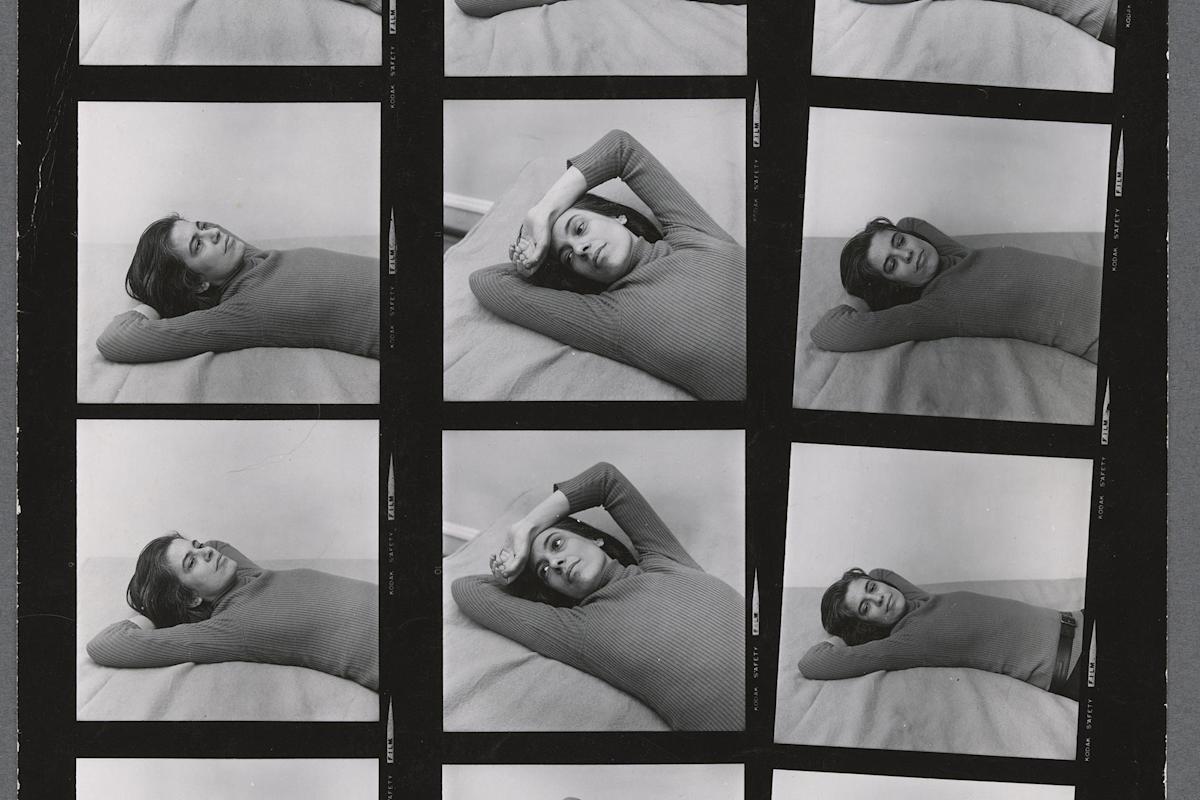
There is a mix of squares and 35mm film, which is interesting as it takes a special type of mental gymnastics or rewinding each time the camera is changed on the book spreads. The format often dictates the image composition and how the operator, to a great extent, makes work, and in my estimation, it’s fairly clear that Hujar was very gifted with the square over the rectangle. It also appears to be his preference. The square, though it may sound contrary when written, is actually quite amenable to the idea of portraiture, for which Hujar was a master. One might think that a rectangle fits the human form better, but with skill in posing, the square becomes more intriguing for the choices that must be made in getting the subject within those walls successfully. It asks the photographer to bend the knee often and to get close to their chosen subject, creating intimacy. Many of Hujar’s greatest images come from his squared-off subjects, like Susan Sontag, Candy Darling, William Burroughs, etc., all recumbent, some lying down, others casually prostrate. It makes the frame feel tight but not claustrophobic, bringing the viewer very close to the subject without much distraction.
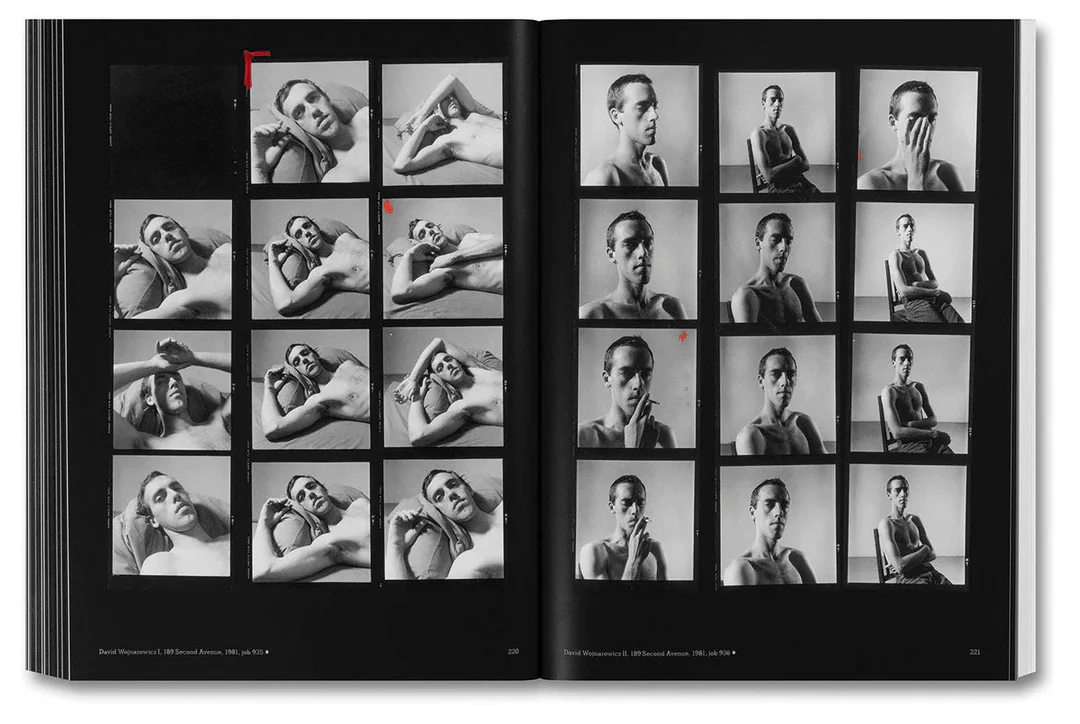 Queer and intellectual icons surface through the contact sheets. The pope of filth, John Waters, William S.Burroughs, Candy Darling, David Wojnarowicz, and more, and where this is an exceptional trove of material for that community, one only needs to skim the photographs inside to realize how essential his coverage of the New York scene in the 70s and 80s was. He caught the spark as it began to rage into a full-blown fire, capturing several generations of icons, many of whom would be lost like himself and Thek, much before their time. It is with some lament that we read these portraits, but greater still is the need to recognize their significance and Hujar’s great gifts and contributions, to see in all the boudoir application a life documented and lived as art, and artful with purpose.
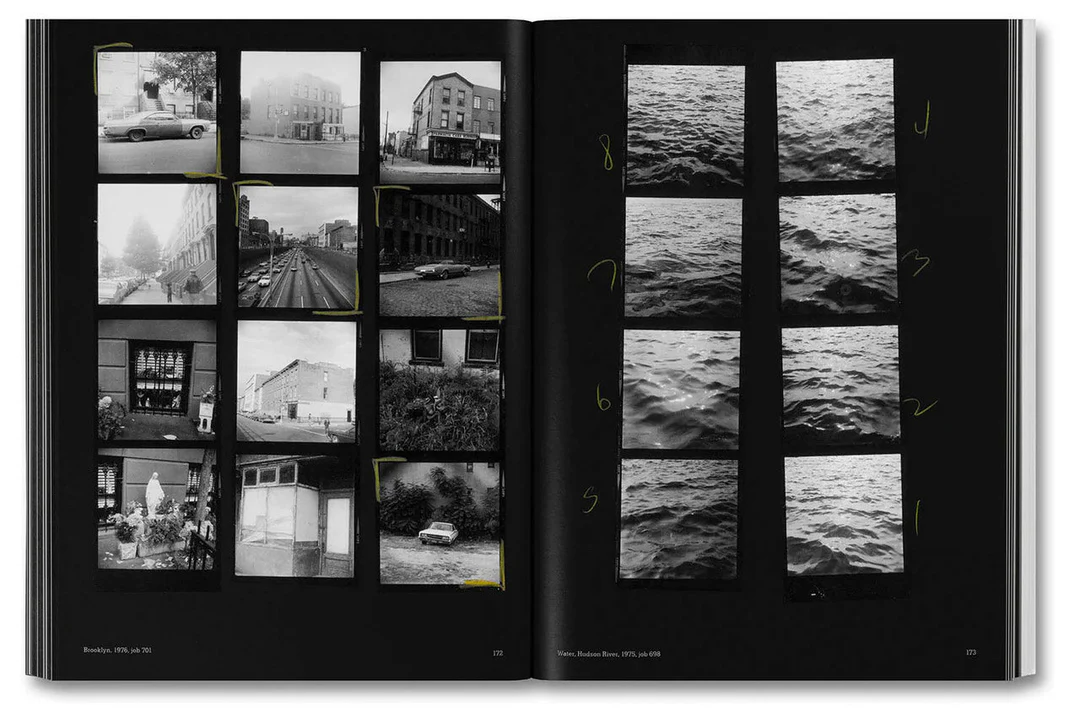 Again, I feel the need to praise Mack’s courship of publishing archival material like this. It is manna for many of us who feel the photobook world at large is shrinking into redundancy, repetitiveness, and just general uninspired churning. These books offer a broader look at lives of significance and cross the thresholds of various cultural appetites, from LGBTQ studies to death studies to AIDS-related social studies to the procedural role of the photographic process. I find these mediations entirely successful. Although Hujar is having another moment, having been re-examined by MACK and Moyra Davies previously, alongside Primary Info’s excellent book on his relationship to Thek, I think this gives one of the more rounded visual assessments of his work as there is literally so much to see that one can inform oneself about the artist’s talents more than other catalogs from Mapfre, or monographs by Scalo, etc. There is no shortage of Hujar material out there, but this offers a more rounded context without laboring to be simply another survey. I really hope, between this and the Armstrong books, that we might see more and more of this type of archival digging. Highly Recommended.