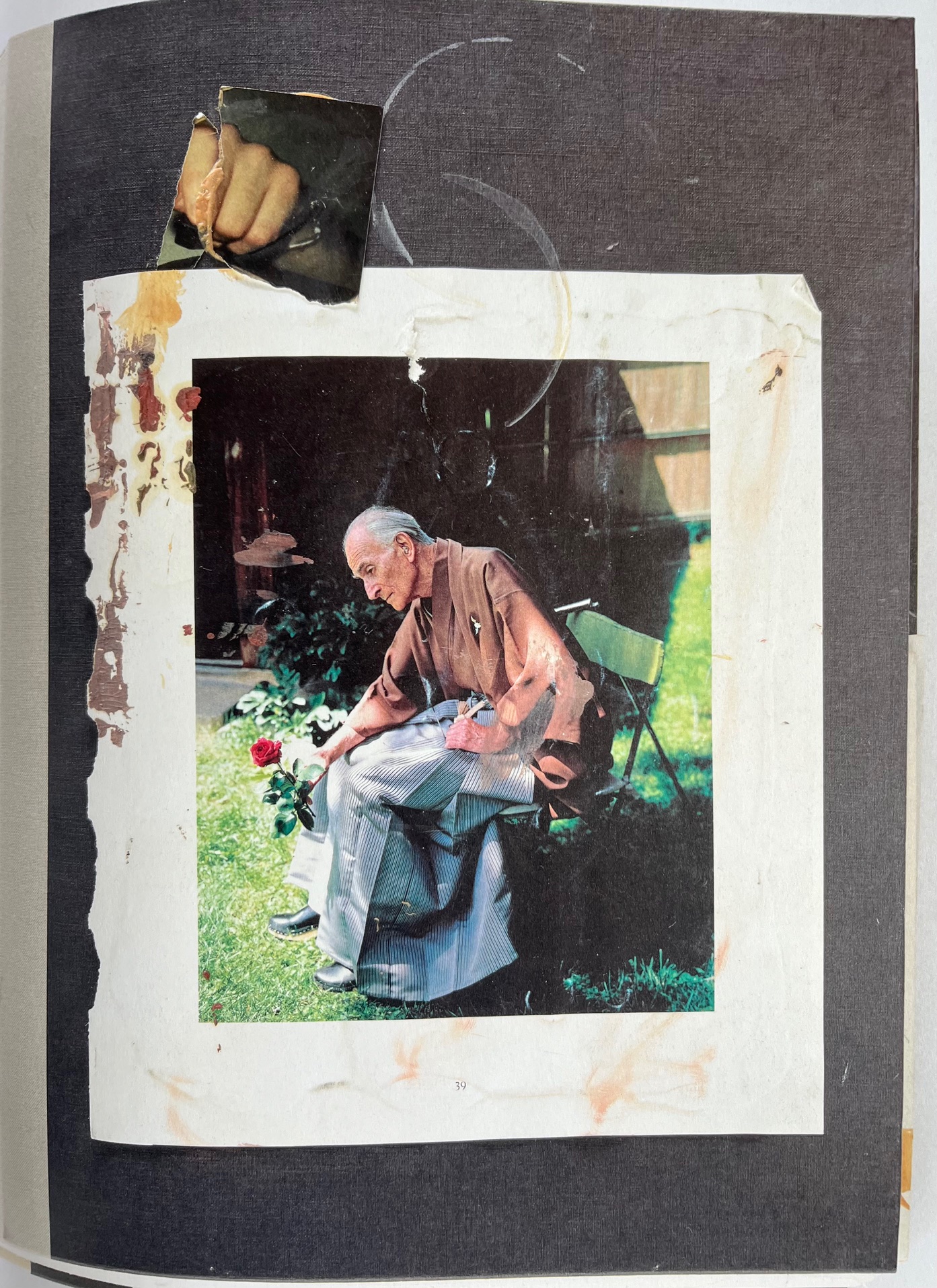
Jonathan Meese is one of those artists compelled by an unseen, yet pernicious, towering force that many of us cannot recognize as anything else but a steam engine powered by Satan and maybe curry wurst, lager, and a cartoonish desire to paint the times as a disgraceful embodiment of human spirit, causality, scum, and victory. I don’t mean this literally, though I think he might appreciate the sentiment. His output is prodigious if it weren’t for the monstorusly absurd visions he is forced to pander to. Regurgitations of war, Xardoz, and Adidas fill the world, where chaos and Amokery serve contemporary art. Its foundation is built on extremely colorful paintings in the vein of a post-Basquiat German Ultrapop, focused much less on race than on the hyper-sensitivity of a post-reconstruction Germany and a childhood spent abroad. When I look at Meese, I always hear Korn. When I look at his work, I hear DAF and the more mellifluous side of Throbbing Gristle and TOPY, ground together with techno-schlager, and I kind of want to hang out, but fear I’d chain-smoke the whole time. I feel like he would have done well in the Crunk scene.
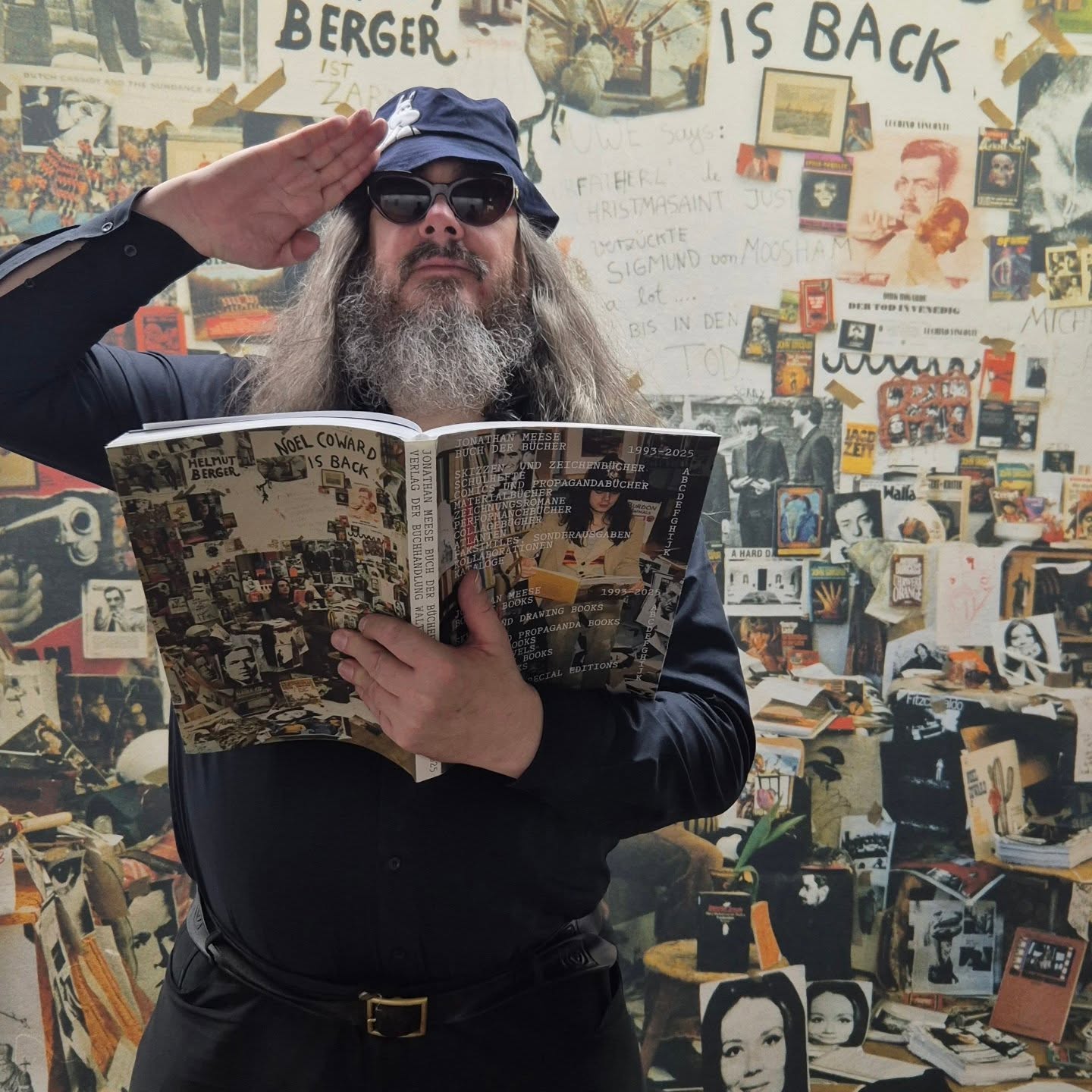
With all of this in mind, it should not be lost on anybody how expressive he is as a character and how insanely productive his output should be considered. He is not relegated to any one medium, and I think that very much follows in the tradition of other German/Swiss/Austrian artists like Thomas Hirschhorn, Dieter Roth, Martin Kippenberger, and Franz West. The flexibility of these post-post-war German artists is significant. The output is a paradox of the 20th Century’s constant consumer gloaming, using capitalist realism as a foundation, but then adding all manner of consumer pop on top, with base materials of secondary consequence. What you get is a distorted spectacle, a jack in the box with gerkin for hands topped with a taxidermied squirrel head where the jester is supposed to be, and it is rabid, looking for a fat fucking sausage finger to latch onto. Paintings, madhouse carnival ride sculptures, and paintings that brow-beat the viewer into loving Mr. Bungle and Sun Ra. The medium is not the message; it’s the cheap impostor of need. With Meese, the canvas is anything he can get his mitts on, and it should not surprise anybody that books are, like many of the 20th-century artists before him, a prime medium worth laying his manky signature to.
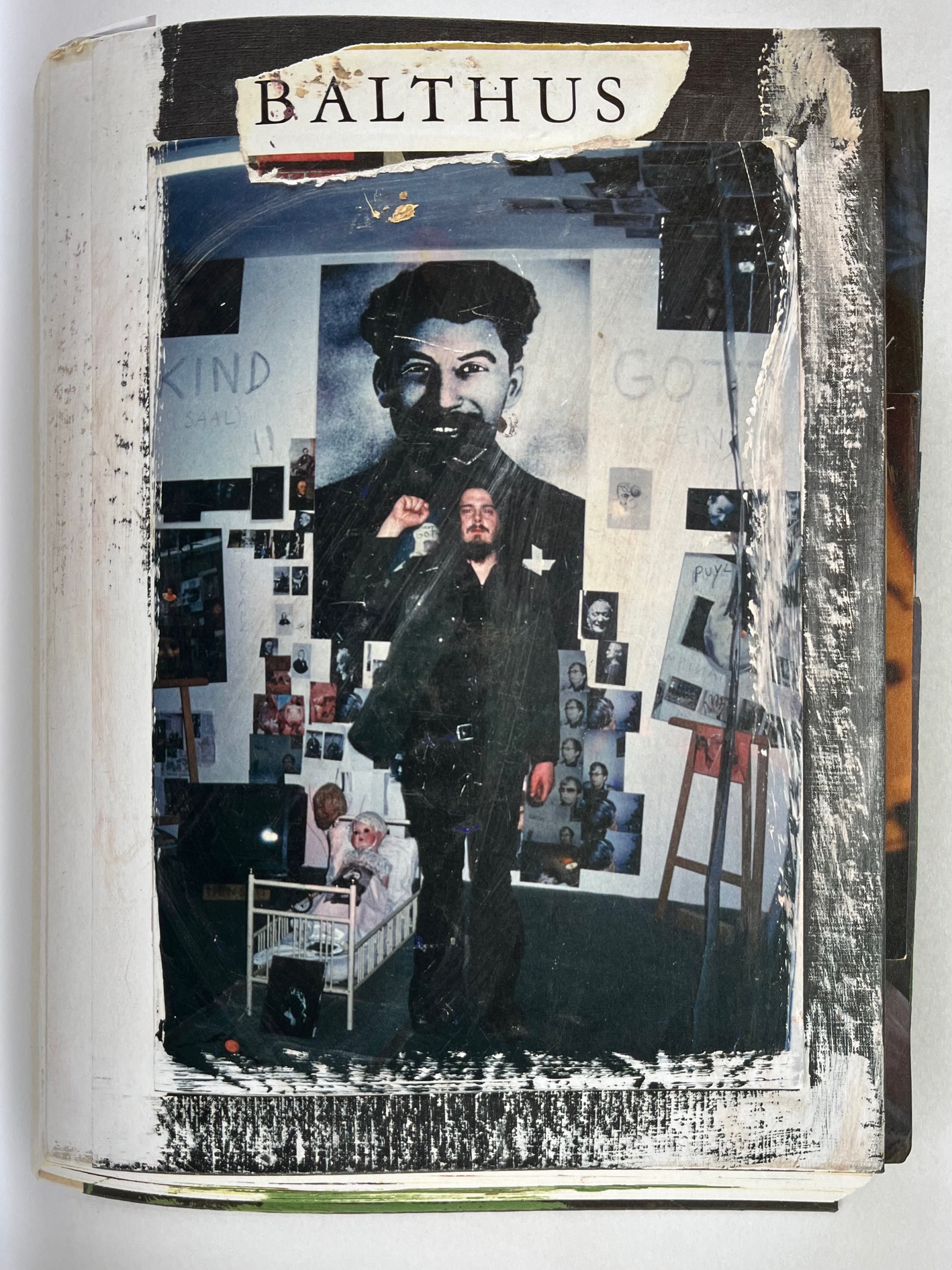
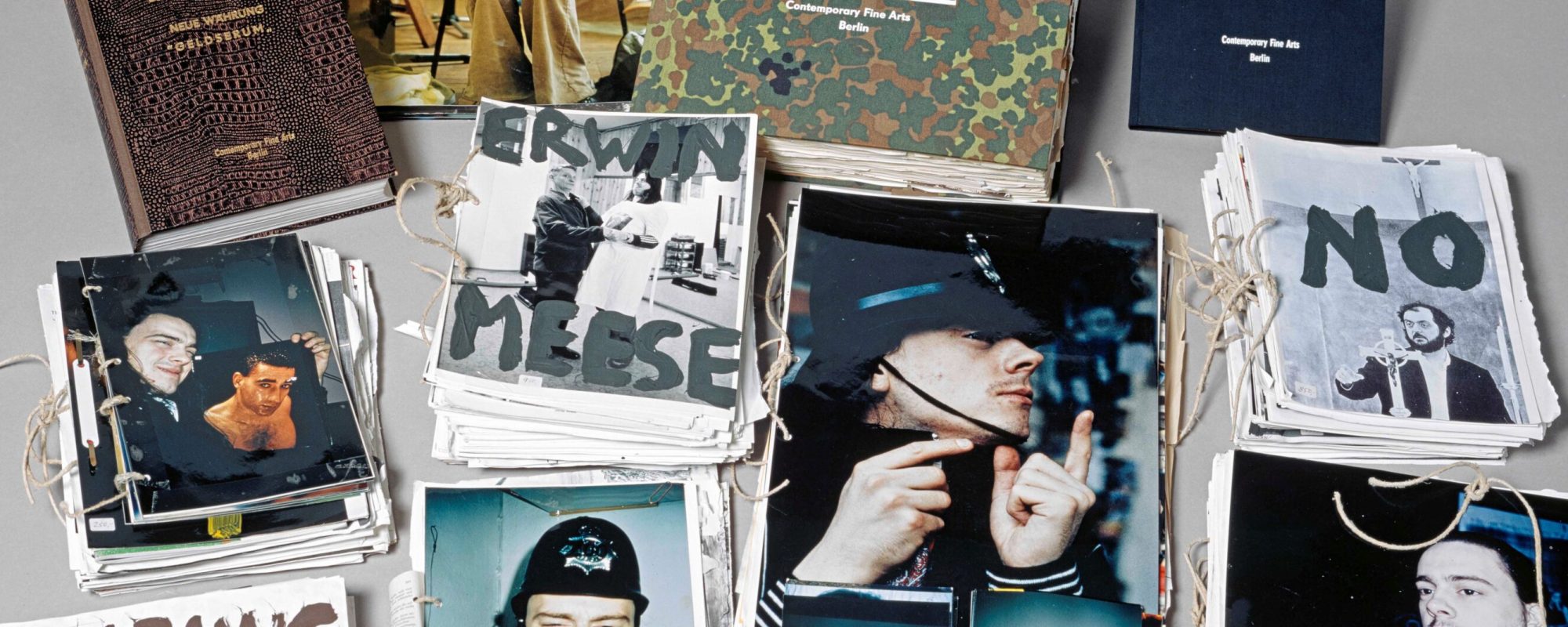
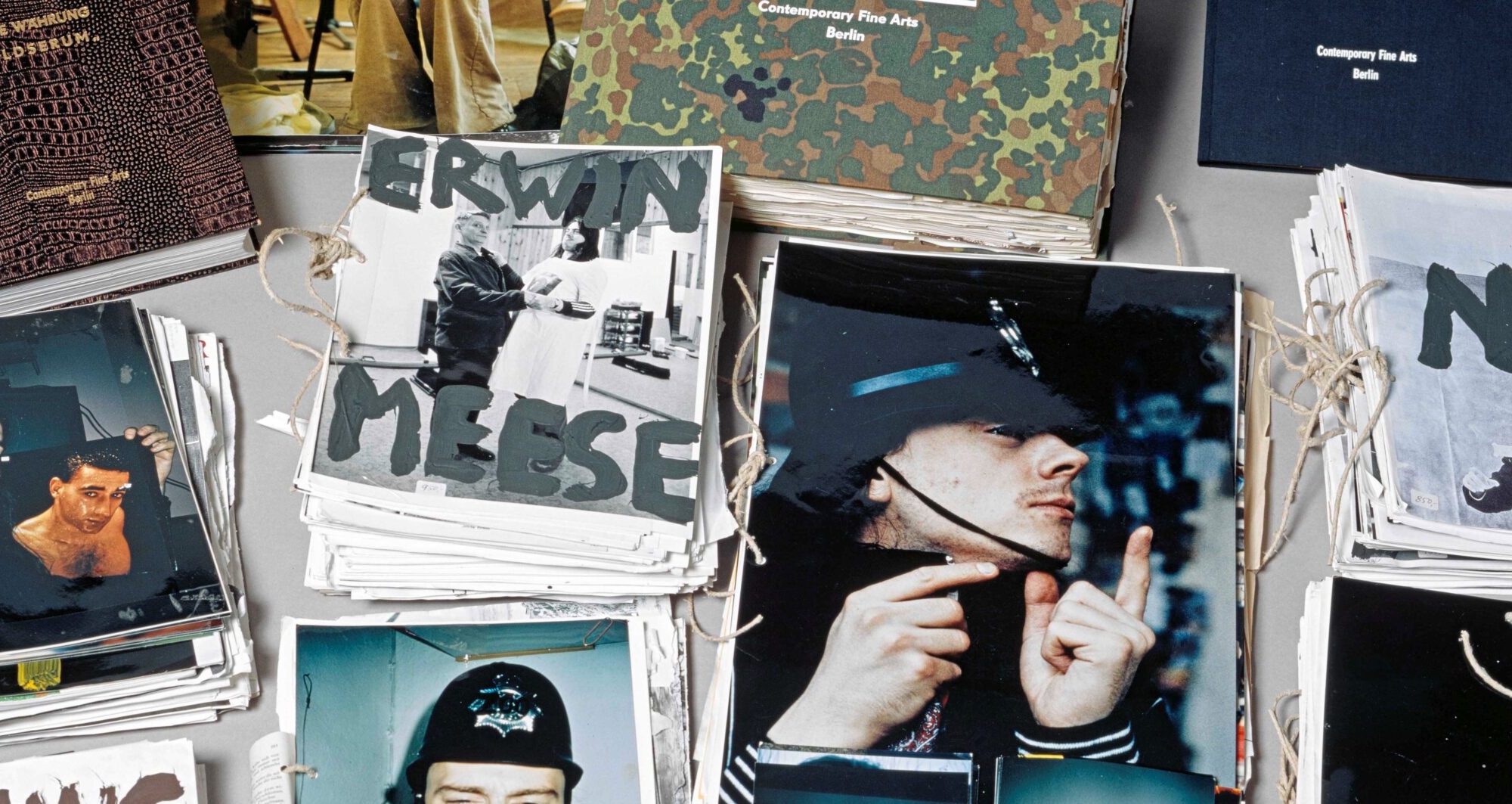
What strikes me as fantastic about his new book is that he carries forward the energy found in his sculpture, paintings, assemblages, and performances into the book, which is often seen as passive due to its normative functionality and format. Though artists like Anselm Kiefer have used the book or iterations of it as a sincere part of their output, Meese keeps the format relatively in line with how we view artists’ books, though the energy, chaos, and absurdity of his larger works teem within these slightly more diminutive offerings. Seeing the books assembled is a pleasure. Artist’s books are a fascinating category of study, as so many artists gravitate toward their form, from sketchbooks to these more holistic, if fast-moving studies. In an age when dematerialization of process seems to align with broader trends toward final products and cleanliness, the artist book may be the last bulwark of salvation for artists, as we are asked to examine the world through its digital aspirations.
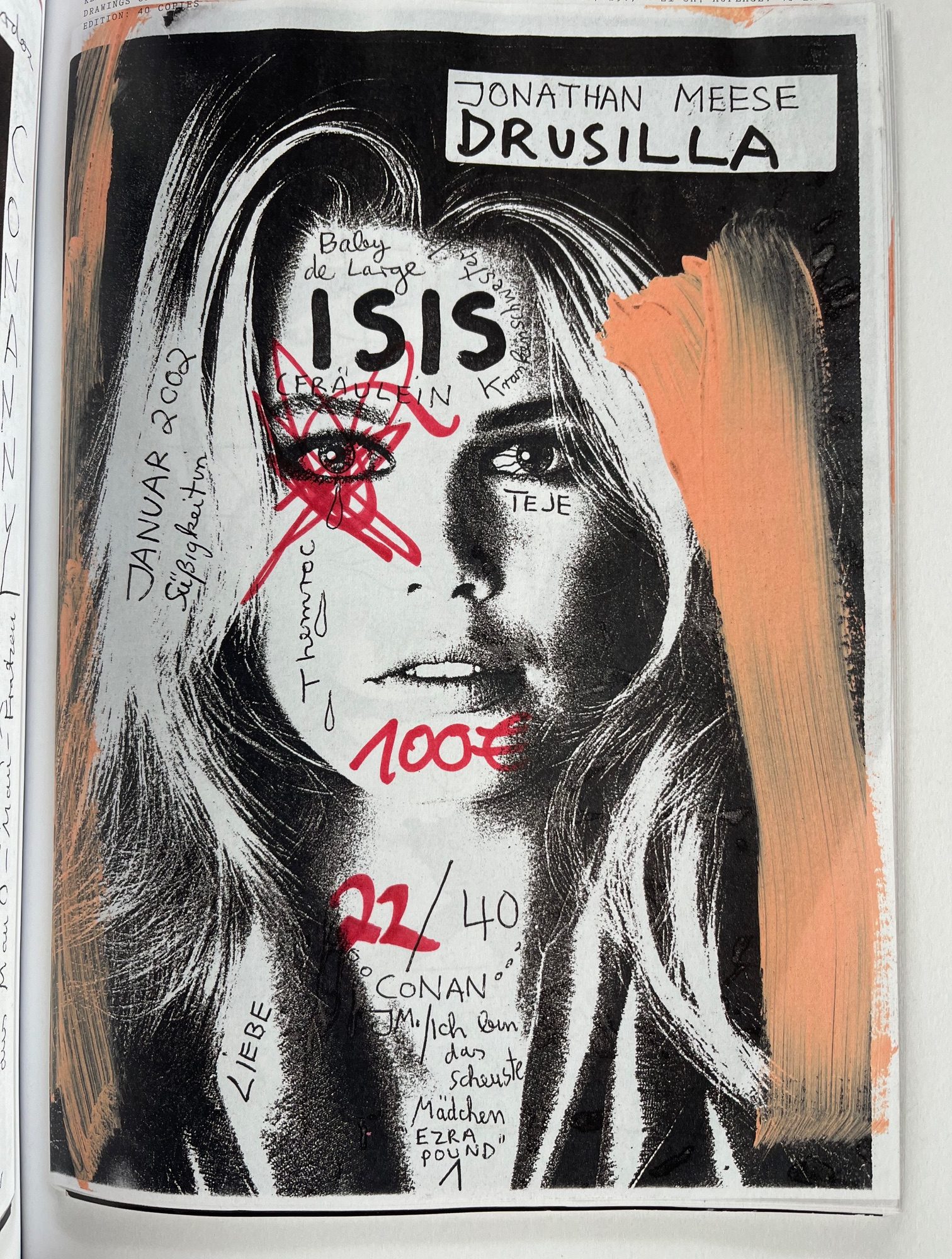
Going through the book, we are given a brief overview of Meese’s books, which translates into a type of extended collage, with comic-book overtones and punk-rock zerox (with a shoe print). I am reminded of the manic energy of Meese’s paintings, as well as of the Destroy All Monsters collective in Detroit, particularly the work of Jim Shaw, with echoes of Mike Kelley and Cary Loren. The energy is all Iggy, all motor town madness, with a profound emphasis on liberating printed forms toward the painted word, brilliantly absurd soliloquies that marry the near-present to the overflow of 20th-century terms and themes. I am reminded when looking at this book, that we must remain committed to material and to culture, however distorted in pop we decide to push it. Whether you like Meese’s work or not, this book should be a reminder of what we’re doing around here, rather than pushing a bleak trolley through a hellscape of corporatism and murderthought. Get at it, luddite!
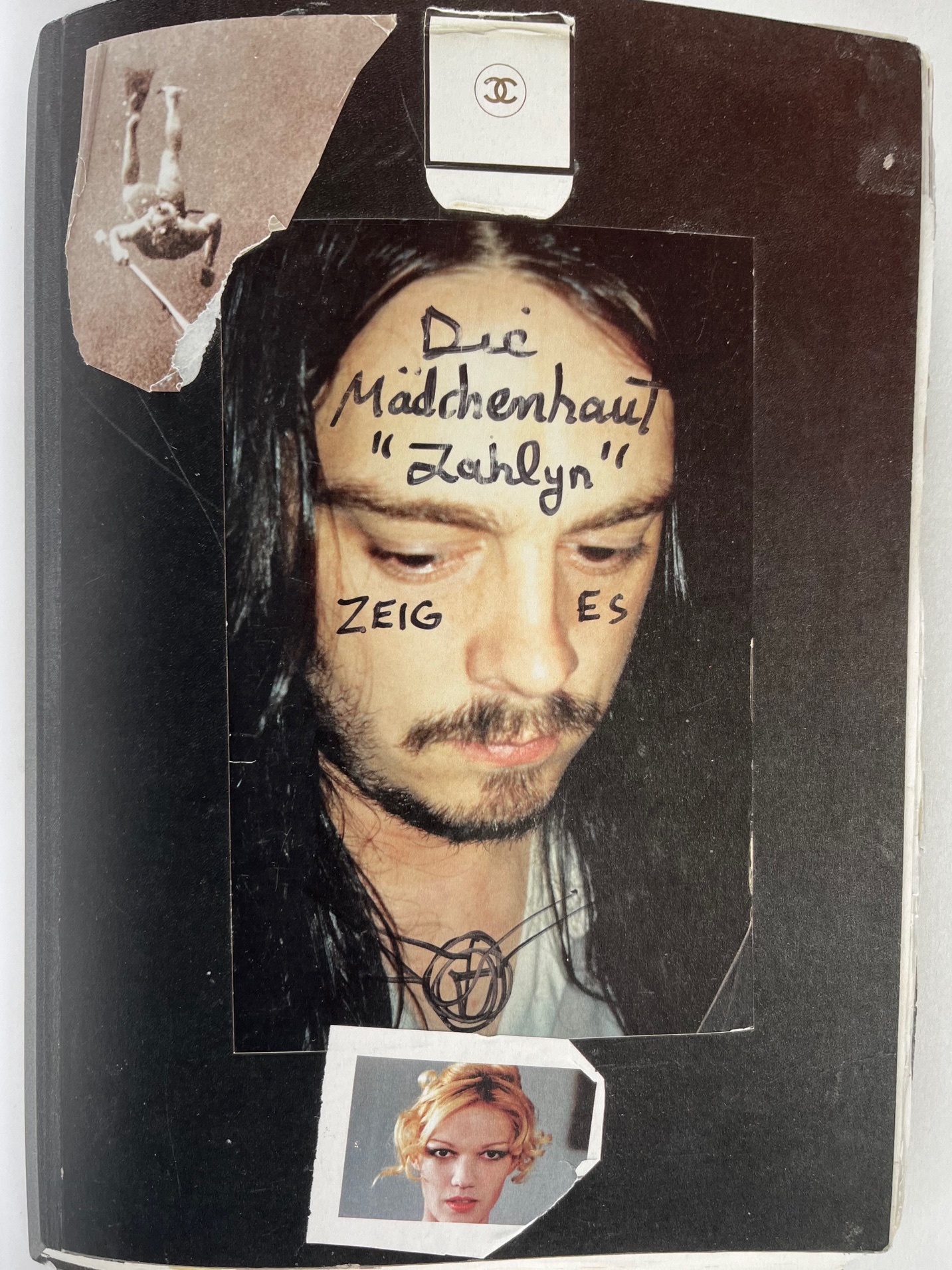
Jonathan Meese
Buch der Bücher: Books of the Books, Annotated Catalog Raisonné of the 1993 – 2025
Buchhandlung Walther Und Franz König