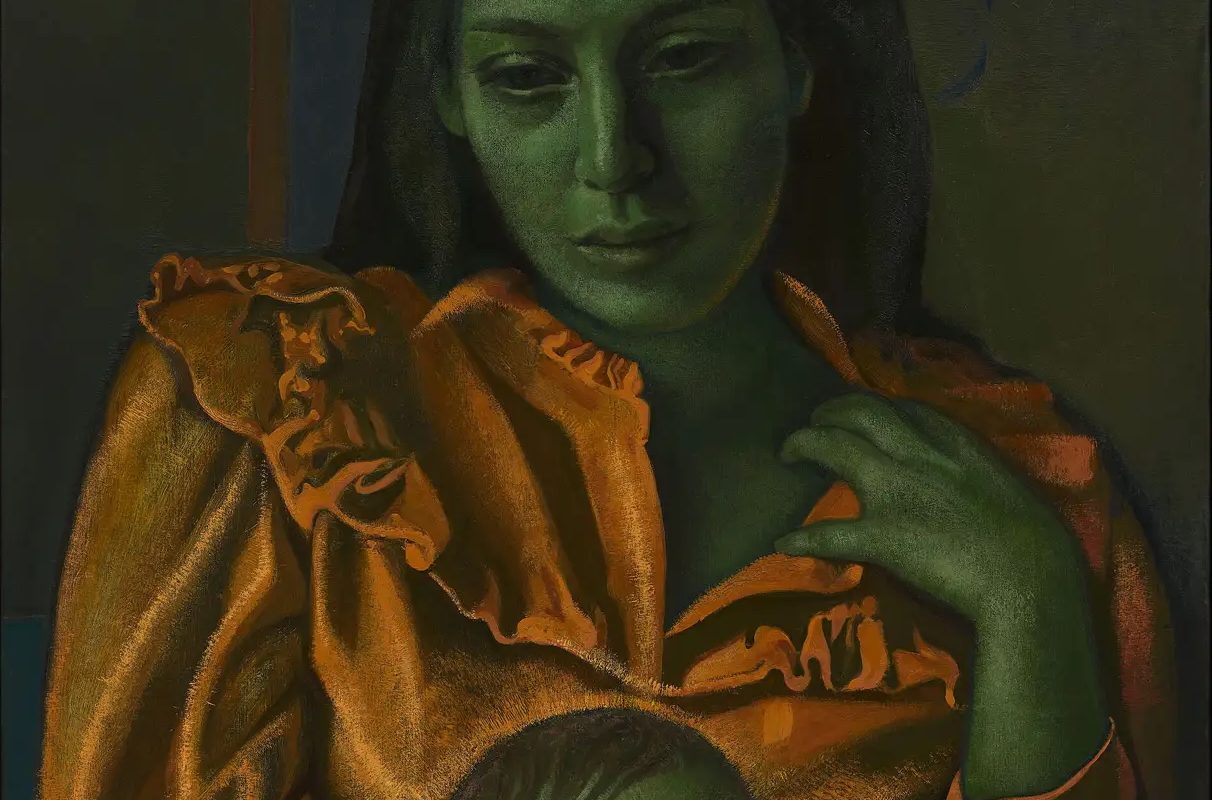

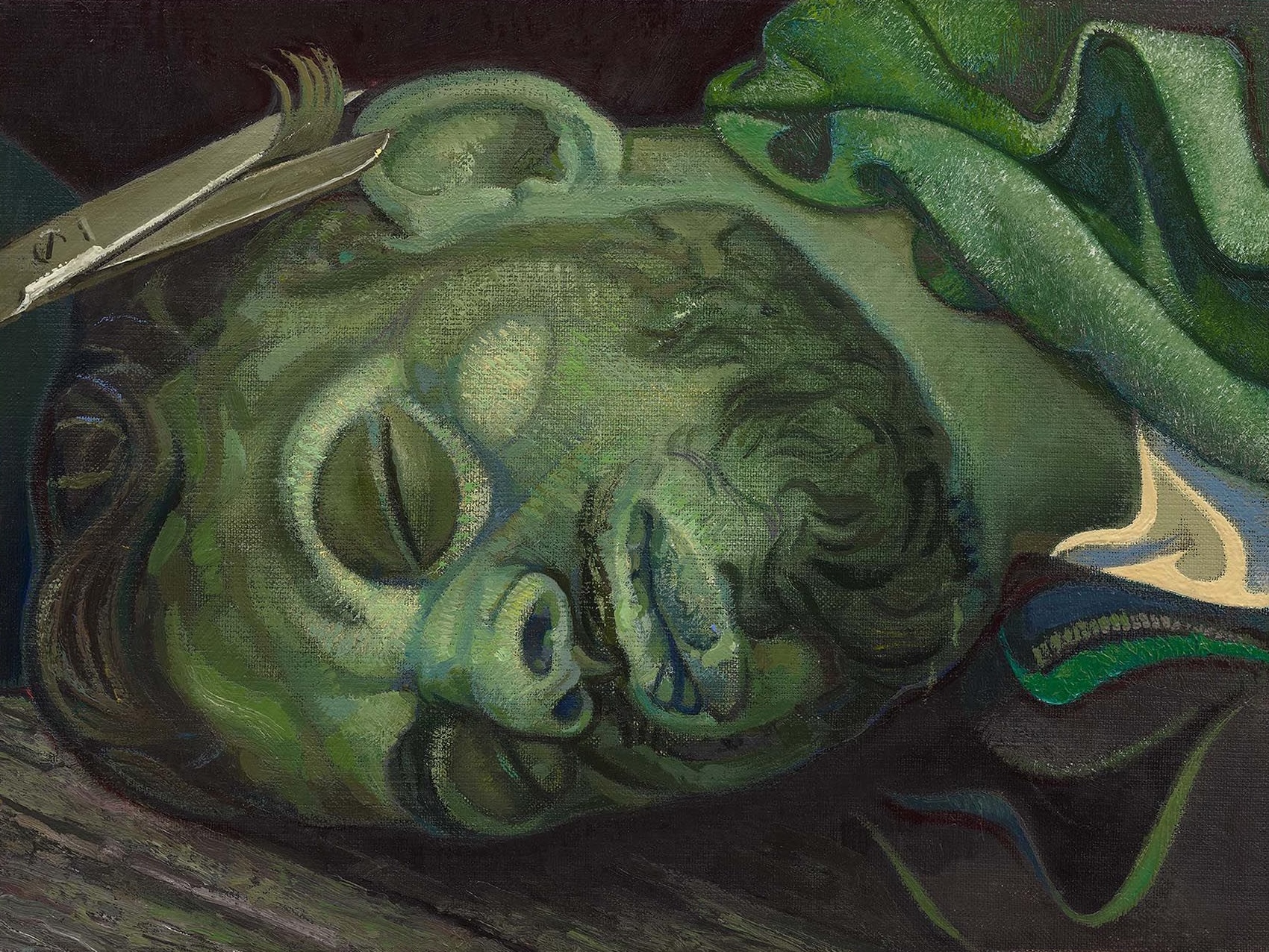
Victor Man’s painting presents a miasmic world in which death is presided over by the elegant souls of the living, and the living, in turn, are reminded of their duty as constant eulogizers of what has been lost. Playing technically off a nod to the kitsch black velvet paintings of the 1960s and to the brushstrokes of Gaugin and Van Gogh, Man’s nocturnal blue images, bathed in blue moonlight, evoke a number of art historical references from the preparatory paintings of morgue studies by Théodore Géricault for what would become one of the world’s greatest history paintings, The Raft of the Medusa to the unnatural colors of the Fauvists if they had been interested in the compositions of the northern renaiisance painting of Dieric Bouts or Rogier van der Weyden.

Victor Man
Pietas (Flower of Gaza), 2025 (Top), Oil on Canvas, 40 × 50 cm.
Ladro Dormente, 2024 (Bottom) Oil on Canvas, 11 3/4 x 15 3/4 inches (30 x 40 cm)
Oil on canvas
Further, his palette when considering the flesh of his subjects bears the necrotic color of Géricault’s mortuary limbs, while also asking the viewer to remember Grünewald ‘s specific choice of greeish-hued patina for the dead, deposed dried body of Christ found in the Isenheim altarpiece, a morbid icon representative of the subject matter, but also of the times in which it was painted, with a clear nod to the pestilence that lived in common memory from only a short time previous when Bubonic plague decimated Europe, taking up to one third of its population. In our contemporary moment, a distant echo, a morbid glossolalia, reaches our ears, reverberating like a worn church bell during our own flirt with the gangrenous possibility of plague in the early part of this decade. These paintings also remind me of Van Gogh and Gauguin, but I am possibly drawing that comparison from how I read the paint strokes of these recumbent, deathly faces.

Victor Man
Umbra Vitae, 2024-2025
Oil on canvas
10 5/8 x 13 1/8 inches (27 x 33.3 cm)
Framed: 17 1/8 x 19 3/4 inches (43.6 x 50 cm)
Further insinuations are the strange grotesques that sometimes infiltrate Man’s paintings, having wandered from their nest in the Prado museum, leaving the edge of Bosch’s ethereal painting, to find themselves nestling in the back of Man’s paintings, conveyed like a sucker punch to the back of the neck, where they invoke an otherworldly insistence to be understood as hellish amongst the mourning tears. These elements are scarce, but when they do appear, they suggest an affinity to the absurdity of casualty in the mind of the living, echoing a time in which painting, outside of Odd Nerdrum, was still invested in ethereal suggestion within the plausible realms of a stilted realism.

Victor Man
Maternity (Curve Delle Anime), 2025
Oil on canvas
31 7/8 x 25 5/8 inches (92 x 73 cm)
In more recent developments in painting and drawing, I am reminded of Steven Shearer to some extent, though the color scheme and subject matter are scattershot. I cannot exactly pinpoint it, but I understand the two artists as living in the same universe, if on slightly different continents. Both artists faintly echo the esoteric tendencies of the symbolists and painters like Gabriel von Max, who are also not lodged in a distant orbit.
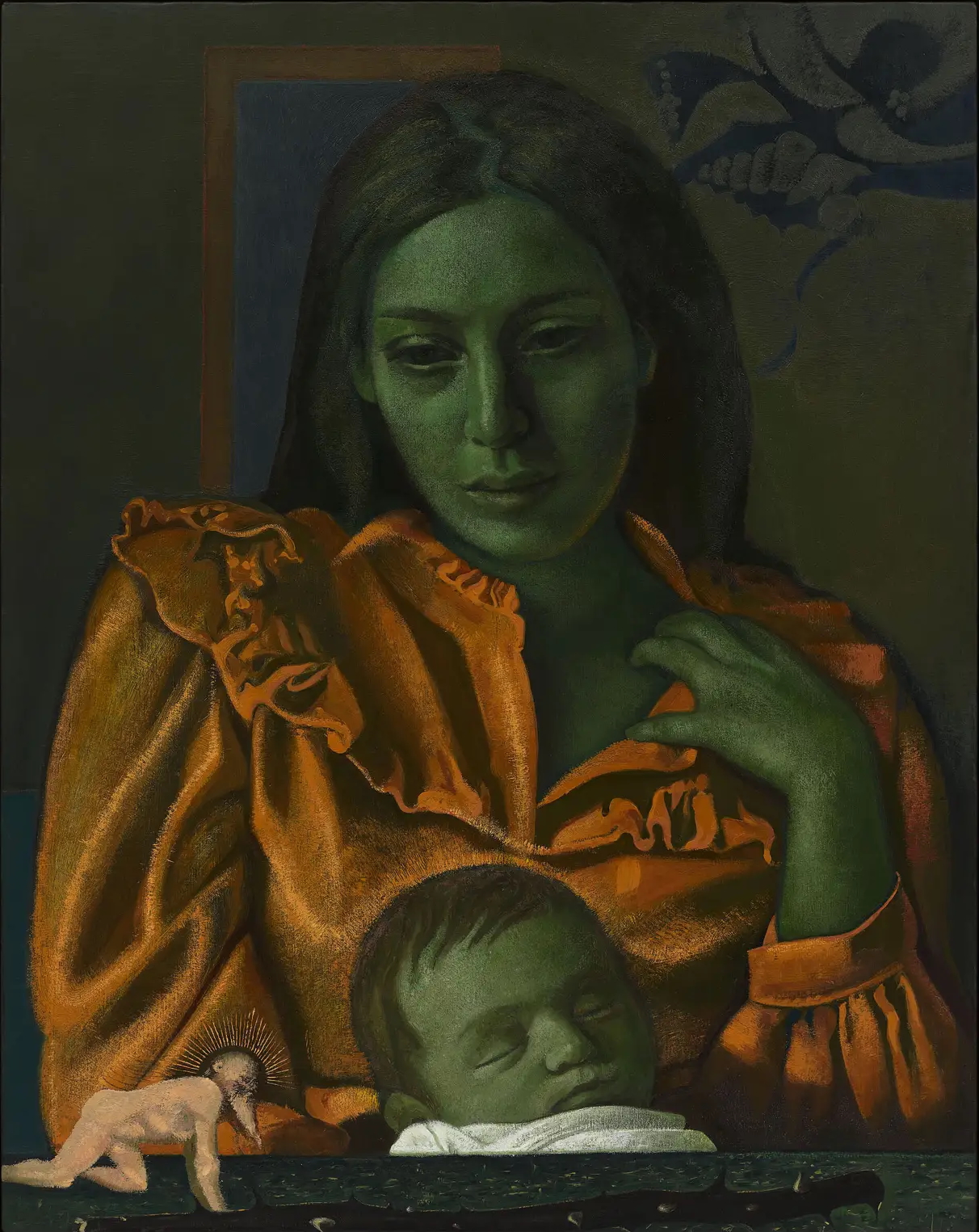
Victor Man
Maternity with Legend, 2024
Oil on canvas
36 1/4 x 28 3/4 inches (92 x 73 cm)
A recluse of sorts, Man’s work has found a home both with the Gladstone Gallery and more recently and in the subject of this article with David Zwirner. One can assume a deep affinity to the work when the gallery owner writes the preface for the book of images. As a first catalog, I find it refreshing that the work has been photographed in situ and that it presents a sense of scale for those unable to attend the exhibition. The paintings are not overly large, which is refreshing in a day when post-war upscale makes intimacy feel slightly alien. I also like the notion that Man and Zwirner’s experience in his studio is somewhat clandestine in an age where the artstar is finally in decline. The humility of getting on with it, making work, and becoming unfettered with Frieze celebrity suggests a reshuffling of focus to the work, not the ego.

Victor Man
Maiden with Skull, 2024
Oil on canvas
31 7/8 x 25 5/8 inches (81 x 65 cm)
As for the book itself, it is well-designed, compact, and to the point, which gives Man’s work the space to inform. With this in mind, I would highly recommend those interested in painting to pick this up as we turn the bend from work informed by our desire to speak through technological means to work that is representative of what human creativity can produce by hand, and to produce it without being mired in the conventions of post-modern abstraction and digression. As someone who writes from outside of the realms of painterly knowledge, and as a proponent for photographic culture, this work has struck a nerve with me in that it feels relatable to the condition of the 21st Century, its genocidal impulse, and its tremendously dire circumstances that most people find themselves in, alienated from the body, the mind, and each other. What else have we but lament and toil? Highly Recommended.

Victor Man
Gypsy Girl with Apparition, 2025
Oil on wood panel
15 3/4 x 11 3/4 inches (40 x 30 cm)
Victor Man
The Absence That We Are
David Zwirner Books