
Sloppy 7-Eleven soap box orators, holding court and council on piss-stained curbs, the newly defined character of a shared and collapsing destiny, glory faded, by sun, by blood, spittle the color of grey, lungs concretized with coal dust, and alcohol vapor. Halfbent, and drooling, a new performance piece, the fent creating a series of odd tableaux, choreography on black tar heroin, hold the pose, marionetted and silhouetted against cloud-enveloped skies. What teeth left of a nation, guided by God, bullets (God Bullets), and fever dreams of climbing an imaginary ladder to ascendant comfort, each rung coated in razor-sharp diamond dust that bleeds the palms and feet soles dry of their burgundy essence, bubbles of red drying in the harsh sunlight, webs of maroon strings waving in the wind, then falling to petrol-stained gravel, a lattice work of loss. All promises told, all promises of gold. Dust everywhere, signs of a swarm of locusts, reign down.
 The long lost snakeskin saleman, covered wagons, ritual cleansing with fire, but more recently the odd notion that the same two-fisted, ham-headed idea of destiny can be gained through the whitewashing of civic pride through financial gain, a little memorial of one genocide tucked behind a little bit of memorial of another genocide, stacked like Russian dolls, left cracked, and open alongside a defaulting highway, flies gathering above like black pillows eating the sky, never capitulating, and yet never entirely giving in. Larval. Rotted. Pale skin blistering and blue/green/yellow slimy, hiding from hurried Marlborough men scuttling along the asphalt above to jobs with circular drone capacity, infant AI, roundabout economy. Crash and burn: everything is now licensable, downloadable, pre-programmed, and OF-adjacent. Got enough sack to ride this one out? Nah, you’re a rough elegy waiting to happen, ’cause China, ’cause Venezuela, ’cause Russia, ’cause anybody but the invisible and translucent mesh cage governing your everyday. You believe in freedom, yet extoll the virtues of credit scores, alone in the vast wilderness of financial dependency.
Somewhere in this twilight fever dream, one still forgets to dress on the way to school, walking full frontal into a room of predators, slowly teasing one out, and an audience applauds behind the stage before bickering about policy, about money, about fires along the Pacific highway. Business as usual, a calculated dress down by an imperial tendency to hold hope too close to the heart to value it as a gift, instead of a possession. This is America at the base of our dissolution. Fifty years of belief in false gods, numbers on the board, the idea that trickle down serves upward mobility, when in fact, it has only served the upward transfer of all wealth. At the same time, we slept, now pharmaize our way through the end of our halcyon days, treating individuality and identity as the last bastions of a self-pitying and self-absorbed colony on the river banks, without the indigenous land owner to put us out of our flailing misery. And Sackler dangles a carrot above the stubborn mule of our destiny. It’s fine so long as it can be monetized, TikTok’d into oblivion—Harvester of Sorrows, Carnival of souls.
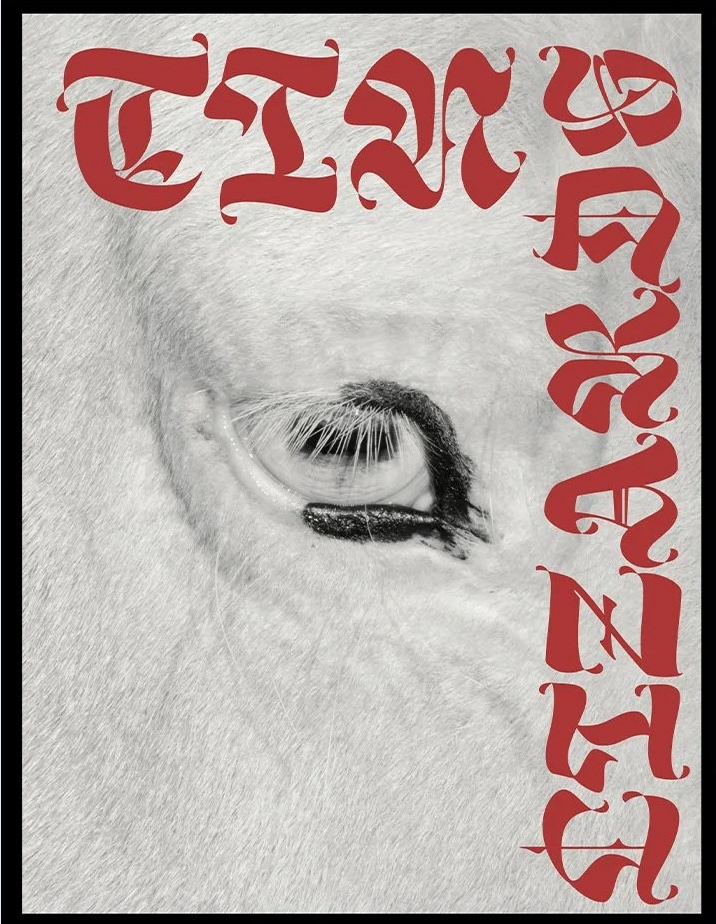
Robert Leblanc is no stranger to the fits and starts of the American project. He is, as we speak, casually documenting the circus of its politics, making his way through the morass of lunacy, with a camera in hand, looking under rocks, finding all the toads and snakes we expect to see there. He is going about documenting the end of the empire in a vaguely rogue manner within the state. As he does this, he has also been casually whittling away at several personal projects that deal with America and its tangential ideologies related to religion, capitalism, theatre, and its people in its wide-open spaces. In Tin Lizards (Carhartt WIP, Nazraeli, Fahey/Klein Gallery), his new book, he is stripping layers of varnish from the dream factory. He is traveling by train, the disused horse of American expansionism, and is documenting what he finds on the causeways, boulevards, and blocks. He is unlocking the reality of contemporary America much as Robert Frank traveled across the land, looking at false promises and decay, melancholic yet wholly beautiful and illuminating.
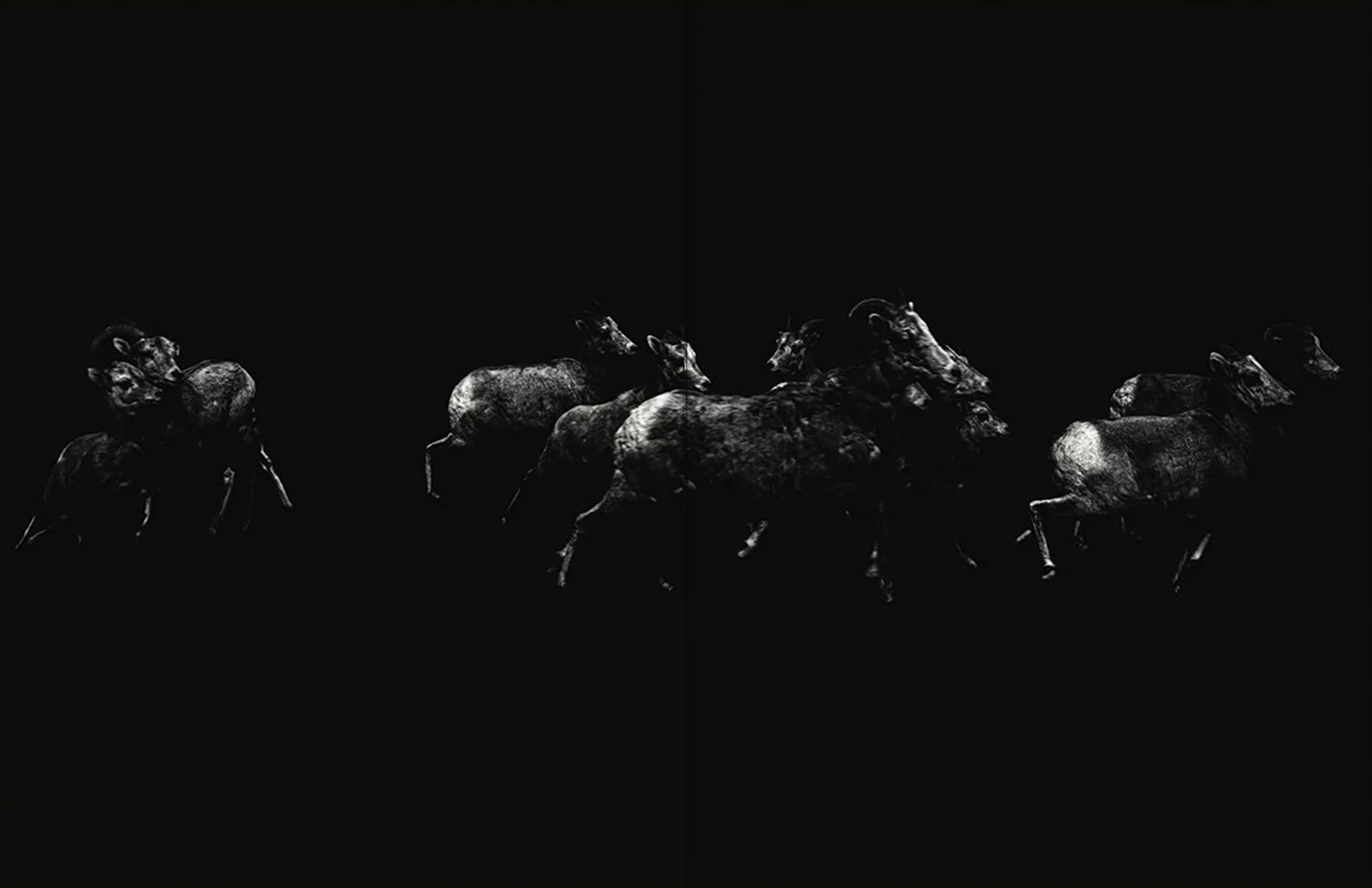
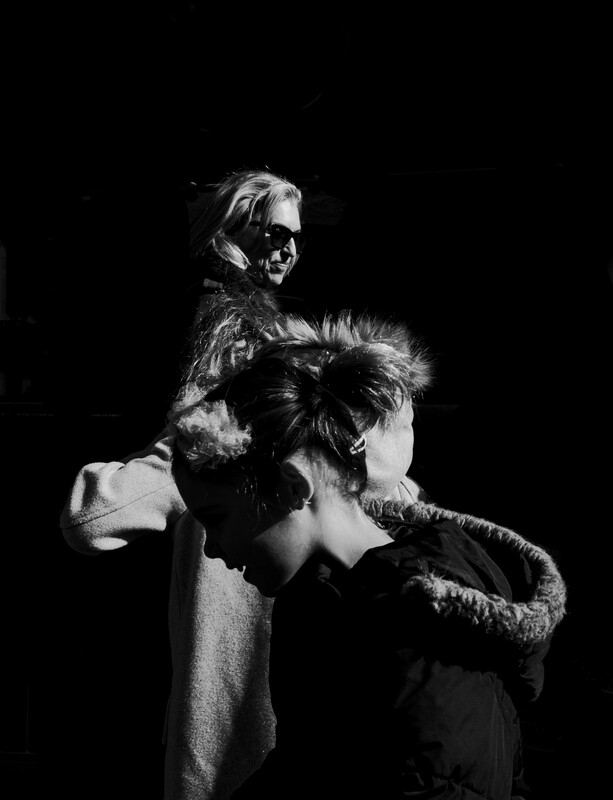
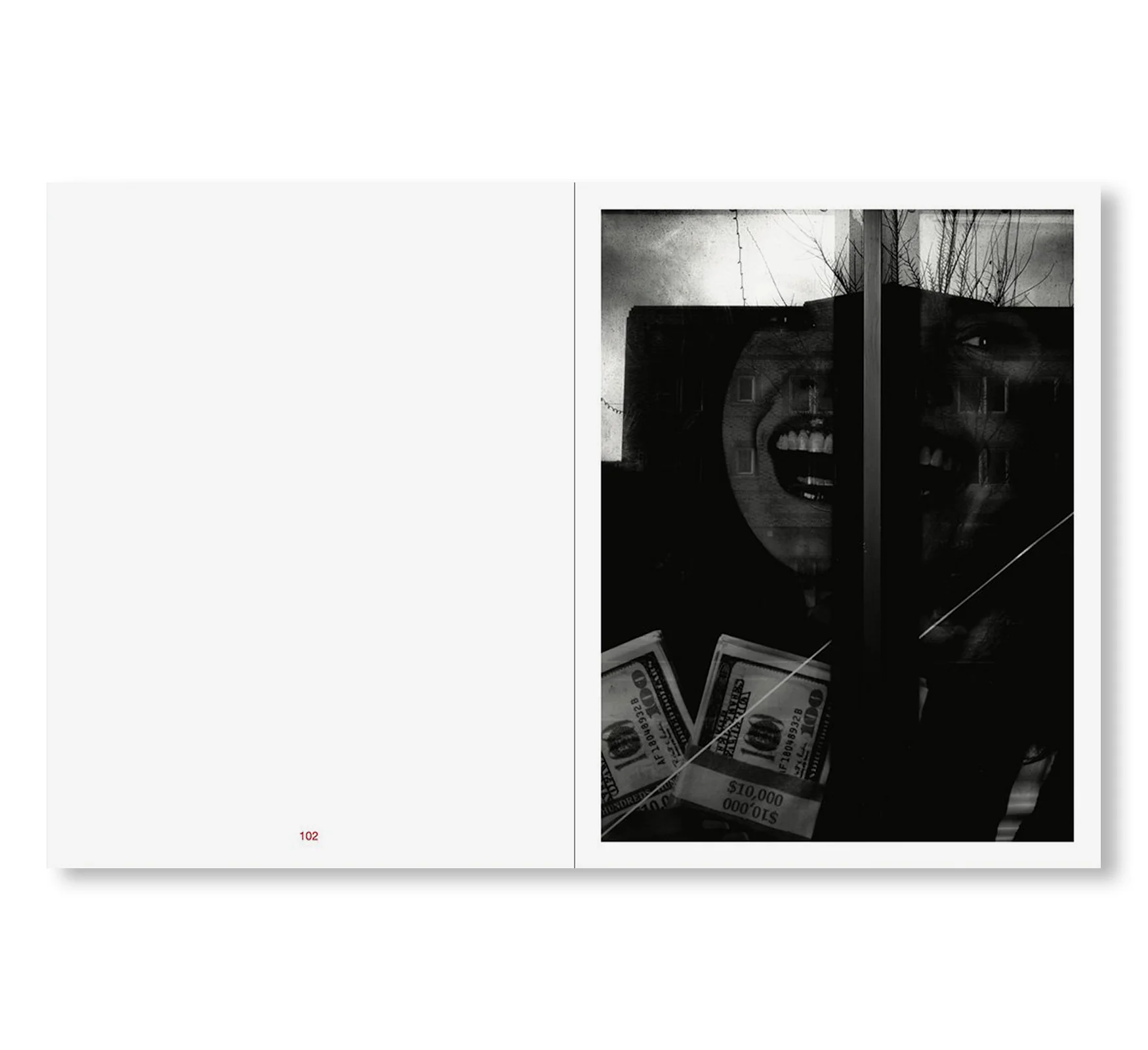 With that nod to Frank, I am also reminded of Matt Black’s American Geography, Bryan Schutmaat’s Sons of the Living, and maybe, if not the same geography, Trent Parke’s monumental, Monument, and of course, where would we be without the training ground of O. Winston Link and Mike Brody, whose fascination with the rails have both been widely documented. What sets Leblanc apart from those that I have mentioned is this chloroformed feeling of nausea presented in the work, perhaps if not nausea, anxiety is the lighter secondary term of expressive feeling I get. Everything is cloaked in shadow, and when I find people, animals, or vistas within the work, they all feel horrific. And on that very topic, the signal to Ghostface, from Wes Craven’s Scream, is a character that looms large over the book, suggesting, in its usage, that what we are dealing with here is a horror movie within a horror movie, where we can speak about the mechanics of decay and the unfolding of empire from inside of it. It is not a casual reference that Ghostface ends up here.
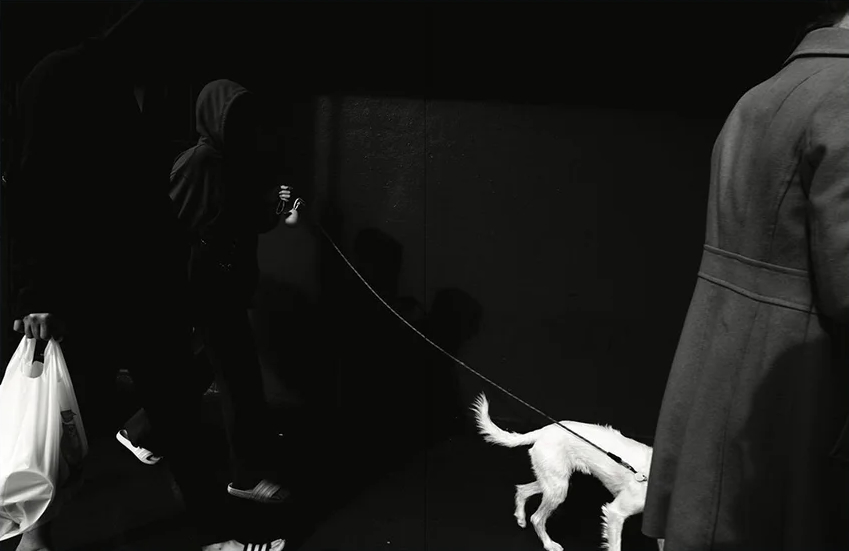
Throughout the book, the haunted image of America presents itself as a lament rather than an imbalance. Unbalance suggests hope that balance can be achieved. Whereas in Tin Lizards, with its morose prose, it feels much more in line with an observable epitaph for the promise of a nation that, in its utter disrepair, is asphyxiating from all of the credit, the pills, and the commonwealth of bad actor governance. The root of the nation’s claims to manifest destiny has been tapped as far as they will go. The crushing reality of poverty, overdoses, and oligarchy have all collided in an unseemly and destitute version of the America we were all spoon-fed until around, let’s say, 2001, 2008, 2016, 2020, and 24, perhaps. Significant nails in the coffin, wouldn’t you say? Of course, it started earlier, perhaps in the 80s, but in terms of the new millennial rot, we can ascribe some significance to the above years.
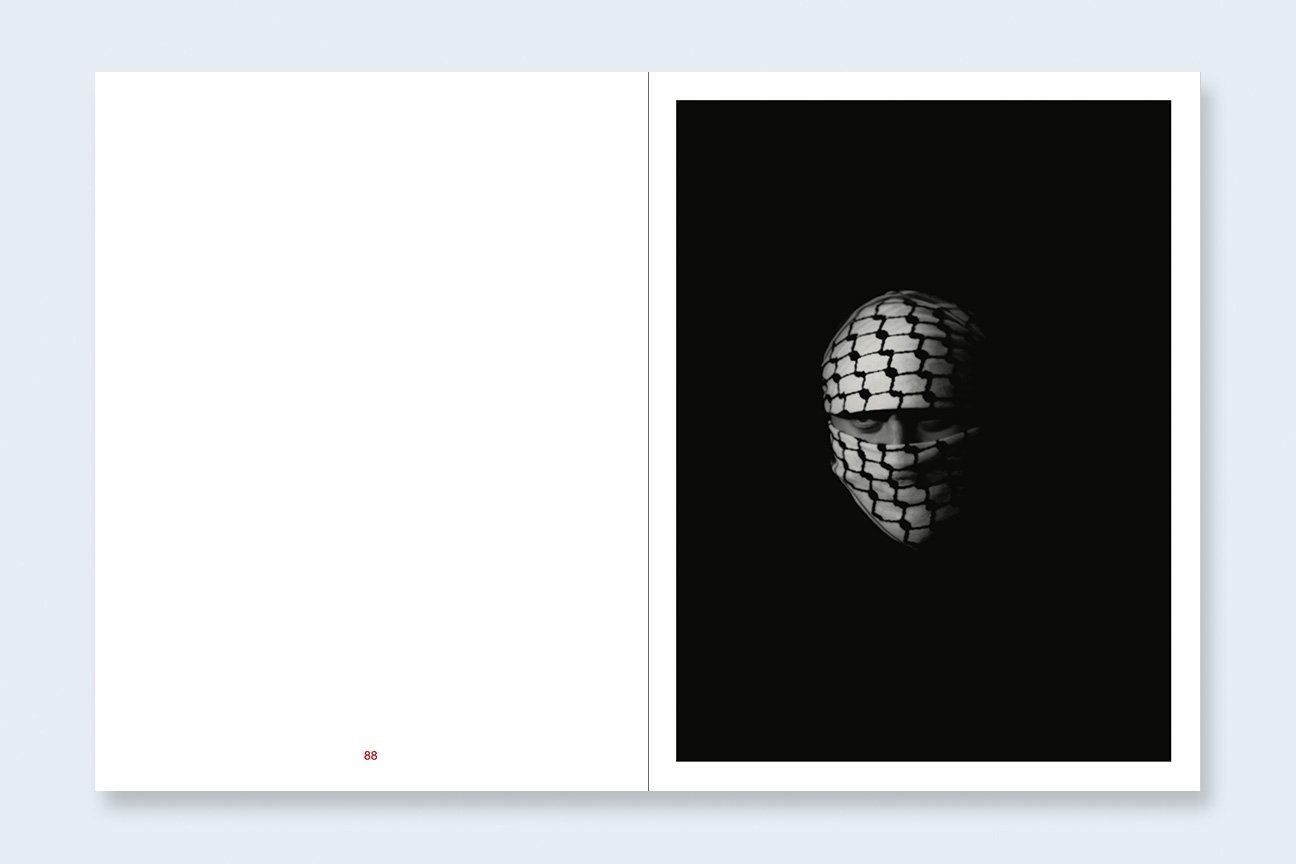
Leblanc’s work is based on observation and not direct critique. His last book, Gloryland, looked at religion, particularly the snake-handling tradition of West Virginia and the culture that surrounds it, also emblematic of America’s past glory, but also hinting at its present condition in terms of job loss, industry loss, and what that leads to via pharmaceutical ramps and poverty within the geography, but much of America as a whole. When I mention that it is not a direct critique, I am suggesting that Leblanc has, at his heart, a concern to observe his fellow Americans and, much like Matt Black, put into context the condition of its people ahead of the visage it previously represented. It testifies to the condition of contemporary America. The provocation here, with the dark, shadowy images, is to put the pathos of America into a framework that can be related to, that is not sequestered in punditry, and that can be widely felt as an unnerving conversation about how we have come to this reckoning. It asks us to dig in, to find answers, and to decide what progress can be made from the current condition.
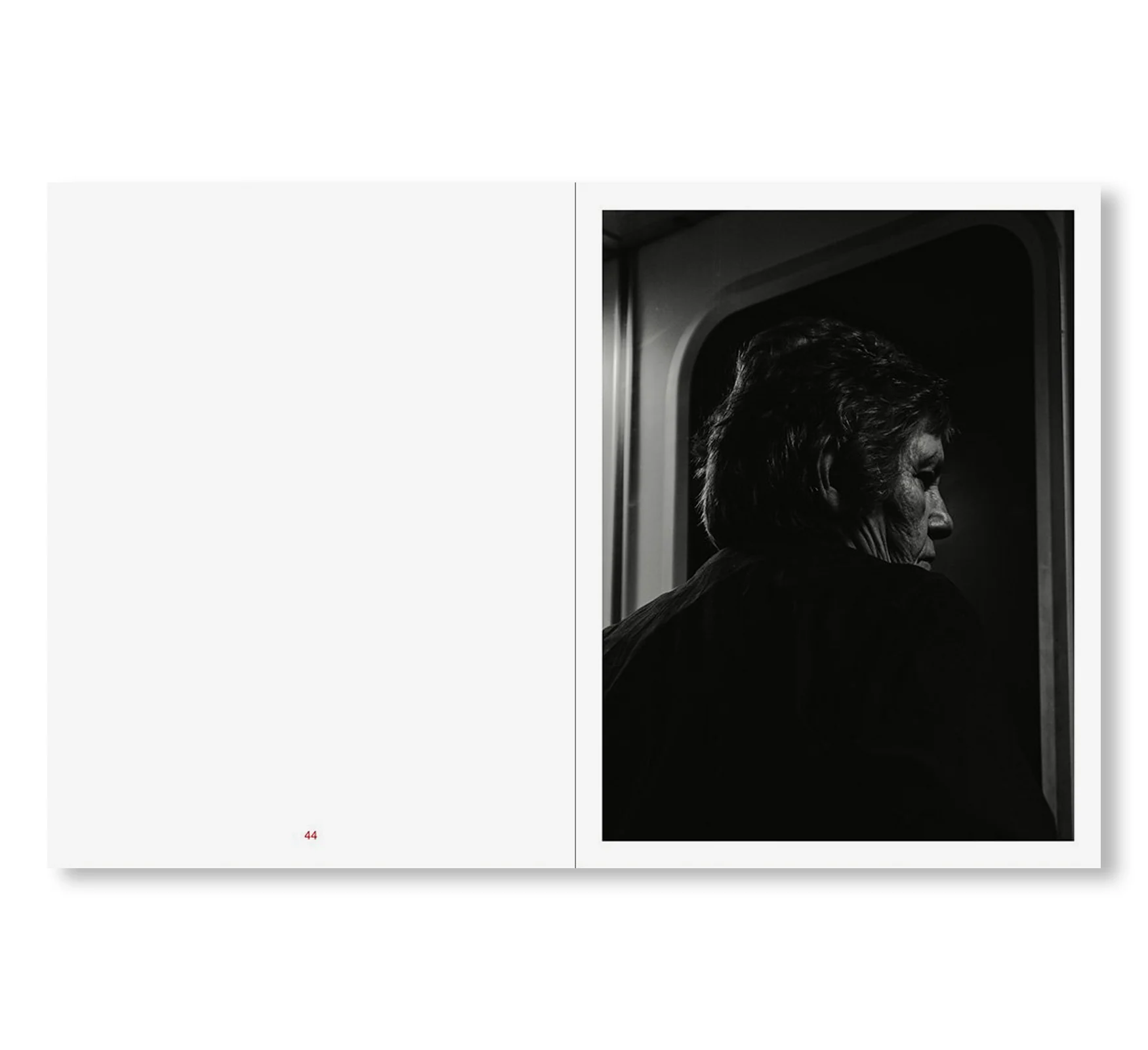
I could talk about the attractiveness of the book itself, with its hard plastic shell and its red threads and page numerals, but I do not want to distract from the content here. It is the second book of Lebalnc’s to have packaging that makes it very attractive to photobook collectors, but in reality, the content is what is essential here. I highly value Robert and his work and think that what comes next may well be the defining book of his early career. I get the sneaking suspicion that the political document he is making now will somehow form a trilogy of books with Tin Lizards and Gloryland, and I am here for it. Highly Recommended!