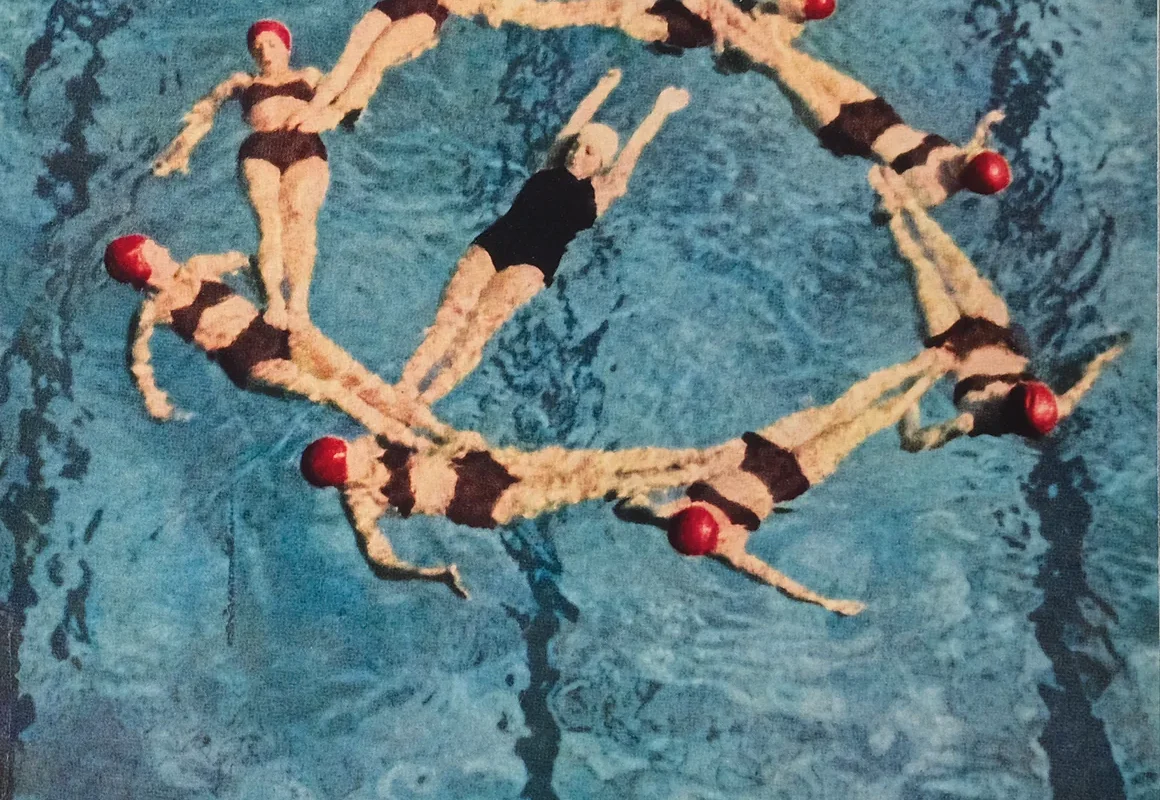
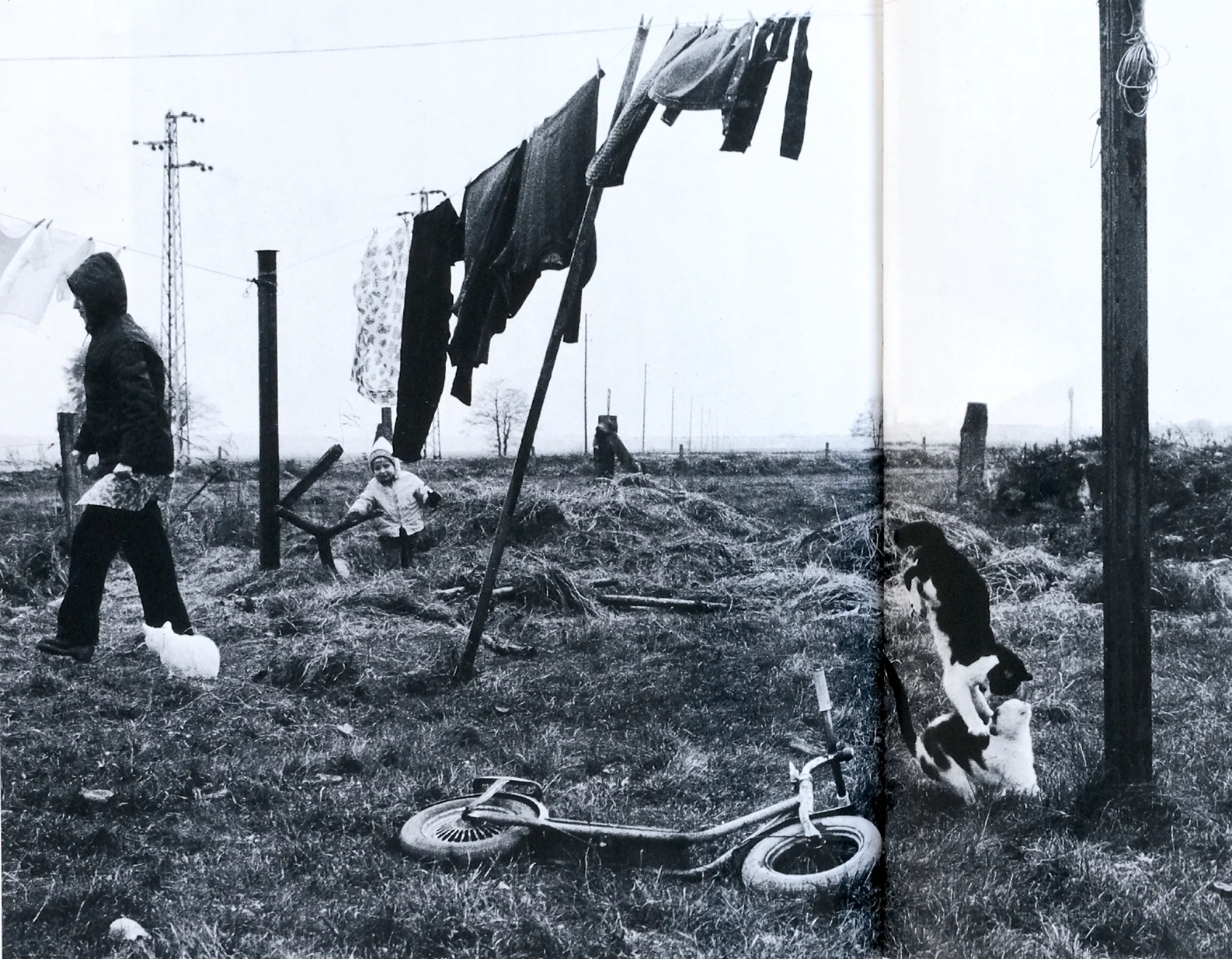
 In general, most photography can and often does function as propaganda. It can do so through its design and contextual arrangement, but its meaning depends largely on the intention behind its placement, which shifts over time and can be shaped toward different goals depending on who uses and broadcasts it and for what purpose. This paradox offers interesting solutions for its use. Over the course of the 20th century, many photobooks have been published that, at their heart, seek to manifest ideology and sway the audience toward the book’s claims. Some of these books function as an obvious assertion of a goal, often promoting the state or a governing ideology in an idealized form. Other books are slipperier in their aims and operate beneath the surface, using purely visual, decontextualized means to advance their intentions, whether for or against a system. One might consider the complexities of Bertolt Brecht’s Kriegsfibel/War Primer as a meaningful example of a book that uses the pornography of war, dissected and reassembled against itself as an anti-war tract which has since been reworked by the now-defunct art duo Broomberg & Chanarin.
Of course, in similar fashion, filmmaking can be seen as an easier-to-fit example of this tendency in which outward forms of ideological display are conveniently assumed, while other films subversively chip away at core fundamental principles of ideology from the inside or, in the case of many post-9.11 American films, for example, provide a militaristic attitude full of heroism and Hollywood box-office cash grabs on behalf of CIA-sponsored ideology. These films preach that message wrapped in fame, big lights, and a delivery system that seems innocuous at first. When you dissect the messaging, it quickly becomes apparent that many of the films try to glorify or promote further global hostilities at the behest of an empire. This is not new, and sponsoring political talking points through culture is as old as, or older than, photography itself. Photography and filmmaking make convenient inculcators because they hold a tenuous grip on reality in the minds of the common audience.

During the Cold War, photobooks were produced across territories as tools of political dialogue and ideology. In simple terms, the struggle between Eastern socialism and Western capitalism was one of the two main tenets of propaganda and discussions about the future, though under the threat of nuclear meltdown and annihilation. Both sides spent time trying to convert their citizens to their own system, erasing the notion of discussion outside their absolute vision. In America, the Cold War produced Communist fear, and Hollywood, in particular, was scrubbed of any person or company that showed sympathy with the left. This manifested in the debacle of blacklisting and exile for many, frankly, mostly Jewish studio heads and directors. The House Un-American Activities Committee (HUAC) brought to trial many individuals, writers, directors, and artists whom they found unsympathetic to the totality of the capitalist system. This started during the Second World War and roughly ended in the 1960s, though unsurprisingly, if paradoxically, different forms of blacklisting for promoting arguments for differing causes, such as the genocide in Gaza, continue to plague artists in the Hollywood and music systems re: Macklemore, etc.
In Communist Europe, daily reminders of ideological positioning were apparent in everything from mandated jobs to the outward display of May Day marches and pioneering dress code enforced on children of the era. No form of straying from the Communist cause was allowed, and traitors or those who openly questioned the system were forced into labor camps or, in East Berlin, placed under Stasi surveillance, with the reality of political imprisonment and torture in state institutions, as in the case of the Stasi Prison, now the Hohenschönhausen Memorial, in which political prisoners were tortured on a daily basis. In short, because this discussion covers years of dialogue, both sides used a heavy-handed approach to discipline while maintaining an unbroken stream of propoganda aimed at simultaneously instilling fear and promising the future utopia of their position.

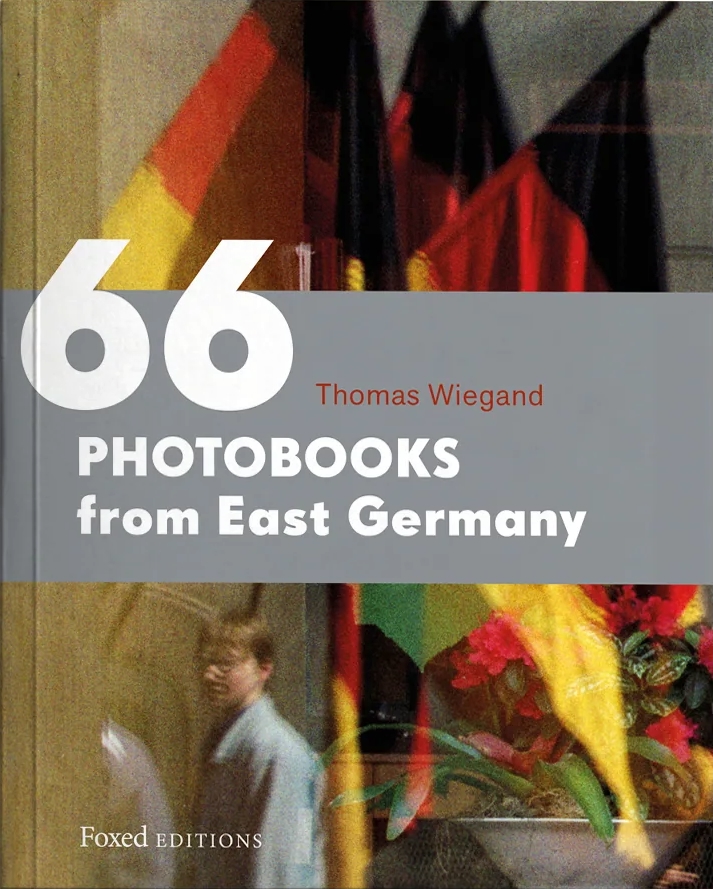
In the 66 Photobooks From East Germany (Foxed Editions), Thomas Wiegand, author and historian of the medium, hand-selected 66 photobooks that reflect East Germany’s publishing industry during the Communist period from the 1950s through the late 80s. Much of what was published under the regime unsurprisingly contains a large amount of material that presents the State as a utopian paradise, proposing the core tenets of the socialist body as an exemplar. Missing from this dialogue, equally unsurprisingly, is any critical discourse around the state itself, though there are hints in some of the books and the aesthetics of overt militarism and struggle, particularly evidenced in Dirk Alvermann’s classic Algerien book from 1960 and Kannibalen aus der BRD, from 1967, suggesting a continued war and sacrifice for the rhetoric of the state.
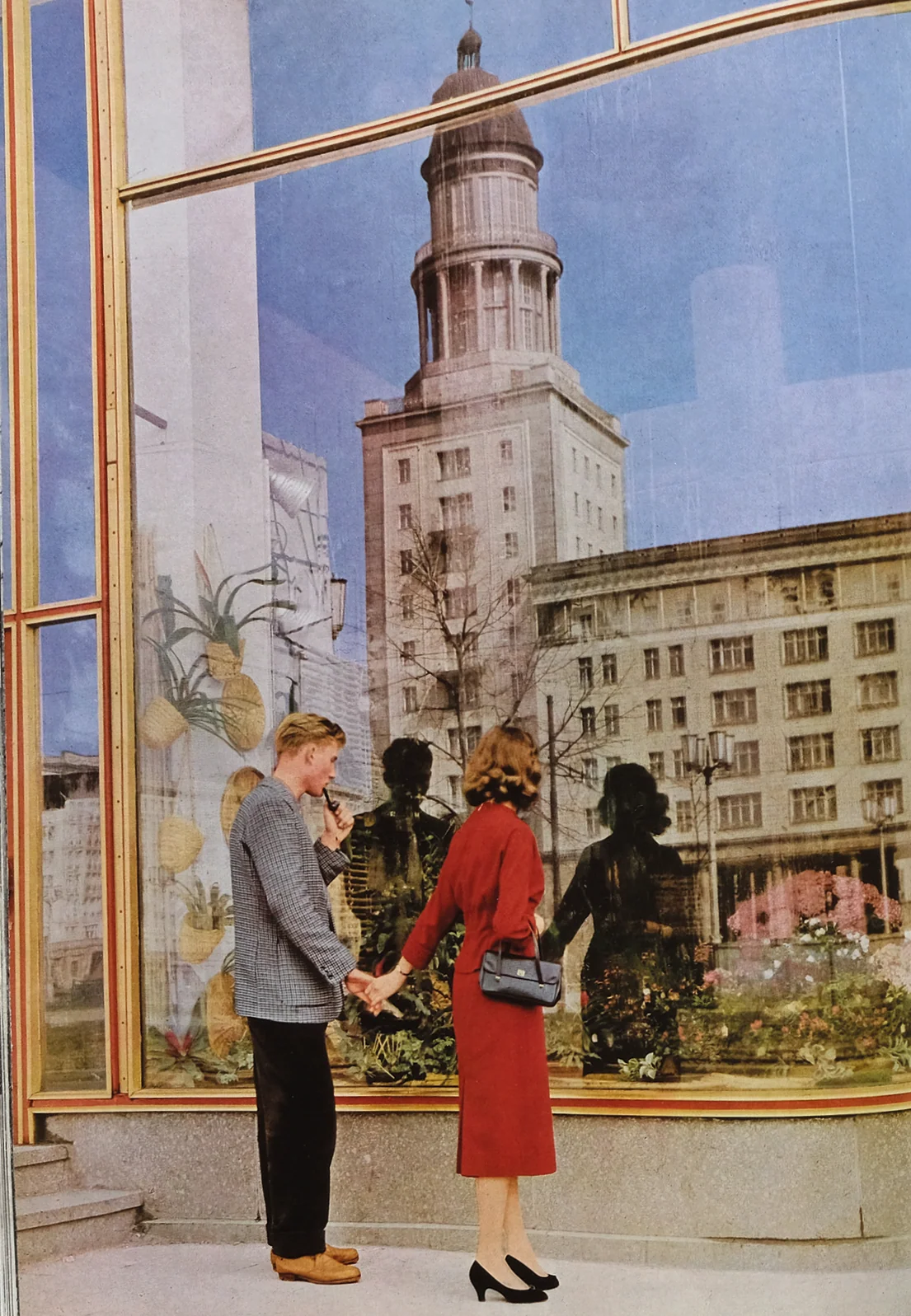
In contrast, the utopian side of life under Communism appears in many books, including several children’s books that introduce children to State concepts and unity early on. Other titles like Berlin-Sonnenseite and Mit den Augen des Freundes present the state as sympathetic and comrade-inspired, with friendly police and a general commitment to the well-being of the neighboring social body. All of which promote the state as organized and with the benefit of the proletariat in mind. On that note, many of the books also reflect sports-related activities and communal health projects, an unacknowledged vestigial tale of the body culture tendencies that led up to the Third Reich.
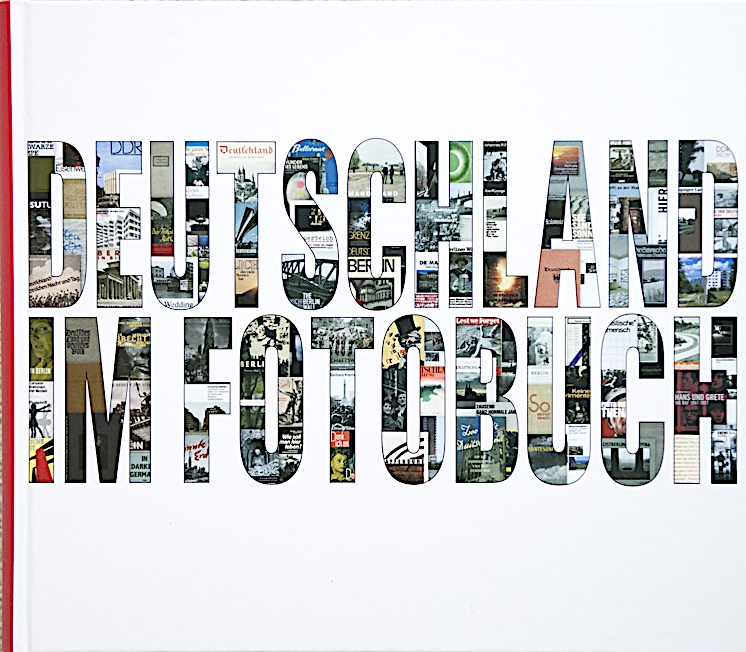
What is fascinating about this overview is seeing it detached from the overall history of the German photobook of which several historiographies exist, including perhaps my favorite, also by Wiegand, titled Deutschland im Fotobuch, published by Steidl in 2011, a predecessor to the two Autopsie books published by Steidl and through the eye/collection of Manfred Heiting. Whereas the opulent nature of the latter is impressive, I drift toward Wiegand’s book more often, as it is somehow easier to “read” and the illustrations and format work in its favor, though both sets of books are massive and worth including their own Starck-designed table like the Taschen Helmut Newton Sumo book.
Simply put, there is a lot of ground to cover on German (and Dutch) photobooks. Germany is one of two nations, the Dutch being the other, that impressively published an incredible number of highly articulated, well-designed photobooks from the 1920s onward. They remain, alongside perhaps the Swiss and, if I am kind, the French (20s and 30s) and Italian (50s and 60s), among the most impressive producers of photographic books to date. Perhaps it’s Protestantism, the history of the printing press, the work ethic, or the technical drive to produce fine objects, but the German publishing industry, on both sides of the political divide, was impressive.
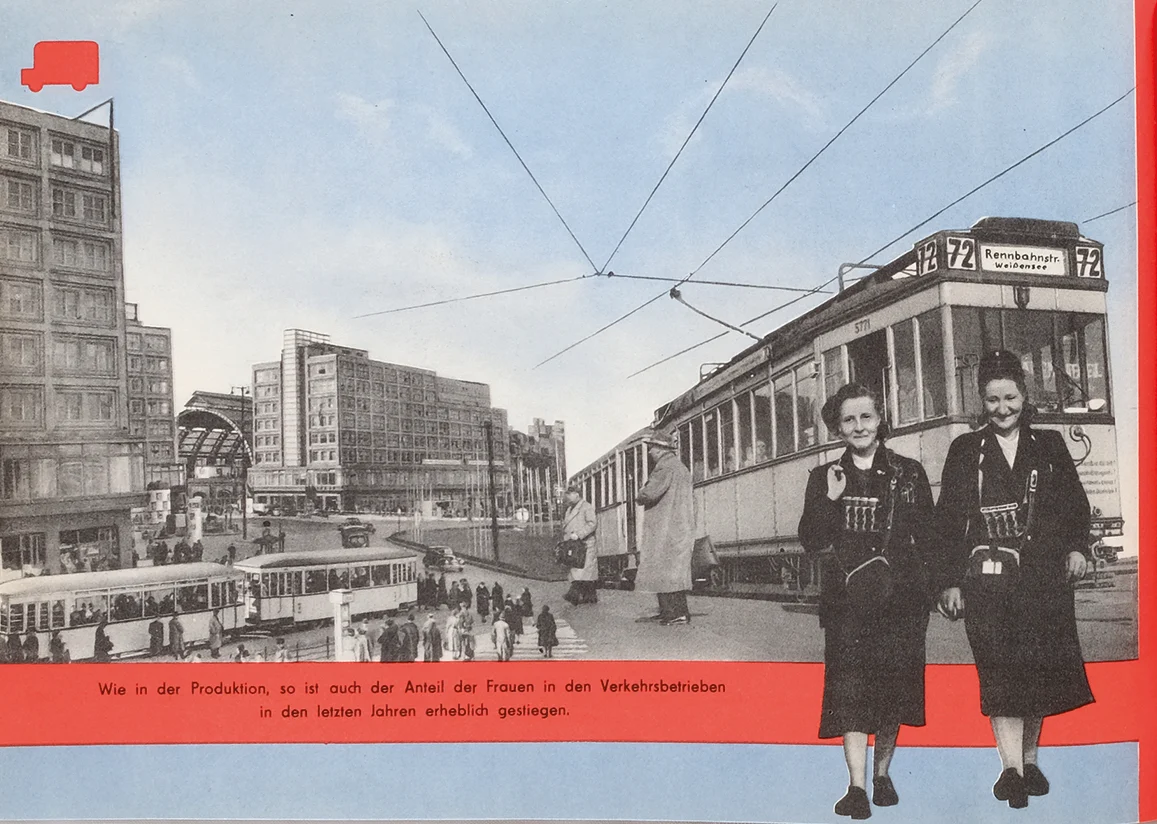 In considering 66 Photobooks From East Germany, I think it’s a great overview of the work produced during the Cold War, and I like that it separates books published in the West. It gives a sharper insight into the territories and ideologies that brought these books into being, and it is interesting to see the ideology play out in the pictures, however much I am aware of the propoganda behind them. As someone who buys photo books outside the boorish current contemporary canon, I’ve found that many of these books are well known in collecting circles, and while most have been cheap for decades, the prices of many have risen to a humorously paradoxical level given their subject matter. Because of the subject matter, these books proliferated widely and often turned up in flea markets across Germany in boxes for the equivalent of a euro or two. I remember buying Richard Peter Sr.’s fantastic Dresden Ein Kamera klagt an this way, among others, while living in Germany. Now the book sells for about 100 Euros or more depending on the day. Other books, such as Kannibalen command, sell for even higher prices. As long as there is an appetite, this will remain the case.
In conclusion, Wiegand’s book is interesting for what it is and what it is not. Separating the Eastern books from the Western German photobooks in the canon makes complete sense in this case, and though it does not purport to work as a full catalog of every Eastern German photobook, it gives a great overview of some of the geography’s best titles and reminds us how insane we are as humans with our belief systems and our attempts at organizing them into warring factions of ideology. Highly Recommended.
Thomas Wiegand
66 Photobooks From East Germany
Foxed Editions