Amongst the wreckage of the past fifty years, one of the fundamental erasures, or perhaps the co-opting, of our diversity of ideological thought has come from the slow decline of subculture, transgression, and punk rock values. During my lifetime, I have seen anti-authority ideologies reconstituted into a hot-topic t-shirt carousel. It plays out, when it plays out at all, in short bursts of public upset, like a child angry over a lost toy, only to calm quickly after a stupid face is pulled from the parent to replace its emotional value. Pushing back has a short time span; it cannot and will not be endured. I have seen the freezing out of squats and anti-establishment voices by dint of impossible rent and developer greed, and the manufacturing of an impossible escape from the clutches of a compressing economy. I have seen uprisings last week and months, not years; slowly fading like a church bell in the distance.
All our previous political disagreements, from Berlin to Baltimore, seem to have been gathered into a tide that prefers identity to discussions of class intolerance, academic reason as an upender to that of forced class dissipation. In the midst of totalitarian regimes, we have been harnessed to worry for the day to day, to put food in our children’s mouths, ain’t nobody got time to agitate against the system and the colony has, generation by generation, been manufactured to aid the mortifying reality of our times under an employ of fear, and by the soft serve notion of identity independence through social media platforms and the white-washing of so much guilt to do nothing significant about it excpet make another post. Never has a ballless scrotum become so clearly manifest that our surrender comes with the complete disappearance of disagreeable deeds to agitate against what we abhor. Pedo nations, petroligarchs, and persistent upward transfer of wealth and the breaking of the worker for the onset of machine predation-is there ever a better time to pull the fucking plug?
 Whereas every struggle is born from real issues that need addressing, the post-industrial wasteland of the twentieth century has been overly busy sanitizing its image to hide what punks of the previous decades rallied against, namely conformity, consumerism, and the overriding hand of Christianity, choosing to pursue a life of intolerance toward the intolerant. Whereas those discussions continue to circulate, I am convinced the suggestion to discuss class or the aesthetics of revolt is being less-than-casually extinguished, with a small enclave of holdouts coming from Latin America, and other smaller communities from the global south, who have endured the West’s tyranny for far too long. We here in the north have been divided, placated, and our values reflect nonexistent leverage within the system. We tacitly condone genocide, extraction, and our emancipation comes from our followers, our social credit, our …influence. Can you imagine thinking that you influence such a dry-hump of an age? You do not challenge, change, or mitigate anything; you exist to feed content into a bottomless pit of data, which is blatantly and visibly used to predict your worth, minute to minute, child to grandchild.

The middle and northern enclaves have all but disappeared as vestiges of hope, with a rare and interesting case study pocket like Portland holding ground just long enough to see itself turned to embers by the example of autophagy. What we can learn from the South is a necessary debate about the dispensation of futures and the slow eradication of hope, due in considerable measure to the disappearance of the private economy. We have somehow tolerated and co-opted into the slow rise of uniformity and complacency through digital banking, the eradication of cash, and the numeration and commodification of everything. If they could sell us back shit in a bottle, we would be bent over for the foreseeable future to be harvested. I can’t wait to see how AI helps develop our shit harness. With the slow erasure of anti-establishment, class-oriented topics comes the continual disruption of culture. Once a hotbed of creative activity, the subversive aesthetics of transgressive subcultures have given speculation about futures tied to aesthetics. Within our contemporary, increasingly monocultural world, these tendencies have been stripped from the discussion, opting instead for a copy of a copy of a copy of its original intentions. The whip cracked; we are running tediously low on voices that will emblematize the struggle of class in our cultural production.
Where are the anarchic suggestions of early 80s punk, the continuation of distrust evidenced through musical acts like Killing Joke? We have lost those lamps to light our way for the complicity of the 9-5, the buy-in to our creature comforts/debts, and, worst of all, we have surrendered our discussion of it in our production. Whereas politics is widely discussed these days and hacktivism is at an all-time high in terms of subscribers, we are gravely missing the discussion that pitches itself at the majority, instead mollycoddling ourselves into believing that intellectualism and highbrow significance are doing us favors. Instead, it is extracting the discussion surrounding class as if it were a foreground conclusion that it couldn’t be nearly as essential as our discussions surrounding identity and individualism, the most heinous and disruptive delusions masquerading as self-care that has come to prioritize our most insufferable needs.
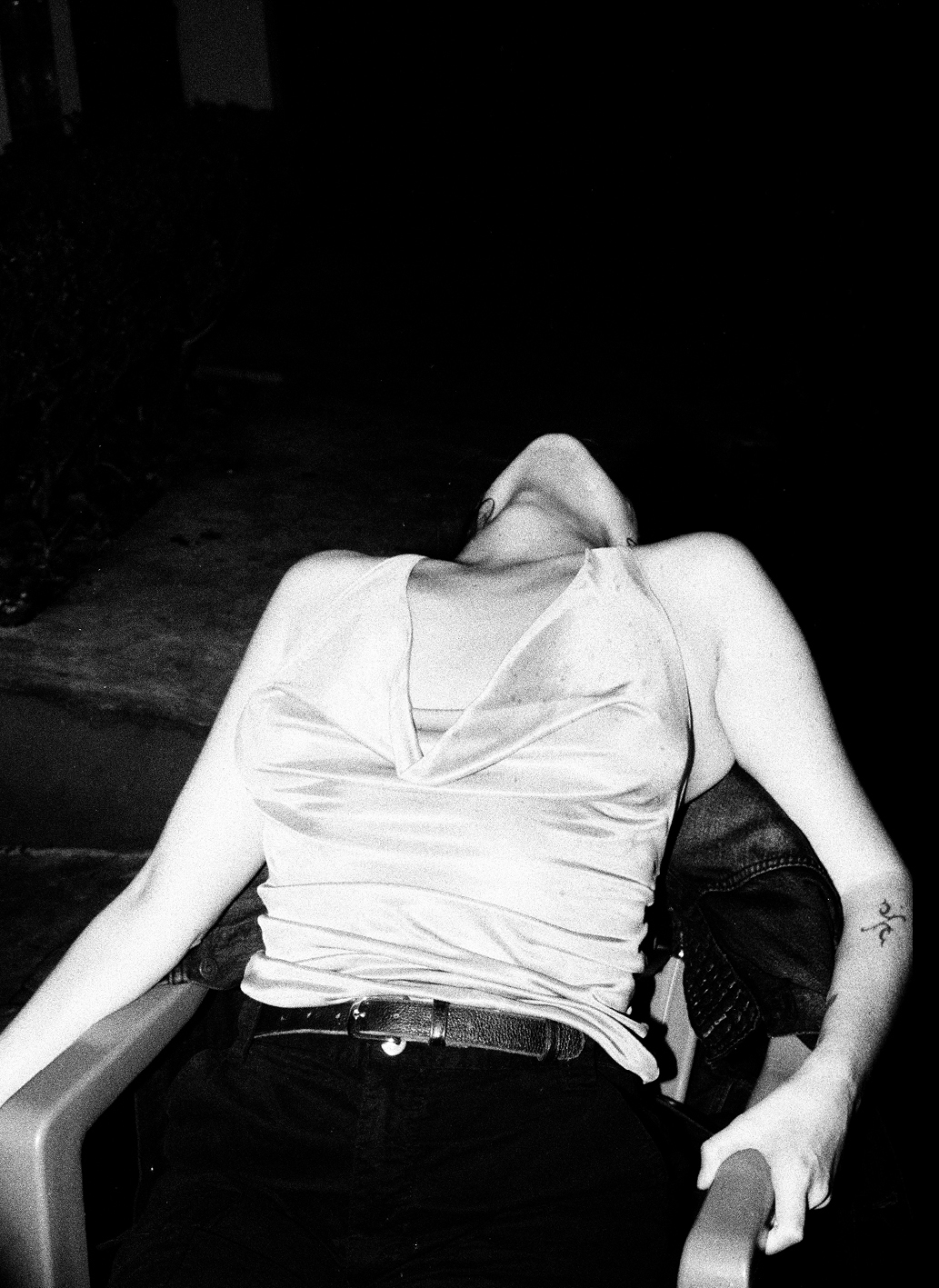
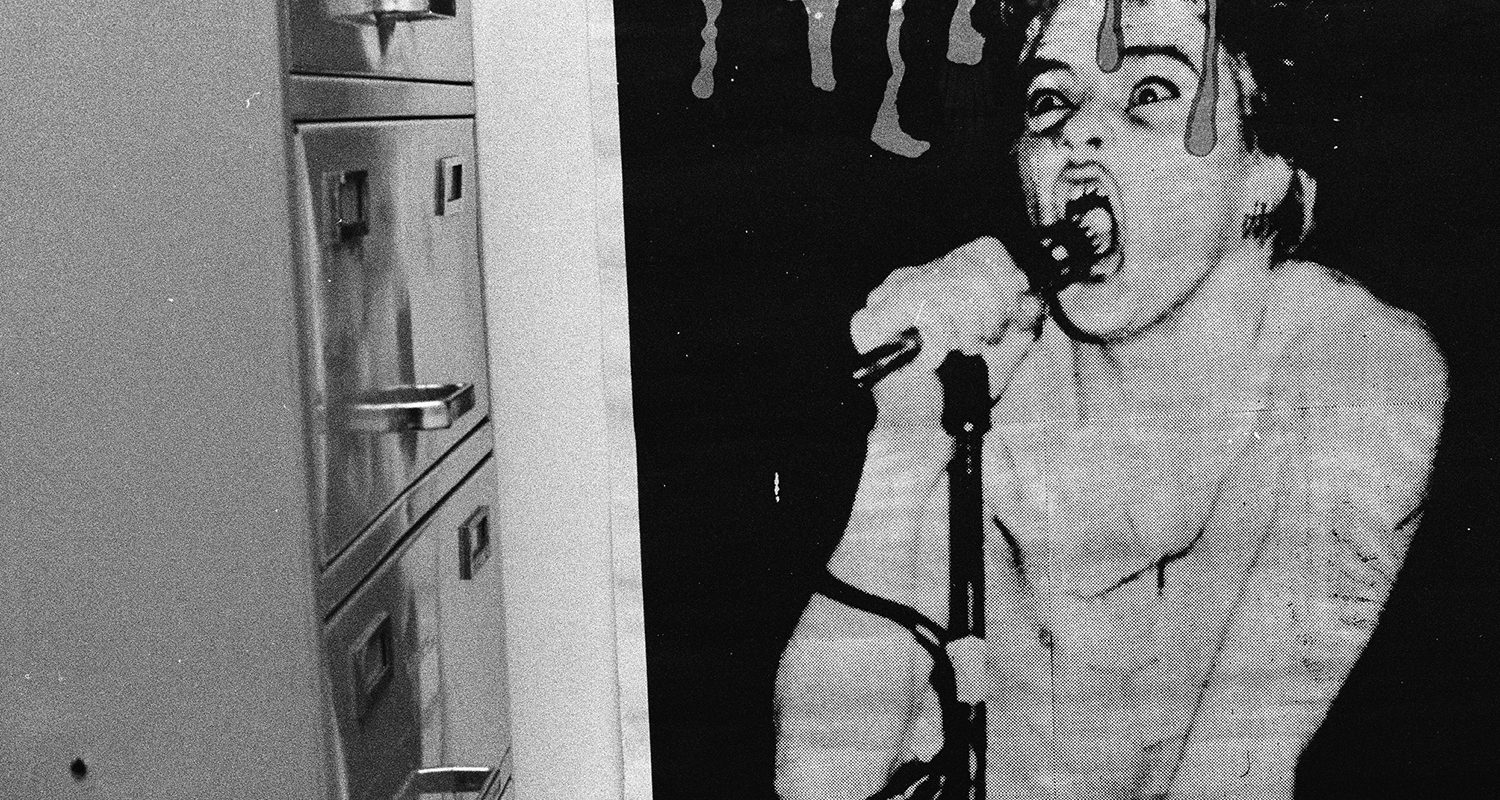
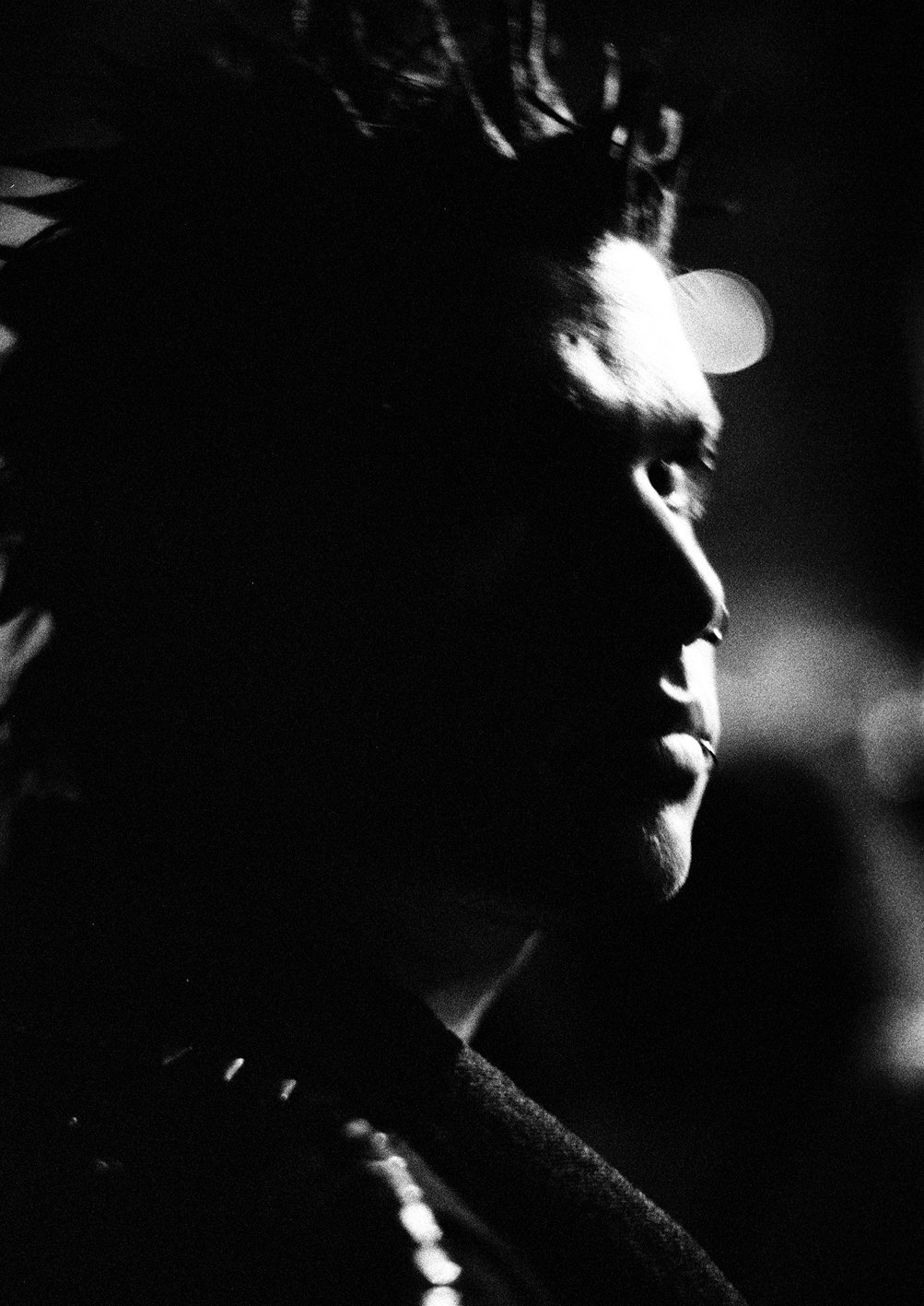
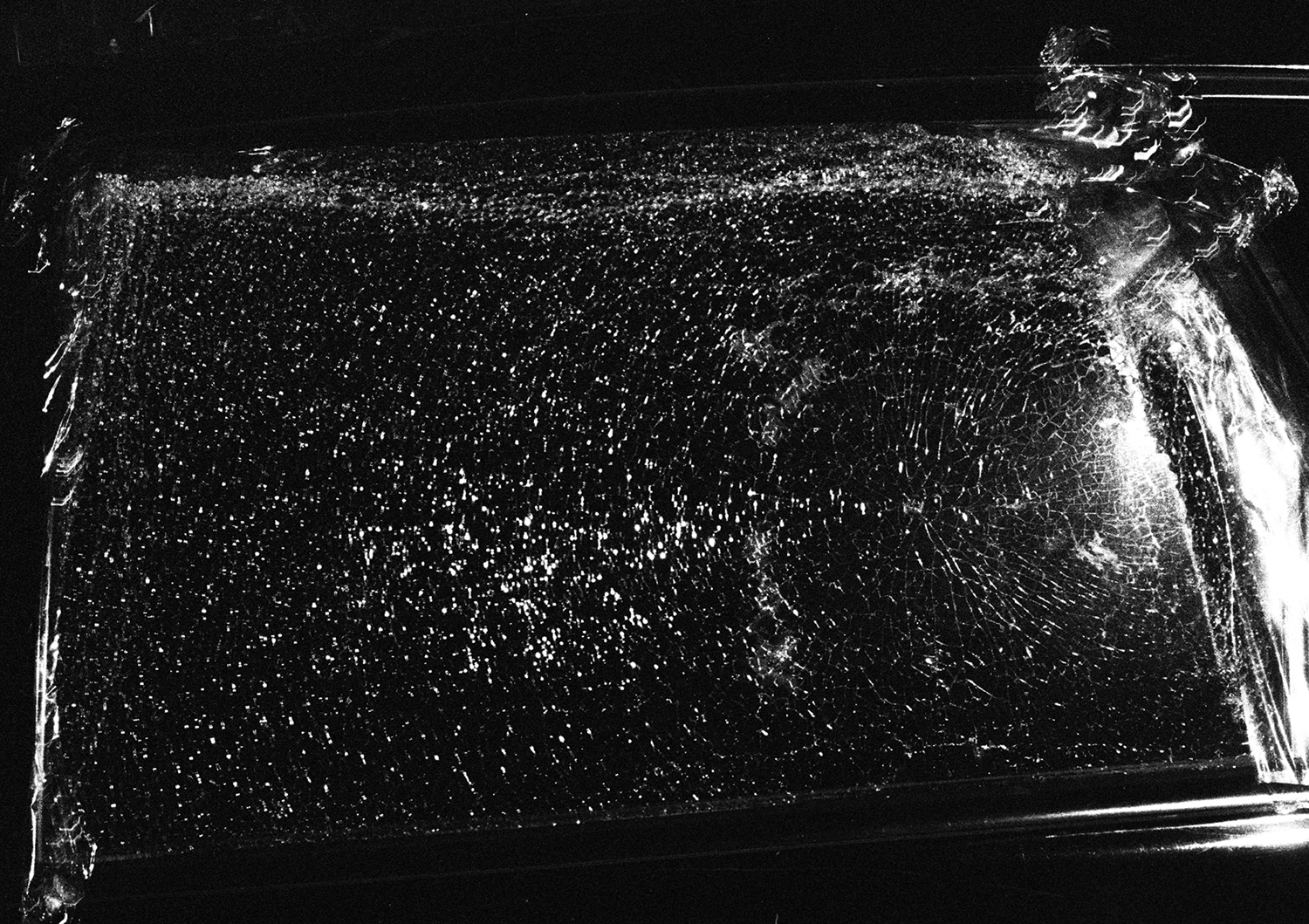
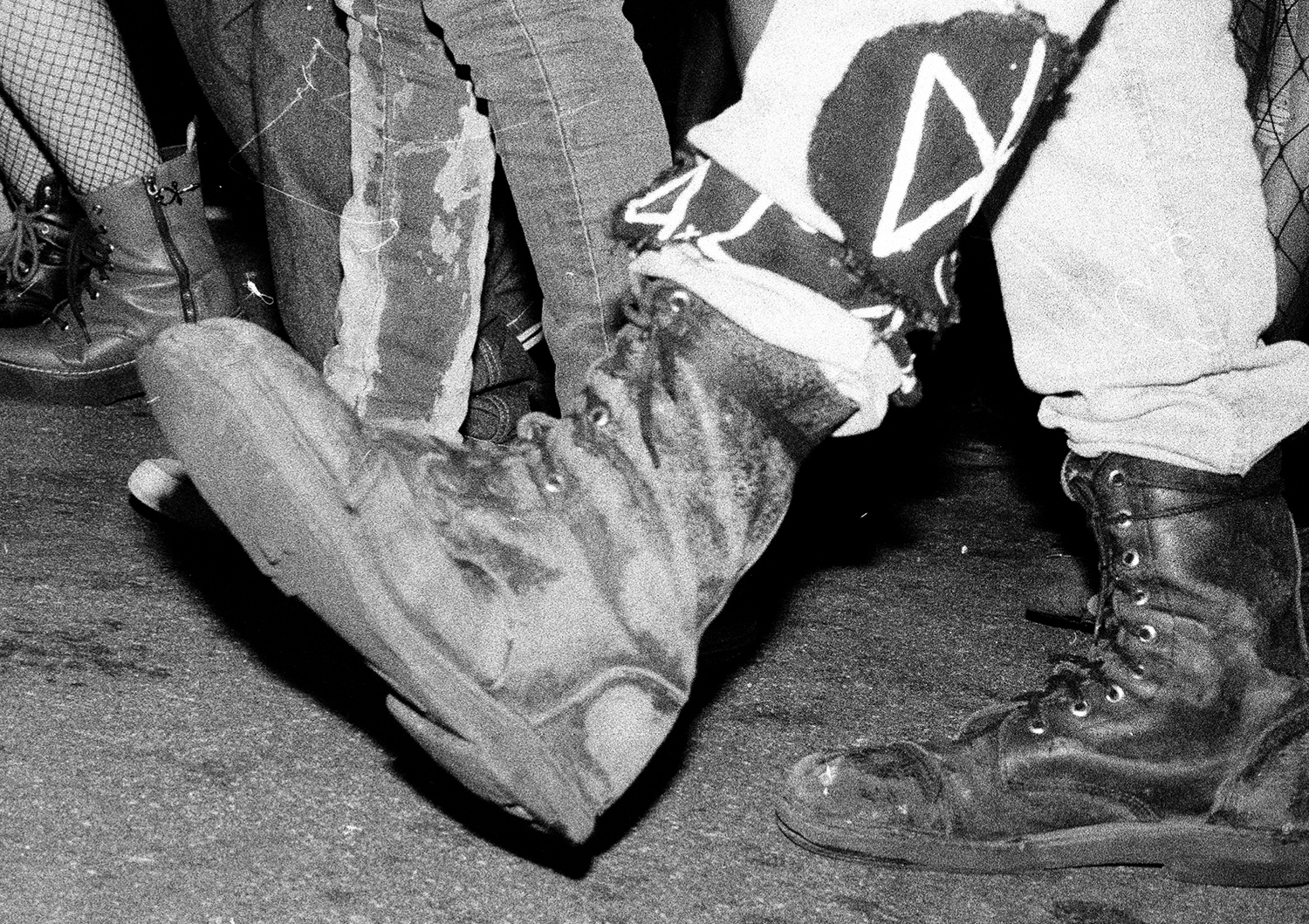
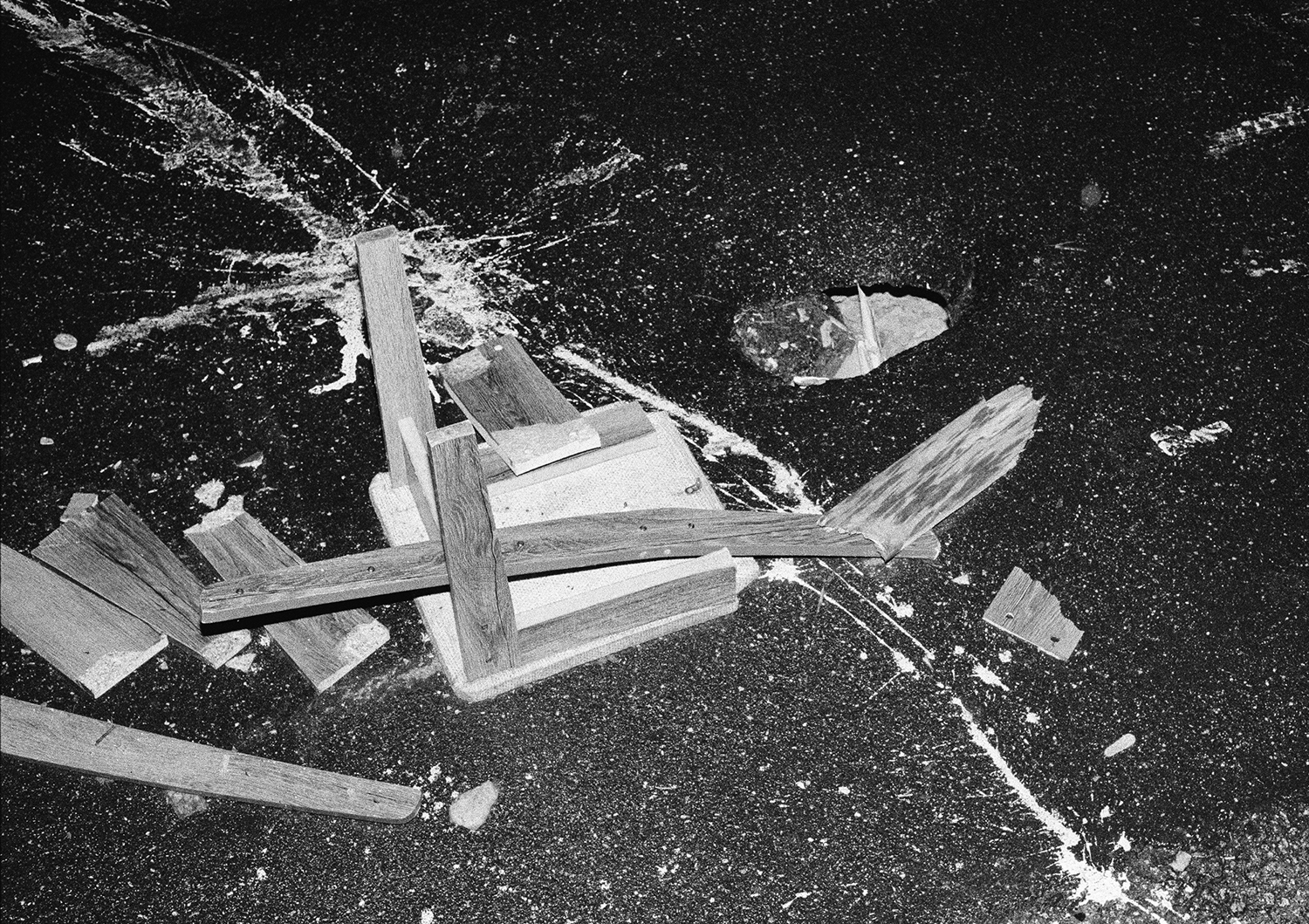
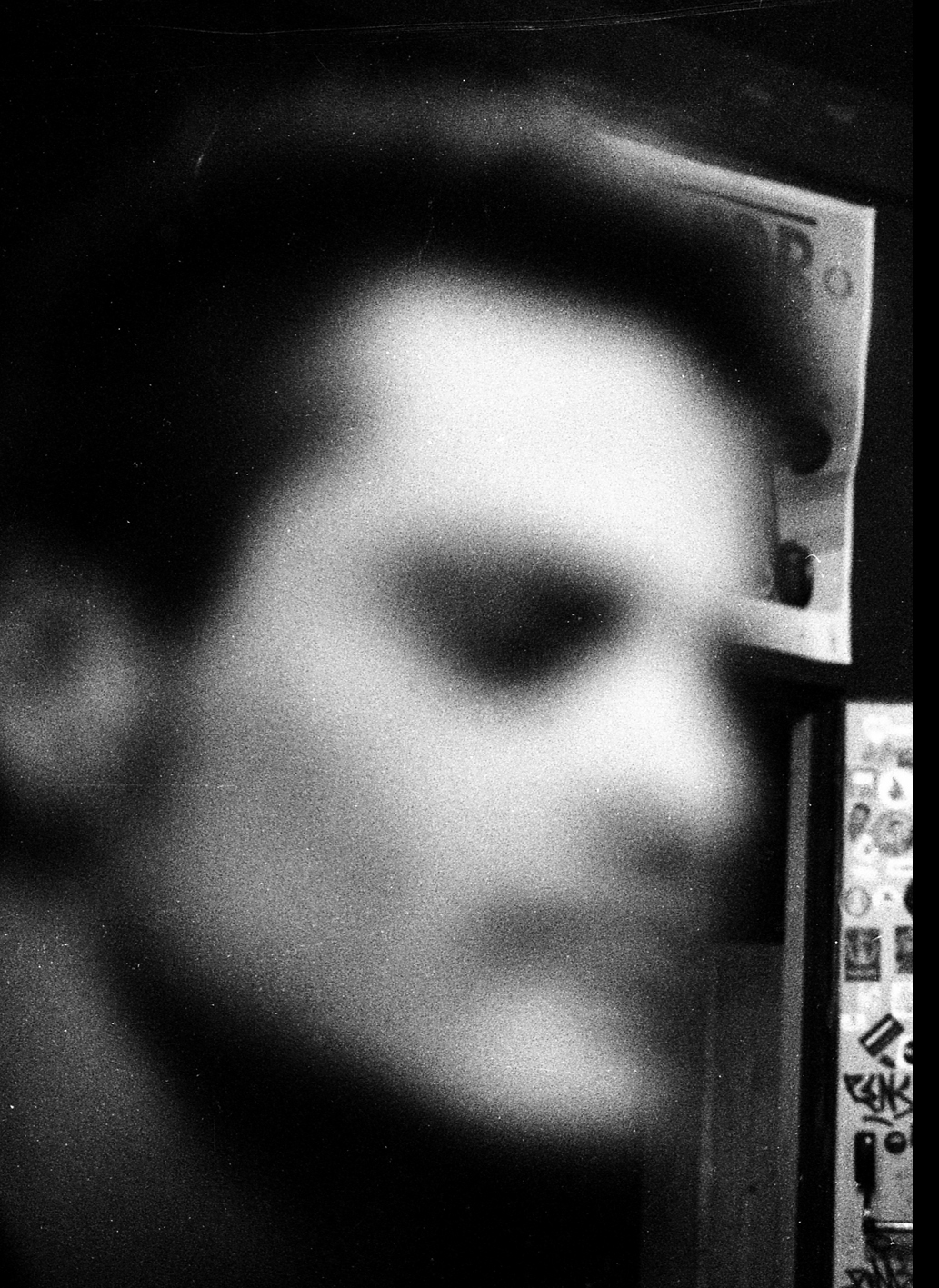
I realize that I am getting too old to rant. What have I done, anyway? I am part of the shit harness. I am conveying it with a normalized self-implication. Was weiß ich? So, without letting that get in the way of a photobook review, let me introduce artist André Djanikian to the discussion, whose new book is. Algunos Sentimientos No Cambian Junto a Las Estaciones, recently published by Selo Turvo, the up-and-coming Brazilian publisher, is in the mix. In full declaration, I have met and worked with André this summer in São Paulo. I want to make that clear, as I feel a camaraderie with André and his work, which exemplifies a turning away from the established order and invites us to consider the aesthetics of punk, disorder, and disquiet in his black-and-white, grainy images. He draws on tropes from punk aesthetics, such as fire, knives, leather-studded fashion, and gigs, to discuss class positions, subculture, and riot.
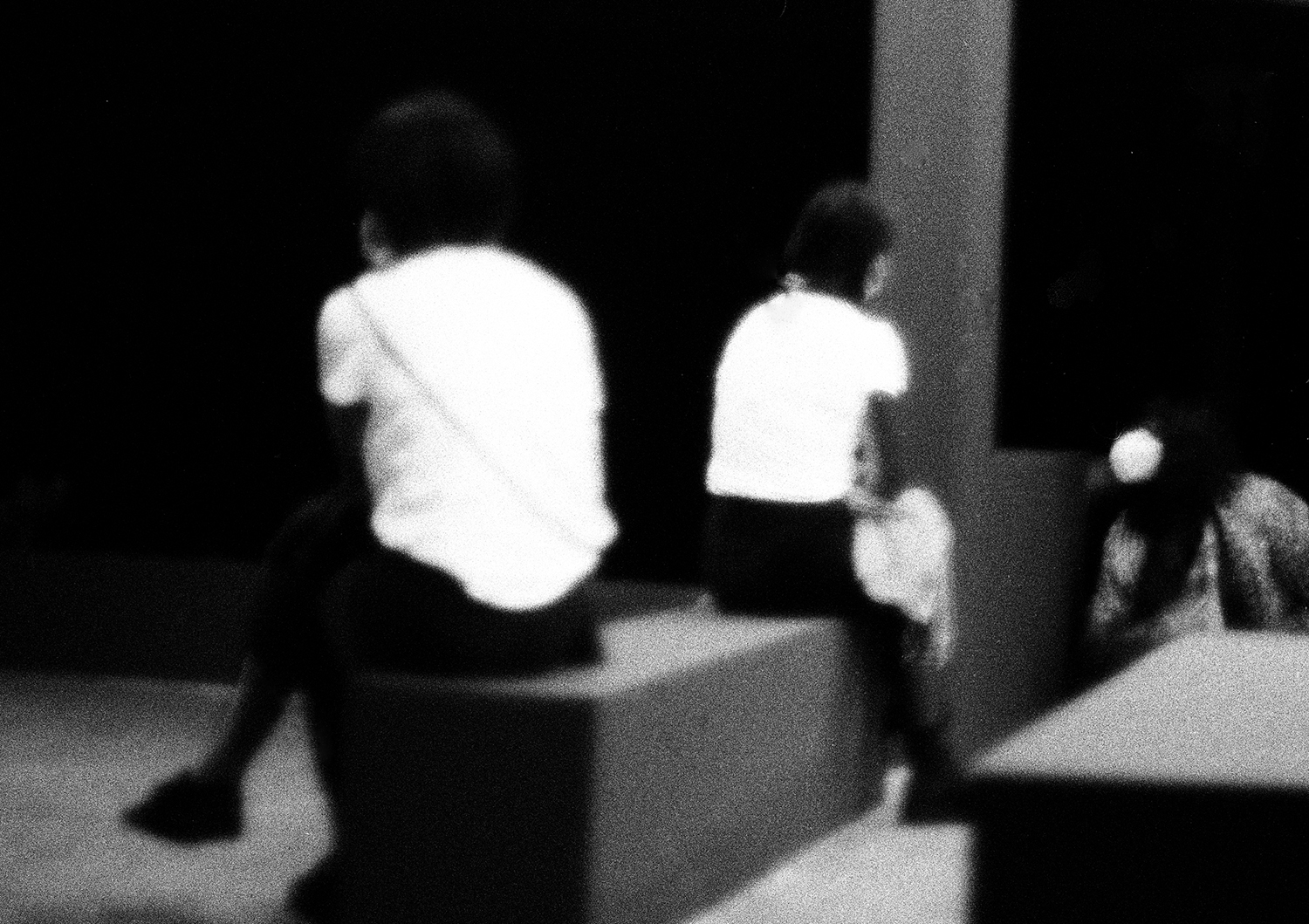
There has been a myriad of books written on punk rock and subculture over the past forty years, many of which take a historical perspective. Whereas those are fine, I am thinking of more contemporary books where these discussions might fit, like Jim Jacoy’s book, or, from a different perspective, the work of Mike Brodie, whose crust-punk kids ride the rails while slipping through the system, as suitable equivalents for Andre’s work. That said, I also believe that his grainy, shaky black-and-white photographs recall the Provoke era of Japanese photography, with its syrupy dissolution used to invoke anxiety and frustration. The blurry image of two people in white shirts sitting on a bench looks straight out of Moriyama’s Hunter, as does the image of a blurred figure exiting an escalator, perhaps slightly more Tomatsu from Oh Shinjuku. are-bure-boke.
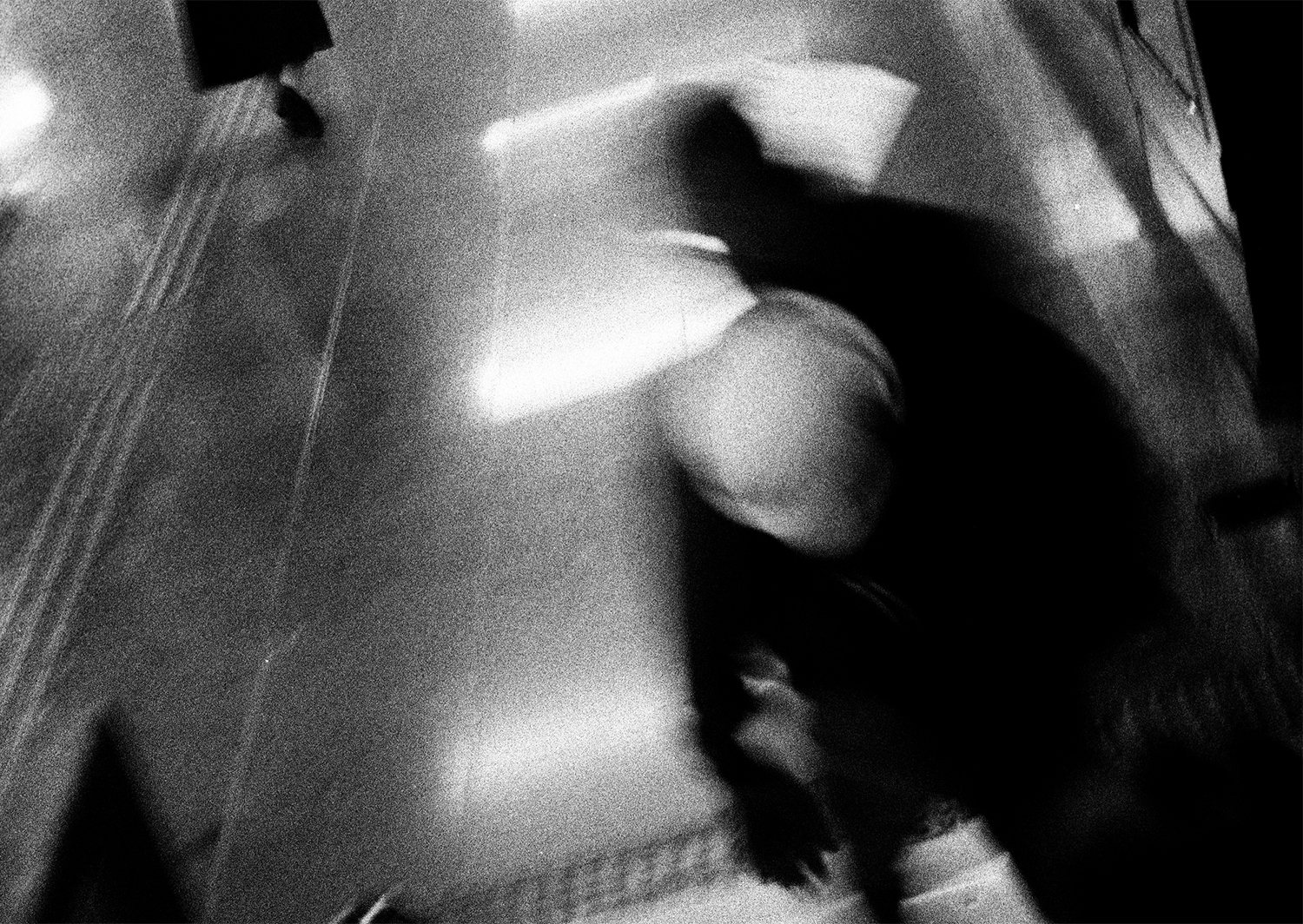
Throughout André’s book, the atmosphere is thick with smoke, claustrophobic with dense black tones, low-lit interiors, and the sweat of punks skanking to the pulsing d-beat of whichever band seems to be illuminating the way. Many of the photographs were made in Buenos Aires, and you can also feel a police presence in the book through pictures of the riot police, scrawled on paint-chipped walls, reminding the reader of social struggle and uncertainty. This is particularly effective at raising the temperature of the work. There are also more serene passages of bodies lying over chairs or floating atop water, recumbent and effortless, offering one of the vital ingredients of subculture story: glimpses, however brief, of hope and potential. Without this, everything would be dystopian and lost, which is cynical and bereft of the romanticism that punk also values. Note that you rarely encounter a punk; you encounter punks, in the plural, which suggests fraternity.
With the book, Djanikian conveys much of this romance and revolt through his pictures, but it is also worth noting that the Selo Turvo team, along with André as a producer himself, has made a great book. There is a section of details at the back of an exhibition that shows the artists’ test prints, which I found emblematic of forward-thinking. Much of the book was also printed by hand, if I were to guess, as André is an exceptional DIY printer, using a Riso machine to significant effect that he also maintains. I know this because we had him print a book for our workshop this summer, and with his hands full of toner when the printer broke down, this attitude toward holding the reins of production was highlighted to the team as they troubleshot and fixed the problem with some elbow grease and an adjusted attitude toward getting shit done. The riso also adds to the object’s graphic design. The cover is an excellent example of how the riso works well for the subject matter, with its sparse red-and-black palette, borrowing from propagandistic design elements subverted to significant effect, as with many, many punk rock emblems, to signify an opting out of polite society.
As a first attempt, I think this is an excellent entry into the world of photobooks. It has all the sweat and romance of revolutionary anti-establishment rancor tied into the grit and anxiety of Andre’s photographs, and the aesthetics are convincing through the design and final object. I love what Selo Turvo is up to and think this is a great collaboration. André has an exceeding amount of potential. I think his production has been evolving over the past years, and his focus is increasing. I believe the graduation of this aesthetic, as time marches on, will only increase in its shine. I am very interested to see where his work goes over the next 5-10 years and how these youthful tropes will evolve with age. I believe the incipit groundwork laid here is a strong indicator that, if honed, his work will continue these same discussions with an enhanced penchant for finding a way to get under the skin in a more subversive manner.
André Djanikian
Algunos Sentimientos No Cambian Junto A Las Estaciones
Selo Turvo