
Interview: Arnau Blanch’s Opium Induced Twilight
“I’ve been trying to transfer some of the states of altered perception resulting from opium use”
“I’ve been trying to transfer some of the states of altered perception resulting from opium use”

“you think…”Well Sweetheart if you don’t want to hear this …Why the fuck are you here in the first place? Go forth and make your way towards the golden honey pot of money and museum exhibitions, you terrible fuck”. Don’t let me stop you or waste my time with your bullshit. Seriously”

“This symbology, this fervent fabric of decline is screened within the book, but it is subtle and perhaps that is why, it is doomed, like human behaviour and meaning, to the sidelines of a genetic and shared understanding of images. “

“I’d say there is a duality that is keeping things unresolved. The narrative isn’t faux, it’s mine and not mine”

“When it comes to thinking about and working with photographic images nowadays, I think it’s crucial to engage with the ways these images are being produced, presented and perceived.”

“It is often confusing being an American. We are a country deeply concerned with our personal histories, yet there is something peculiar about all of this in so much as that it seems to deflect from what we actually are: American”

“There is a whole history of photography fronted by Rosalind Wolf Purcell, Akin and Ludwig, and a few others called “Formaldehyde photography”.

“Completely captivated by the photographic possibilities of light, both artists come at the medium with a desire to seek the extraordinary, in order to access invisible states of consciousness.”

“The image itself is being hailed as an icon of the current struggle between the American police state and the tremors of their abhorrent measure to kill young black Americans, which is no doubt racially and economically motivated”.

“Trees, leaves, flowers are all given the Sells treatment and become abstracted metaphors of the sacred geometry still found between light and organic materials within the aforementioned natural world.”
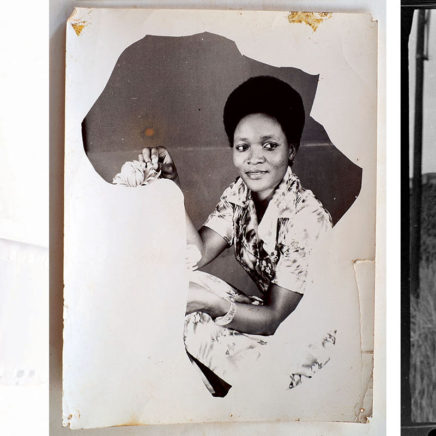
“He recalls developing his negatives by moonlight, having to make his way to the ferry on a road thick with often-time un-negotiable elephant herds. He tells of carrying his chemicals with him and cutting down his negatives to get a surplus of possibilities. I never had this.”

To combine cinematography with photography, Wall took his camera out of the studio along with lights and actors with the intention ofmaking pictures with the look of films from the 1970s that would lend a sharp, documentary style to his pieces. By Graham W. Bell In 1982, Wall took his photography to the street. Combining the aesthetic […]